Jerusalem. The name alone conjures images of ancient walls, holy sites, and a history etched deep in the stones of the Old City. While geographically located in the Levant, its influence extends far beyond its physical boundaries, impacting global politics, religious discourse, and even the very way we perceive and construct world maps. From ancient cartographic representations to modern geopolitical realities, Jerusalem holds a unique and often contentious position, acting as a focal point for religious fervor, historical claims, and political aspirations that ripple across the globe.
This article delves into the complex relationship between Jerusalem and world maps, exploring how the city has been depicted, interpreted, and utilized throughout history to shape narratives and reinforce specific ideologies. We will examine the historical evolution of its cartographic representation, its significance in religious mapping, the geopolitical implications of its contested status, and ultimately, how Jerusalem continues to function as an unseen center point, influencing our understanding of the world.
Jerusalem in Ancient Cartography: More Than Just a Place on the Map
Early world maps were not simply objective representations of geographical space; they were imbued with cultural, religious, and philosophical meaning. Jerusalem often held a prominent position, reflecting its central role in the cosmological understanding of various cultures.
In ancient Babylonian maps, like the Imago Mundi (circa 6th century BCE), Babylon was typically depicted as the center of the world, but Jerusalem, as a significant regional power and a site of religious activity, would have been recognized, albeit perhaps not with the same prominence as later Christian or Islamic maps.
For the Greeks and Romans, Jerusalem held less inherent cosmological significance, although it gained importance during the Roman period. Maps like the Tabula Peutingeriana, a Roman road map from the 4th century CE, depict Jerusalem as a significant city within the Roman Empire, showcasing its strategic location and connection to other important urban centers. However, these maps prioritized practicality and administrative efficiency over religious symbolism.
The Rise of Religious Mapping: Jerusalem as the Navel of the World
The advent of Christianity fundamentally altered the way Jerusalem was portrayed on world maps. The city, as the site of Jesus’s crucifixion and resurrection, became central to Christian theology and worldview. Consequently, maps began to reflect this shift, often placing Jerusalem at the very center of the world.
-
The T-O Map: This iconic medieval world map, often associated with Isidore of Seville, typically depicts the world as a circle divided into three continents: Asia, Europe, and Africa. The “T” shape represents the Mediterranean Sea, the Nile River, and the Don River, which separate the continents. Crucially, Jerusalem is almost invariably placed at the intersection of the "T" and the center of the circle, signifying its spiritual and geographical centrality. This placement was not simply symbolic; it reflected a belief that Jerusalem was the axis mundi, the point connecting heaven, earth, and the underworld.
-
The Hereford Mappa Mundi (circa 1300): This elaborate and visually stunning map is another prime example of a medieval Christian world map. While not perfectly centered, Jerusalem is prominently featured, surrounded by depictions of biblical events and religious figures. The map emphasizes Jerusalem’s sacred history and its importance as a pilgrimage destination.
These religious maps were not intended as accurate geographical representations in the modern sense. They were didactic tools, designed to reinforce religious beliefs and provide a visual framework for understanding the Christian worldview. Jerusalem’s central position was not based on precise measurements but on its profound theological significance.
Islamic Cartography: A Different Perspective on a Shared Holy City
Jerusalem also holds immense significance in Islam, as the location of the Dome of the Rock and Al-Aqsa Mosque, considered the third holiest site in Islam. Islamic cartography, while influenced by Greek and Persian traditions, developed its own unique characteristics, and Jerusalem was often depicted with reverence and importance.
-
Orientation and the Kaaba: Unlike Christian maps, which typically oriented the world with east at the top, Islamic maps were often oriented with south at the top, positioning Mecca, the location of the Kaaba, at the center of the world. While Jerusalem might not be the absolute center in this orientation, it was still recognized as a significant holy city and was often depicted with detailed representations of its sacred sites.
-
Emphasis on Pilgrimage Routes: Islamic maps often emphasized pilgrimage routes to Mecca and other holy sites, including Jerusalem. These routes were meticulously detailed, reflecting the importance of pilgrimage in Islamic religious practice.
Although Islamic cartography differed in its orientation and emphasis from Christian cartography, Jerusalem remained a crucial city, acknowledged for its historical and religious importance within the Islamic world.
The Modern Era: Geopolitics and the Contested Status of Jerusalem
The rise of modern cartography, with its emphasis on accuracy and scientific measurement, did not diminish the significance of Jerusalem. However, it shifted the focus from religious symbolism to geopolitical realities. The city’s contested status, particularly after the establishment of the State of Israel in 1948, has made it a focal point of international conflict and political maneuvering.
-
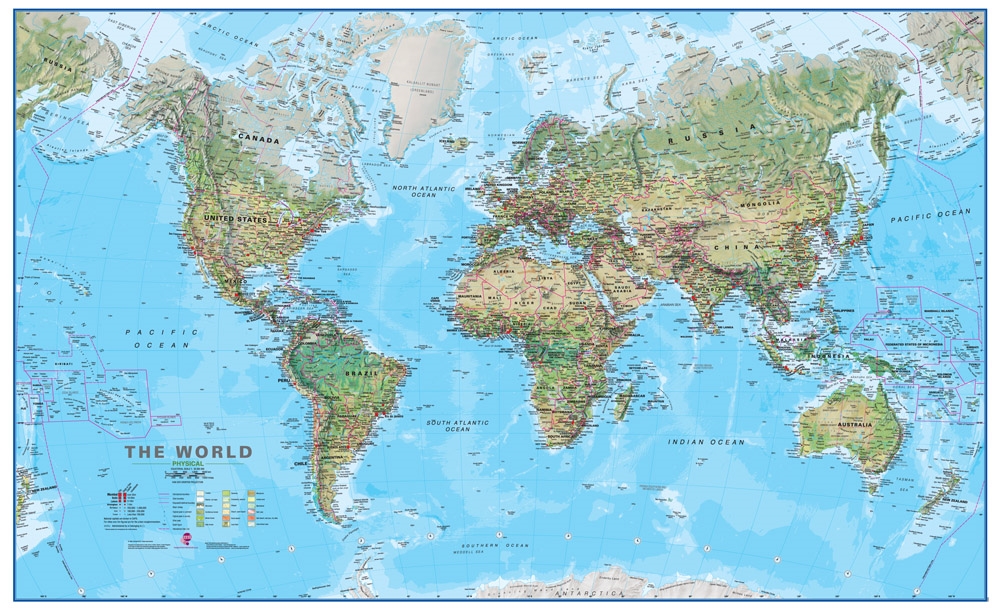
Political Maps and Border Disputes: Modern political maps of the Middle East often reflect the ongoing disputes surrounding Jerusalem. The city’s status as the capital of Israel is not universally recognized, and many maps produced by international organizations and foreign governments depict Jerusalem with qualifications or disclaimers, acknowledging the unresolved issues surrounding its sovereignty.
-
Maps as Tools of Propaganda: Maps have also been used as tools of propaganda by both sides of the Israeli-Palestinian conflict. Maps that depict the entire territory of Palestine as part of Israel, or conversely, maps that erase Israel from existence, are often used to promote specific political agendas and narratives.
-
The Impact of Digital Mapping: The advent of digital mapping technologies, such as Google Maps, has further complicated the issue. While these platforms strive for accuracy, they are also subject to political pressures and controversies regarding the depiction of borders and place names in Jerusalem and the surrounding territories.
Beyond the Map: The Enduring Power of Jerusalem as a Symbol
While maps provide a visual representation of Jerusalem’s location and significance, they only scratch the surface of its enduring power as a symbol. For millions of people around the world, Jerusalem represents far more than just a place on a map. It embodies faith, history, identity, and hope.
-
A Symbol of Religious Identity: For Jews, Jerusalem is the eternal capital of their nation, the site of the Temple Mount, and the spiritual center of their faith. For Christians, it is the city where Jesus lived, died, and was resurrected, making it a central pilgrimage destination. For Muslims, it is the location of the Dome of the Rock and Al-Aqsa Mosque, sites of immense religious significance.
-
A Nexus of Historical Narratives: Jerusalem is a palimpsest of history, with layers of civilizations and cultures interwoven within its walls. From the ancient Israelites to the Romans, the Byzantines, the Crusaders, the Ottomans, and the modern state of Israel, each has left its mark on the city, creating a complex and contested historical landscape.
-
A Site of Contested Claims: The city’s contested status is a constant source of tension and conflict. Both Israelis and Palestinians claim Jerusalem as their capital, and the unresolved issues surrounding its sovereignty continue to fuel political instability in the region.
Conclusion: Jerusalem, the Unseen Center
Jerusalem’s position on world maps, from ancient depictions to modern geopolitical representations, reveals more than just its geographical location. It reflects the city’s profound impact on religious beliefs, historical narratives, and political aspirations across the globe.
Whether depicted as the axis mundi in medieval Christian maps, revered in Islamic cartography, or contested on modern political maps, Jerusalem remains an unseen center, influencing our understanding of the world and shaping the course of history. Its enduring power lies not just in its physical presence but in its symbolic weight, its capacity to evoke deep emotions, and its ability to connect people to something larger than themselves. As long as these connections persist, Jerusalem will continue to occupy a unique and powerful place in the collective consciousness of humanity, far beyond the lines and legends of any map. The city’s story, etched in stone and reflected in countless cartographic representations, serves as a constant reminder of the enduring power of place, faith, and the enduring human quest for meaning.