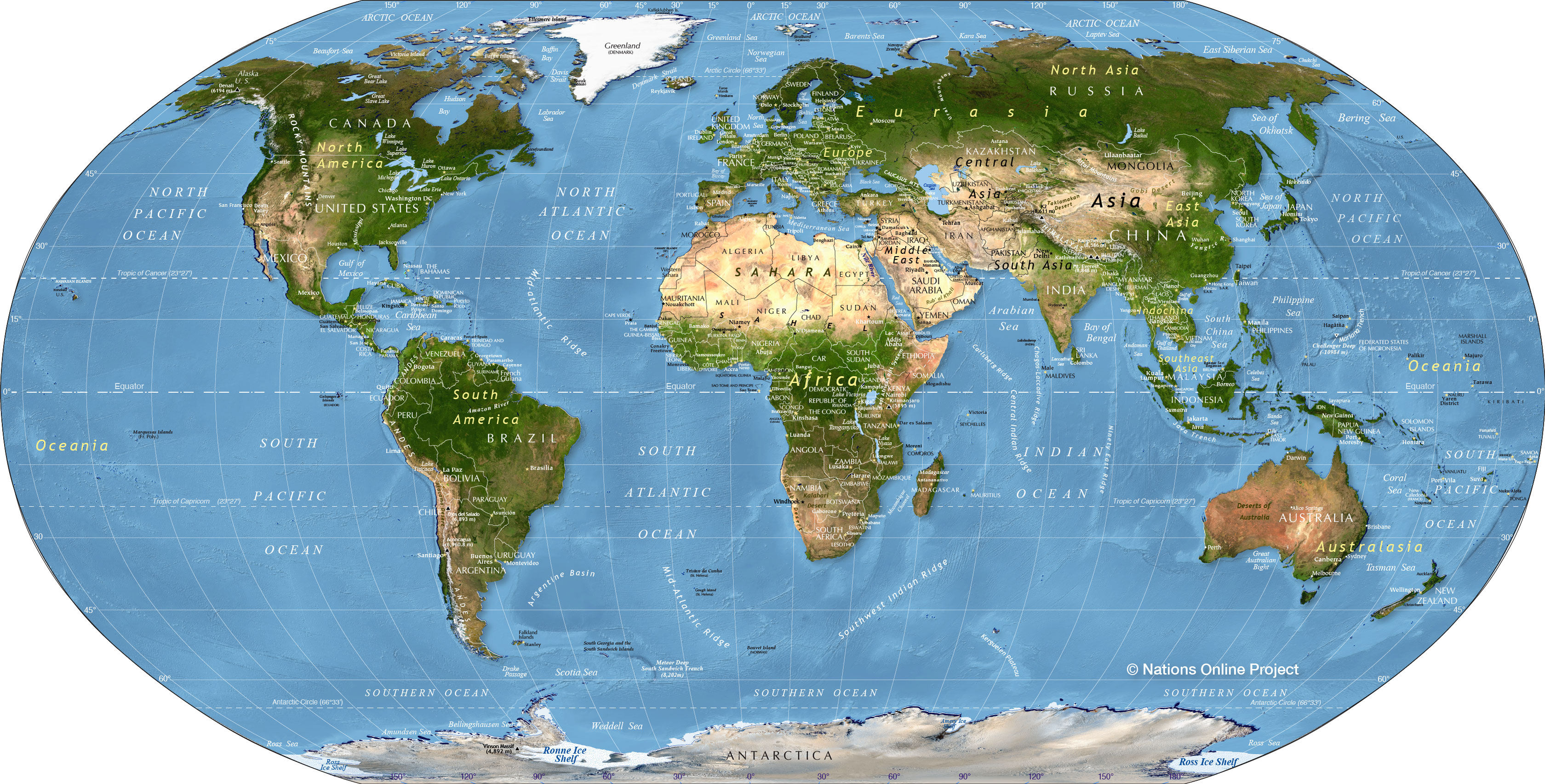
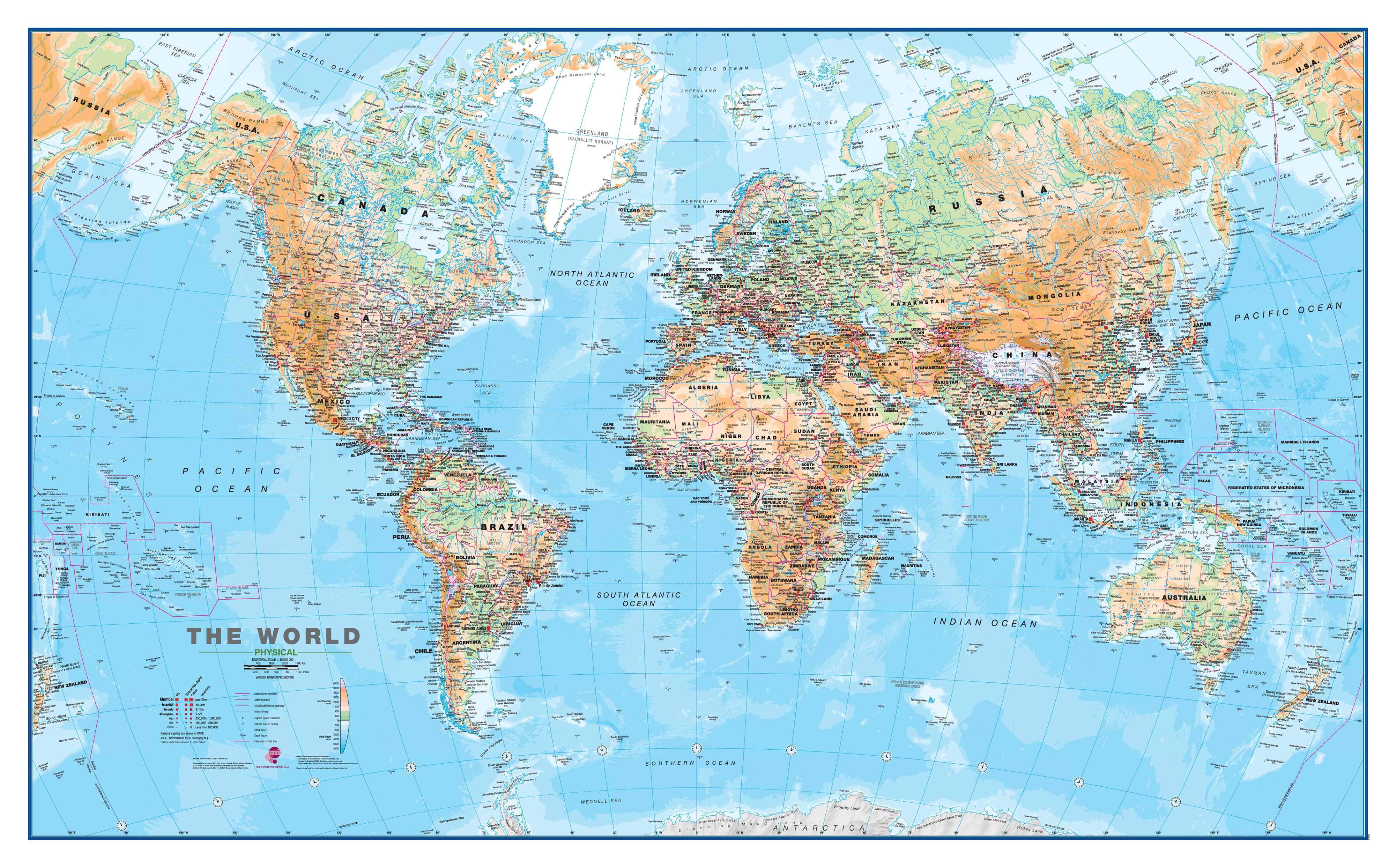
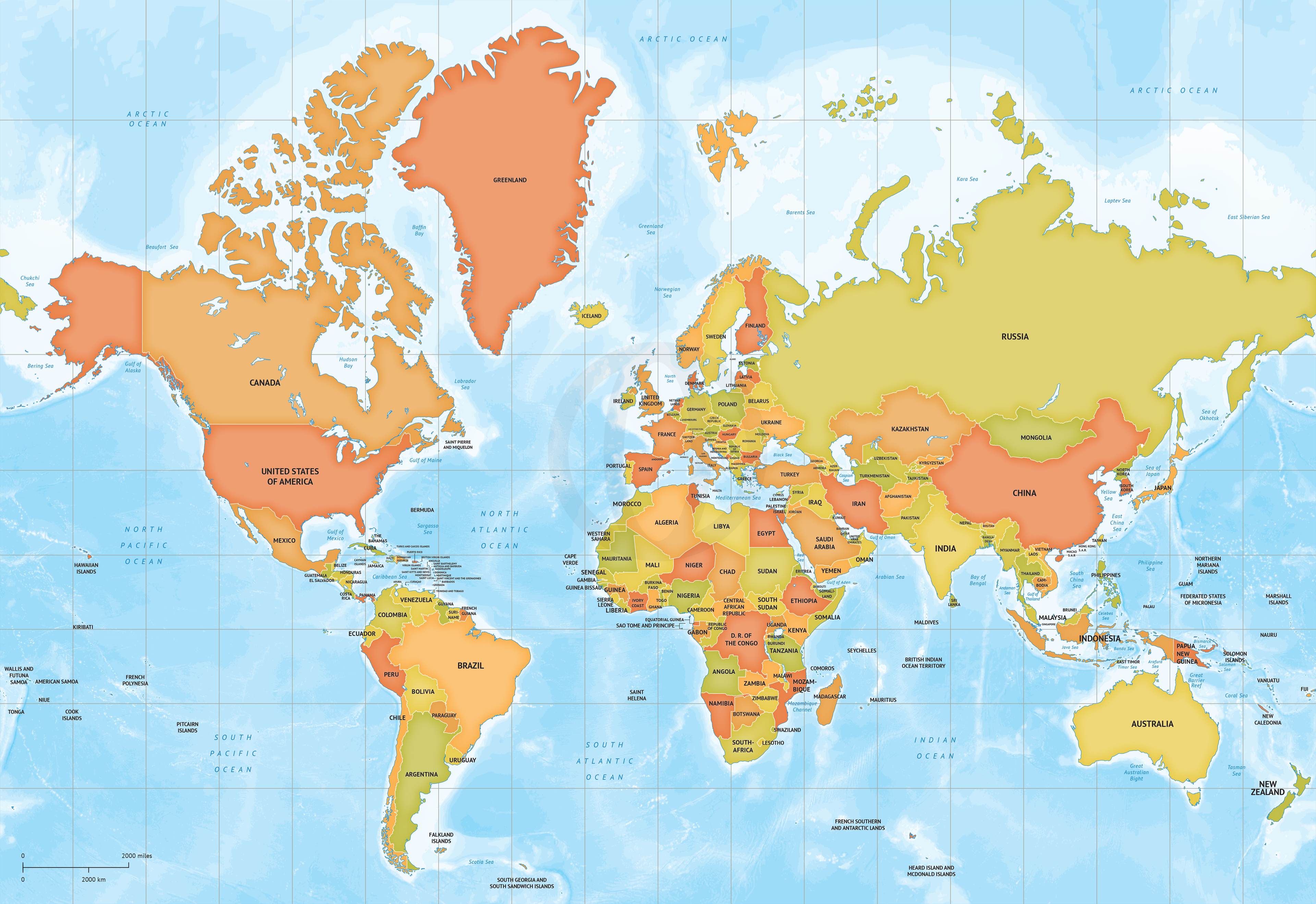
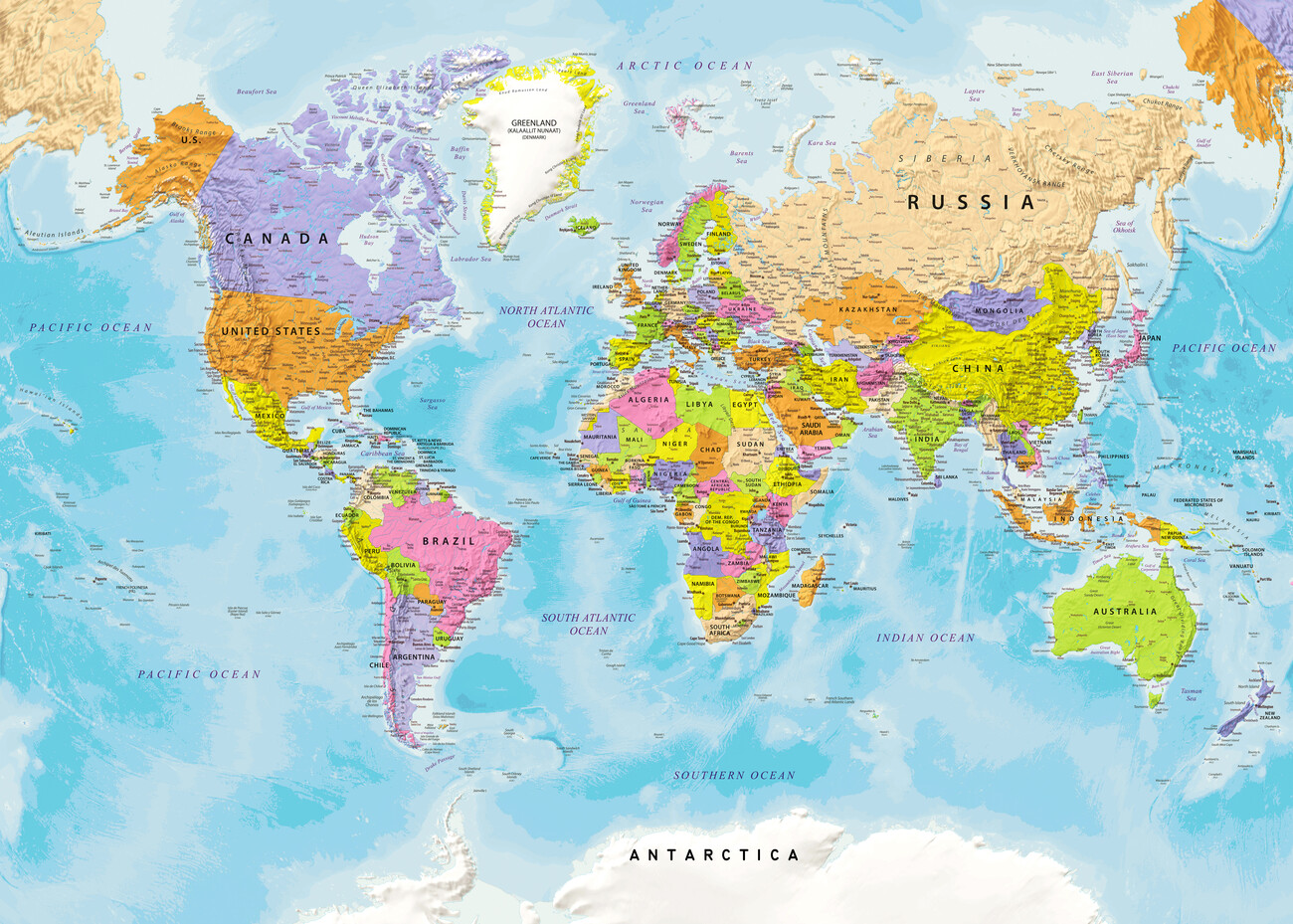
The Earth, a vibrant blue marble suspended in the vast expanse of space, is a world of unparalleled diversity and beauty. Its surface is sculpted by powerful geological forces and shaped by the relentless action of water, wind, and ice. To understand this complex and dynamic system, we rely on maps – visual representations that distill the immensity of our planet into a manageable and comprehensible form. Among the most fundamental of these maps are those depicting the seven continents and five oceans, the defining geographical features that shape global climate, influence human civilization, and connect us all.
This article will delve into the specifics of these key elements, exploring their individual characteristics, their interconnectedness, and their significance in shaping our understanding of the world.
The Seven Continents: Landmasses of Distinct Character
The concept of continents is primarily based on large, continuous landmasses separated by oceans. While the precise boundaries and even the number of continents have been debated throughout history, the currently accepted model identifies seven: Africa, Antarctica, Asia, Australia, Europe, North America, and South America.
-
Africa: The second-largest continent, Africa is renowned for its incredible biodiversity, vast deserts, and rich cultural heritage. From the Sahara Desert in the north to the lush rainforests of the Congo Basin, Africa boasts a diverse range of ecosystems. Its history is marked by ancient civilizations, colonial influences, and a vibrant modern culture. The continent is also home to the world’s longest river, the Nile, and the Great Rift Valley, a geological wonder.
-
Antarctica: The southernmost continent, Antarctica is a frozen wasteland almost entirely covered in ice. This icy expanse holds approximately 70% of the world’s fresh water, locked away in glaciers and ice sheets. Despite its harsh conditions, Antarctica plays a crucial role in regulating global climate and ocean currents. It is also a hub for scientific research, with numerous research stations established by various nations.
-
Asia: The largest and most populous continent, Asia is a land of extremes, encompassing towering mountain ranges like the Himalayas, vast deserts like the Gobi, and fertile river valleys like the Indus and the Yangtze. Asia is the birthplace of many of the world’s major religions and civilizations, and its cultural diversity is unparalleled. It is a continent of rapid economic growth and technological innovation, playing an increasingly significant role on the global stage.
-
Australia: The smallest continent, Australia is also an island nation, surrounded by the Indian and Pacific Oceans. Known for its unique flora and fauna, including kangaroos, koalas, and wombats, Australia boasts a diverse range of landscapes, from the arid Outback to the tropical rainforests of Queensland. Its indigenous Aboriginal culture is one of the oldest continuous cultures in the world.
-
Europe: Though geographically a peninsula of Eurasia, Europe is traditionally considered a separate continent due to its distinct cultural and historical development. From the ancient civilizations of Greece and Rome to the Renaissance and the Industrial Revolution, Europe has played a pivotal role in shaping global history and culture. It is a continent of diverse landscapes, from the snow-capped Alps to the rolling hills of Tuscany, and home to a rich tapestry of languages and traditions.
-
North America: Stretching from the Arctic Circle to the tropics, North America encompasses a wide range of climates and landscapes. From the vast plains of the Midwest to the towering Rocky Mountains, North America boasts diverse geographical features. It is a continent of diverse cultures, shaped by indigenous populations, European colonization, and immigration from around the world.
-
South America: Home to the Amazon rainforest, the Andes Mountains, and the Atacama Desert, South America is a continent of breathtaking natural beauty. Its history is marked by ancient civilizations like the Inca, Spanish and Portuguese colonization, and a vibrant modern culture. South America is also a major producer of agricultural commodities and natural resources.
The Five Oceans: The Lifeblood of Our Planet
The oceans cover approximately 71% of the Earth’s surface and are crucial to regulating global climate, supporting marine life, and facilitating global trade. While often depicted as separate entities on maps, the oceans are interconnected, forming a single global ocean system. The five recognized oceans are the Arctic, Atlantic, Indian, Pacific, and Southern.
-
Arctic Ocean: The smallest and shallowest of the five oceans, the Arctic Ocean is located around the North Pole. It is largely covered by sea ice, which plays a critical role in regulating global temperature. The Arctic Ocean is also home to a unique ecosystem, adapted to the harsh conditions. Due to climate change, the Arctic ice is rapidly melting, raising concerns about rising sea levels and the impact on Arctic ecosystems.
-
Atlantic Ocean: The second-largest ocean, the Atlantic Ocean separates the Americas from Europe and Africa. It is a major shipping route and plays a crucial role in global trade. The Atlantic Ocean is also home to the Gulf Stream, a powerful ocean current that influences the climate of Europe. It is known for its diverse marine life, including whales, dolphins, and sea turtles.
-
Indian Ocean: Located between Africa, Asia, and Australia, the Indian Ocean is the warmest of the world’s oceans. It is characterized by a unique monsoon climate, which influences weather patterns across the region. The Indian Ocean is also home to a diverse array of marine life, including coral reefs, sharks, and sea turtles. It is increasingly vulnerable to pollution and overfishing.
-
Pacific Ocean: The largest and deepest of the five oceans, the Pacific Ocean stretches from the Americas to Asia and Australia. It contains numerous islands and is home to the Ring of Fire, a zone of intense volcanic and seismic activity. The Pacific Ocean is also home to the Great Barrier Reef, the world’s largest coral reef system. It is a major source of seafood and plays a crucial role in global climate regulation.
-
Southern Ocean: Also known as the Antarctic Ocean, the Southern Ocean surrounds Antarctica. It is characterized by strong winds and currents, which play a crucial role in distributing heat and nutrients around the globe. The Southern Ocean is home to a unique ecosystem, adapted to the cold and icy conditions. It is also a major carbon sink, absorbing significant amounts of carbon dioxide from the atmosphere.
Interconnectedness and Global Significance
The seven continents and five oceans are not isolated entities but are intricately interconnected, forming a complex and dynamic system. Ocean currents transport heat around the globe, influencing climate patterns and weather systems. The continents influence ocean currents through their landmasses and topography. The exchange of water and nutrients between land and sea is crucial for supporting marine ecosystems and regulating the global carbon cycle.
Understanding the relationships between the continents and oceans is essential for addressing global challenges such as climate change, biodiversity loss, and resource management. The burning of fossil fuels is causing the Earth’s climate to warm, leading to rising sea levels, melting glaciers, and more frequent extreme weather events. These changes are impacting both land and sea, threatening ecosystems and human populations.
Overfishing, pollution, and habitat destruction are also threatening marine ecosystems. Protecting the oceans and their biodiversity is crucial for maintaining global food security and regulating the climate. Sustainable land management practices are essential for preventing soil erosion, preserving water resources, and protecting biodiversity.
Conclusion: A World Worth Exploring and Protecting
The map of the seven continents and five oceans provides a fundamental framework for understanding our planet. Each continent and ocean possesses unique characteristics and plays a crucial role in the global system. By studying these features and their interconnections, we can gain a deeper appreciation for the complexity and beauty of our world.
As we face increasing environmental challenges, it is more important than ever to understand the interconnectedness of the Earth’s systems. By promoting sustainable practices, reducing our carbon footprint, and protecting biodiversity, we can ensure that future generations can continue to explore and appreciate the wonders of the seven continents and five oceans. The future of our planet depends on our ability to understand, appreciate, and protect this remarkable interconnected system. Understanding the map of the world is the first step towards becoming responsible stewards of our shared home.