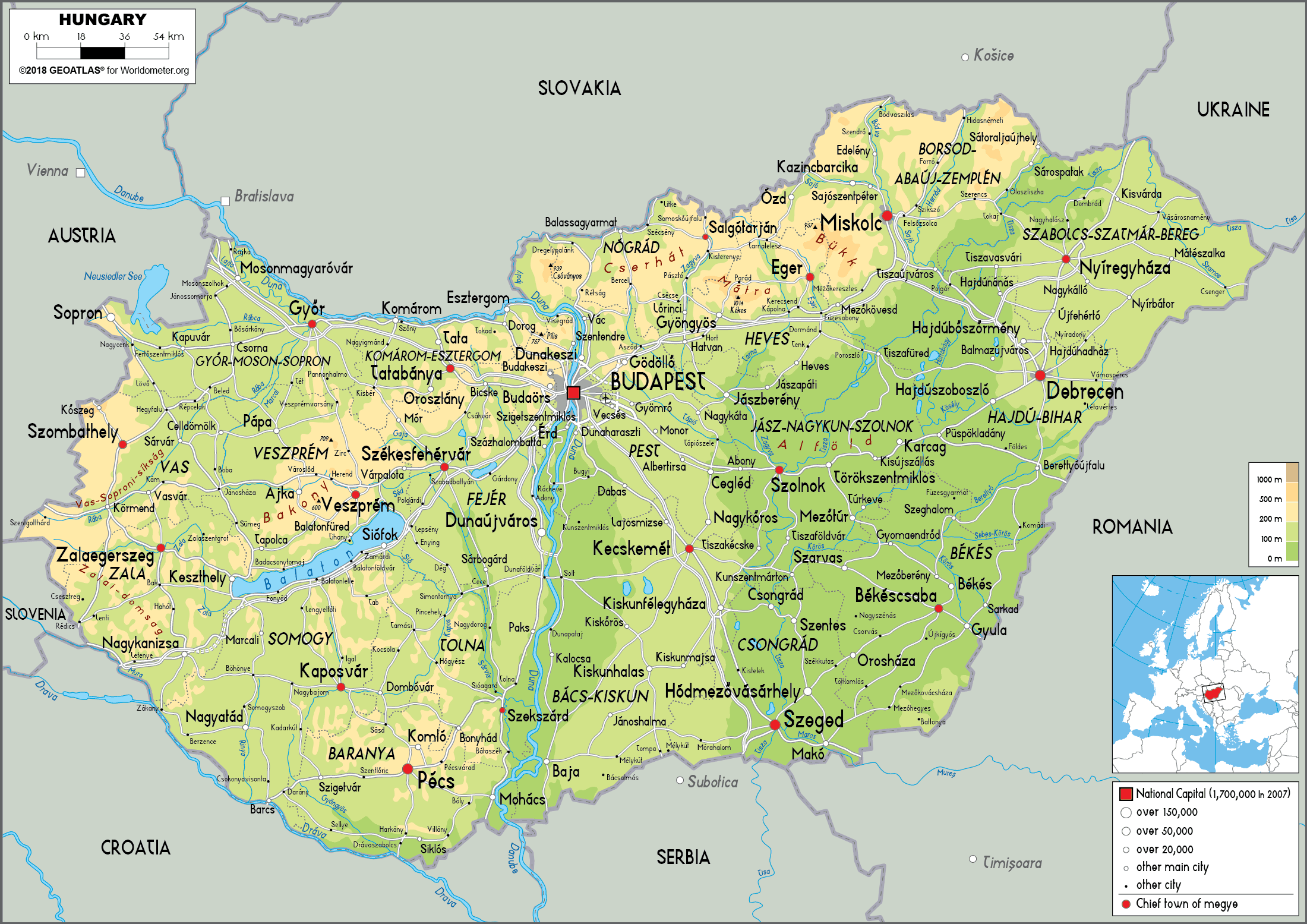
Hungary, a landlocked nation nestled in the heart of Europe, often finds itself the subject of geographical inquiries. While its rich history, vibrant culture, and distinctive language are well-known, its precise location on the world map can sometimes be a source of curiosity. This article aims to illuminate Hungary’s geographical coordinates, explore its strategic position within Europe, and delve into the factors that have shaped its unique identity due to its location.
Pinpointing Hungary: Coordinates and Continental Context
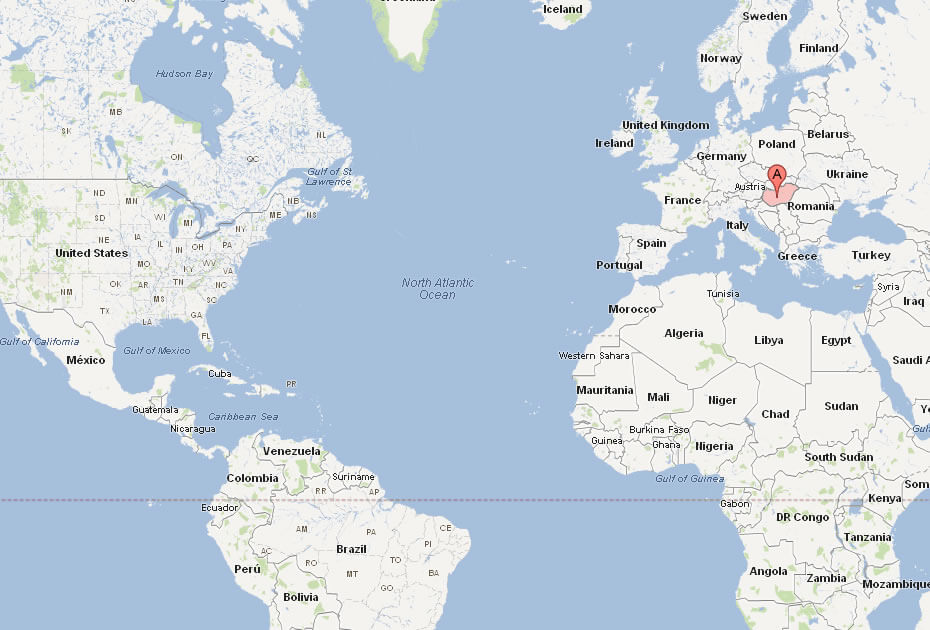
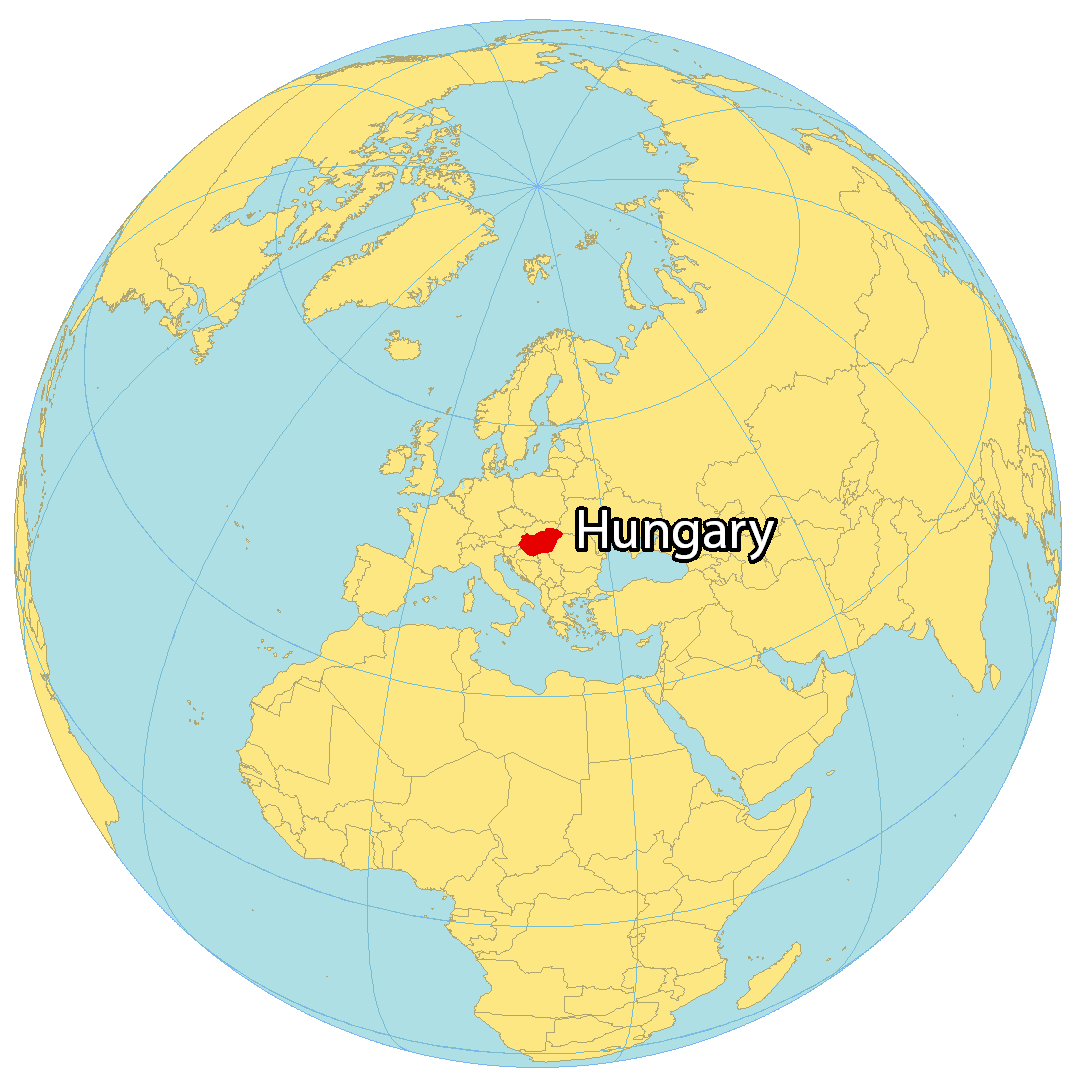
To pinpoint Hungary on the world map, we need to consider its latitude and longitude. Hungary lies approximately between 45° 48′ and 48° 35′ North latitude and 16° 05′ and 22° 55′ East longitude. This places it firmly within the Northern Hemisphere and the Eastern Hemisphere.
More broadly, Hungary is situated in Central Europe. However, the definition of Central Europe is itself a fluid one, subject to historical, cultural, and political interpretations. While geographically closer to Eastern Europe, Hungary identifies culturally and politically more strongly with Central Europe, aligning itself with nations like Austria, the Czech Republic, Slovakia, and Poland.
Its location in the heart of Europe has been both a blessing and a curse throughout history. Strategically positioned at the crossroads of trade routes and migratory pathways, Hungary has been influenced by various cultures and empires. This has resulted in a complex and fascinating tapestry of traditions, languages, and artistic expressions.
Landlocked but Not Isolated: Hungary’s Neighbours and Geographical Features
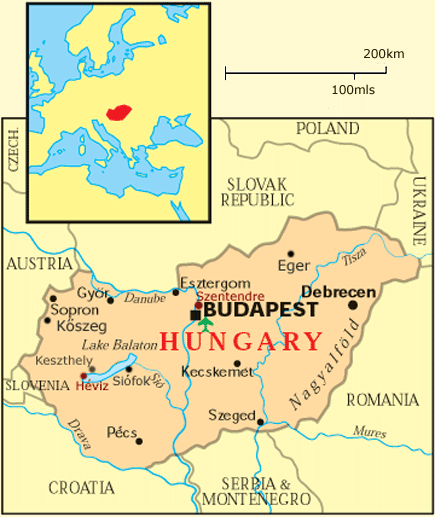
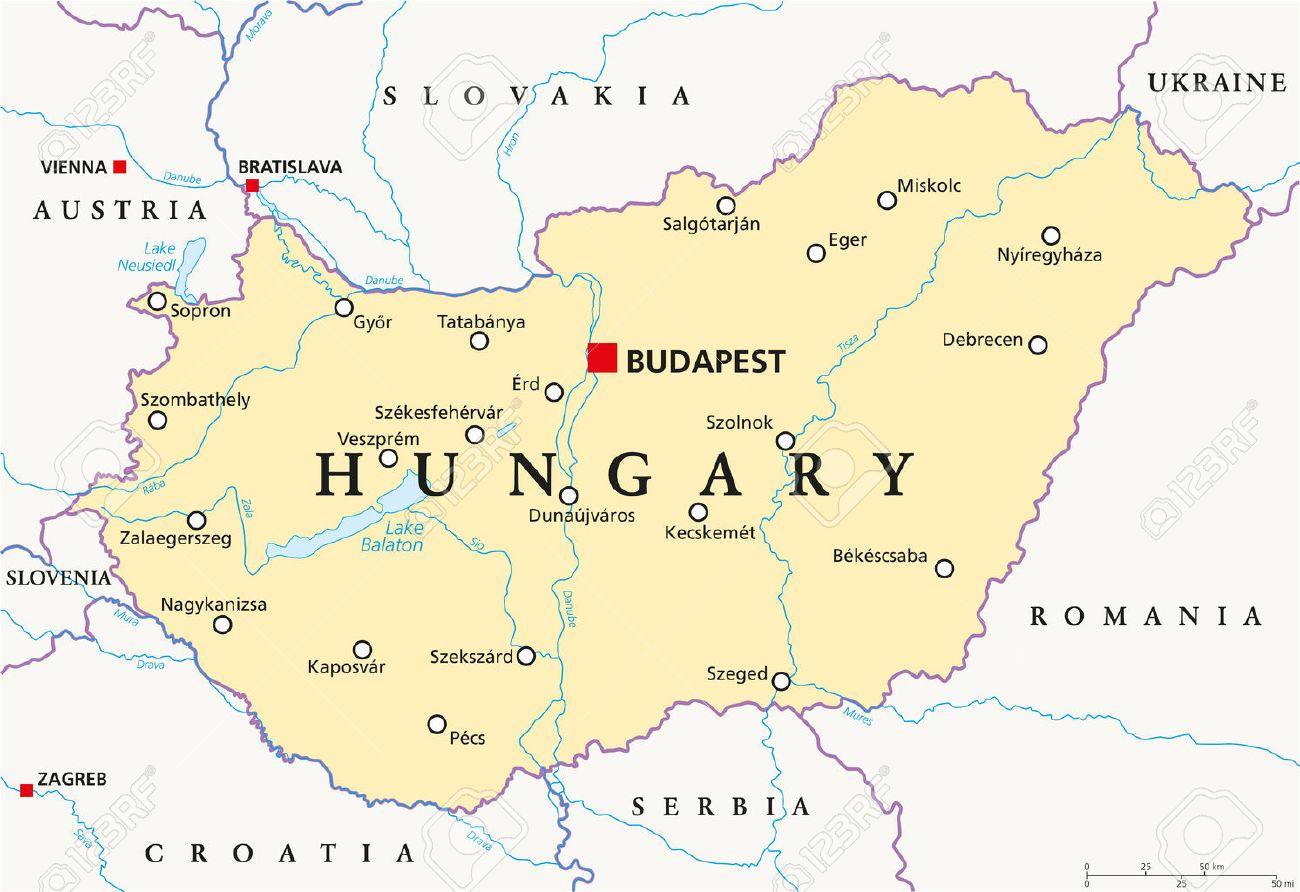
Being landlocked, Hungary lacks direct access to the sea. However, this has not prevented it from becoming a significant player in European affairs. It shares borders with seven countries:
- Austria to the west
- Slovakia to the north
- Ukraine to the northeast
- Romania to the east
- Serbia to the south
- Croatia to the southwest
- Slovenia to the west
These neighboring countries have played a crucial role in shaping Hungary’s history, culture, and economy. Trade, migration, and political alliances have all been influenced by these geographical relationships.
The landscape of Hungary is predominantly characterized by the Pannonian Basin, a vast plain surrounded by mountains. This basin is drained by the Danube River, which flows through the heart of Hungary, and its major tributary, the Tisza River. These rivers have been vital transportation routes and sources of irrigation, contributing significantly to Hungary’s agricultural productivity.
The Great Hungarian Plain (Alföld) dominates the eastern and southern regions of the country, known for its fertile soil and extensive agricultural lands. This region is crucial for the production of grains, fruits, and vegetables.
To the north, the Carpathian Mountains extend into Hungary, providing a natural border with Slovakia. The Mátra Mountains, part of the Northern Hungarian Mountains, are home to Hungary’s highest peak, Kékes, reaching a height of 1,014 meters. While not particularly high compared to other European mountain ranges, these mountains offer stunning landscapes, forests, and opportunities for outdoor recreation.
The Lake Balaton, located in western Hungary, is the largest lake in Central Europe and a popular tourist destination. Its shallow waters and sandy beaches attract visitors from across the region, offering opportunities for swimming, sailing, and relaxation.
A Crossroads of History: How Geography Shaped Hungary’s Past
Hungary’s central location has made it a crossroads of history, witnessing the rise and fall of empires, the migration of peoples, and the clash of cultures.
- Ancient Times: The territory of present-day Hungary was inhabited by various Celtic and Roman tribes. The Roman Empire established the province of Pannonia, leaving a lasting impact on the region’s infrastructure and culture.
- The Magyar Conquest: In the late 9th century, the Magyar tribes, led by Árpád, migrated from the east and settled in the Carpathian Basin. This marked the beginning of the Hungarian state, which would later become the Kingdom of Hungary.
- Medieval Kingdom: The Kingdom of Hungary became a powerful force in Central Europe, expanding its territory and influence. Its strategic location made it a key player in regional politics, often caught between the interests of the Holy Roman Empire and the Byzantine Empire.
- Ottoman Rule: In the 16th and 17th centuries, much of Hungary fell under Ottoman rule. This period was marked by constant warfare and cultural exchange, leaving a lasting impact on Hungarian society and architecture.
- Habsburg Empire: After the expulsion of the Ottomans, Hungary became part of the Habsburg Empire. This period saw significant economic and cultural development, but also periods of national unrest and calls for independence.
- Austria-Hungary: In 1867, the Austro-Hungarian Compromise created the dual monarchy of Austria-Hungary. Hungary gained greater autonomy within the empire, but remained tied to Austria in matters of defense and foreign policy.
- World War I and its Aftermath: Austria-Hungary was defeated in World War I, leading to the disintegration of the empire. Hungary lost significant territory to its neighbors under the Treaty of Trianon, a historical event that continues to shape Hungarian national identity.
- Communist Era: After World War II, Hungary came under Soviet influence and became a communist state. This period was marked by political repression and economic stagnation.
- Transition to Democracy: In 1989, Hungary peacefully transitioned to a democratic republic. It joined NATO in 1999 and the European Union in 2004, marking its integration into the Western world.
Throughout these historical periods, Hungary’s geographical location has played a crucial role in shaping its destiny. Its central position has made it a target for invasion and conquest, but also a center of trade and cultural exchange.
Modern Hungary: A Geopolitical Hub in the European Union
Today, Hungary is a member of the European Union and NATO, playing an active role in European affairs. Its strategic location within the EU makes it an important transportation hub, connecting Western and Eastern Europe.
Hungary is actively involved in regional initiatives, such as the Visegrád Group (V4), which brings together Hungary, Poland, the Czech Republic, and Slovakia to promote cooperation on issues of common interest.
Its membership in the EU has provided Hungary with access to new markets and investment opportunities, boosting its economy. However, it has also faced challenges related to migration, border security, and political differences with other EU member states.
Conclusion: Hungary’s Enduring Geographical Significance
In conclusion, Hungary’s location in the heart of Europe has been a defining factor in its history, culture, and economy. Situated at the crossroads of civilizations, it has been shaped by diverse influences and has played a significant role in European affairs for centuries. While landlocked, its strategic position within the Pannonian Basin and its network of rivers have facilitated trade and transportation. From its ancient roots to its modern-day role as a member of the European Union, Hungary’s geographical location continues to shape its identity and its place on the world map. Understanding its coordinates, its neighbors, and its physical features is crucial to appreciating the rich tapestry of Hungarian history and culture. As Hungary navigates the challenges and opportunities of the 21st century, its geographical significance will undoubtedly continue to play a pivotal role in its future.