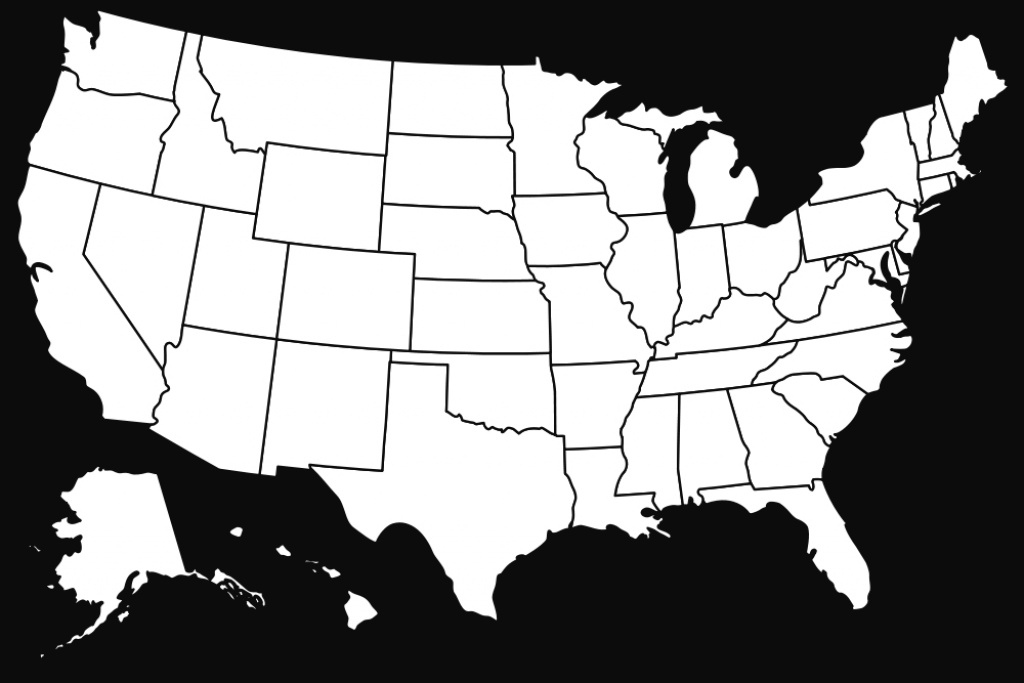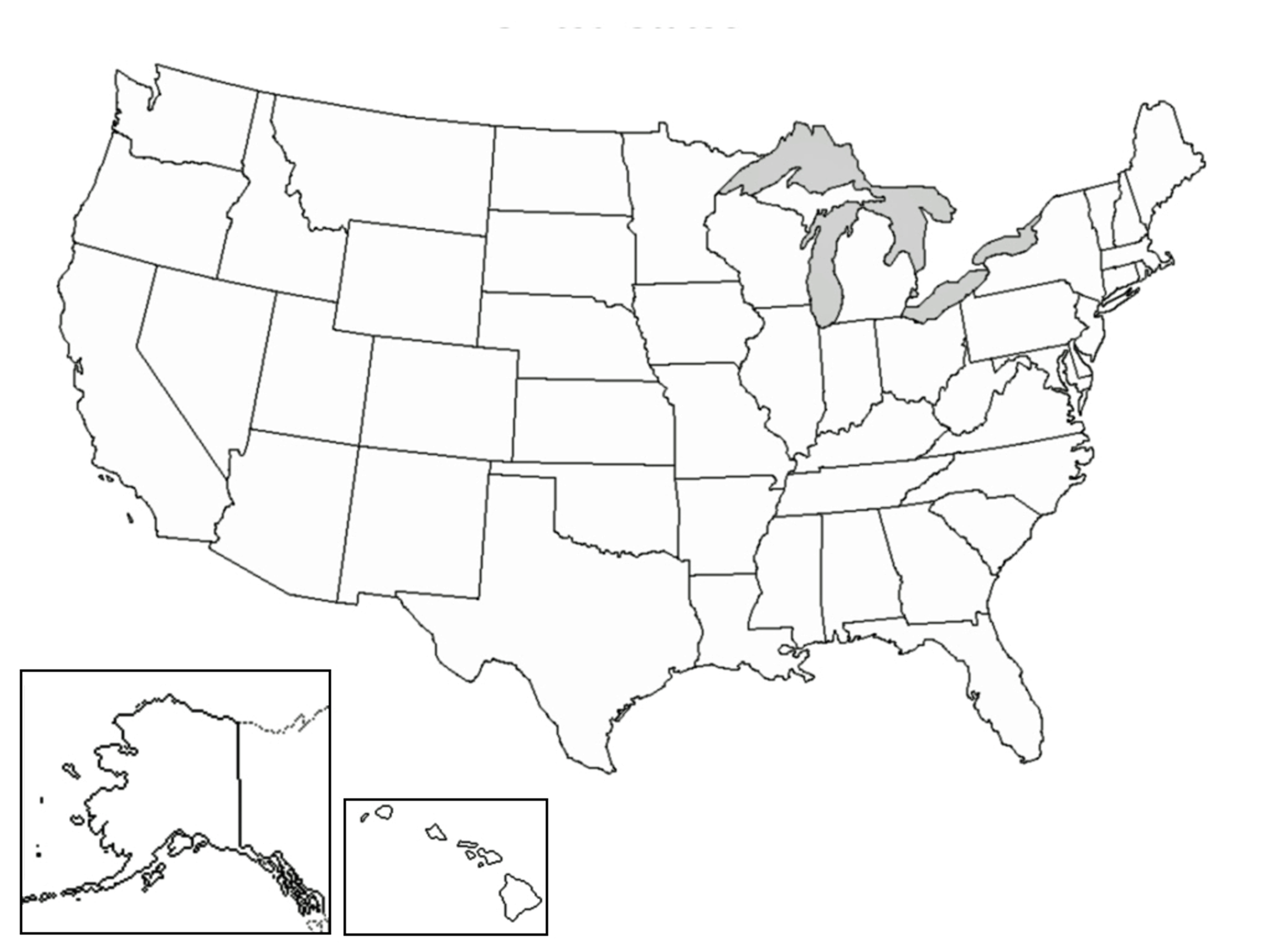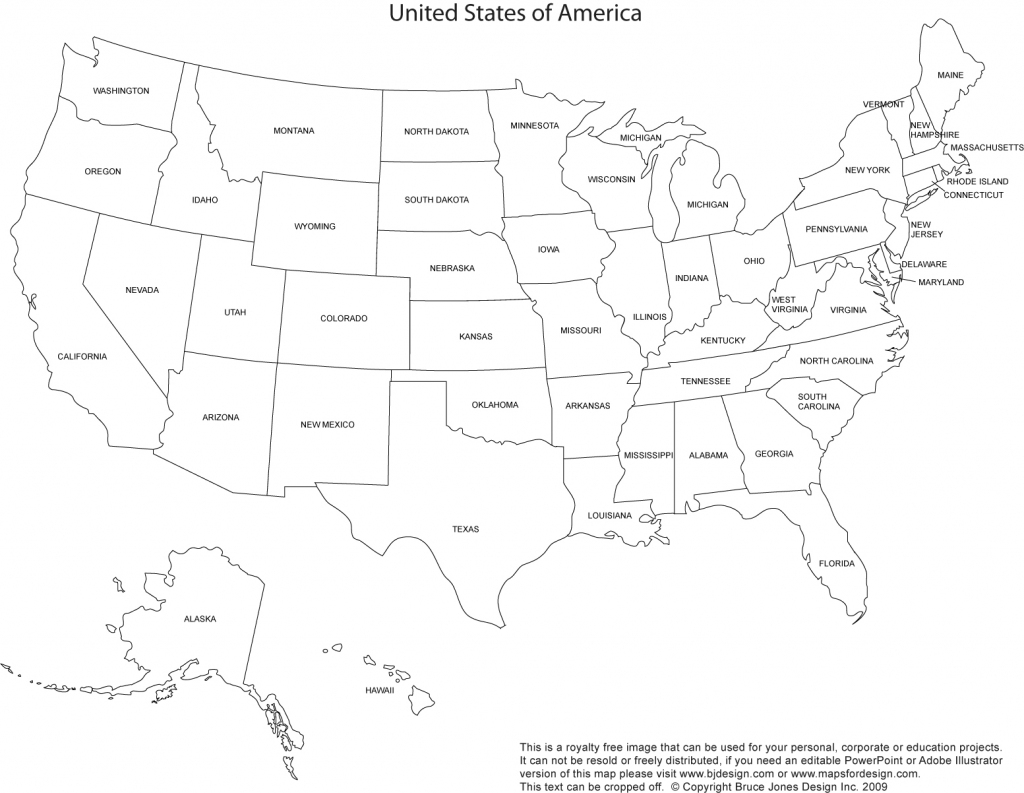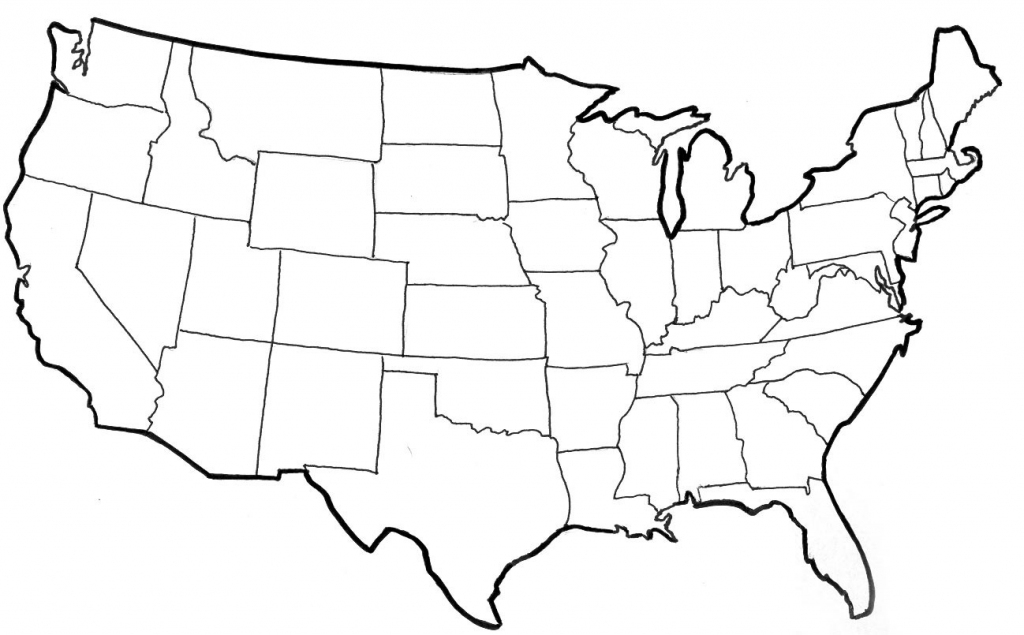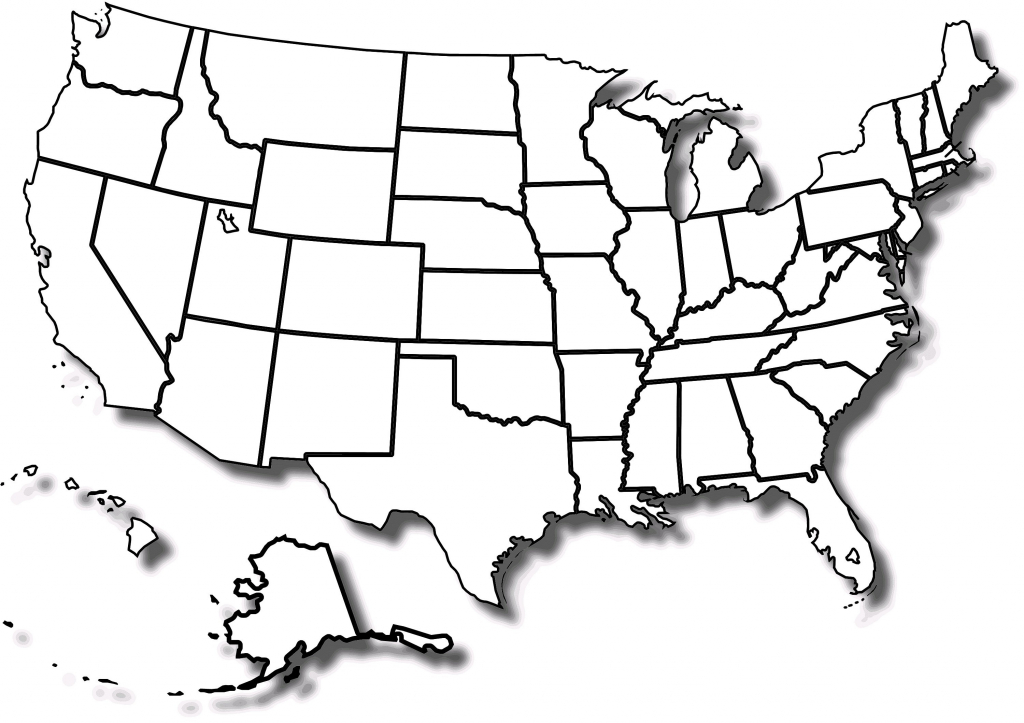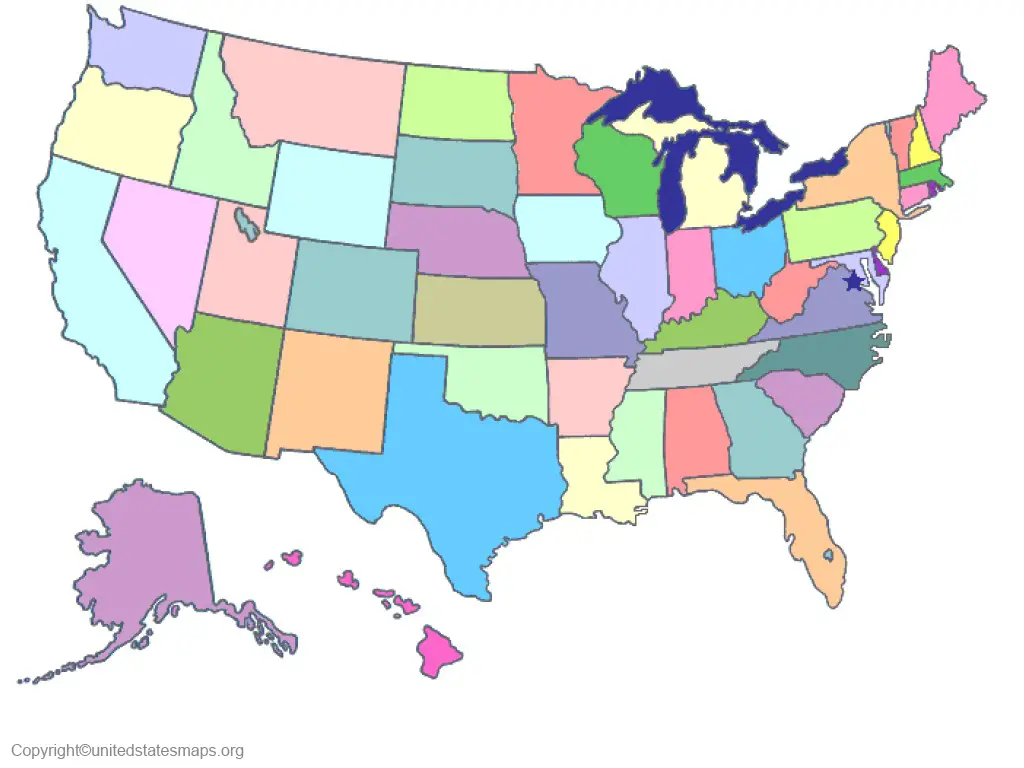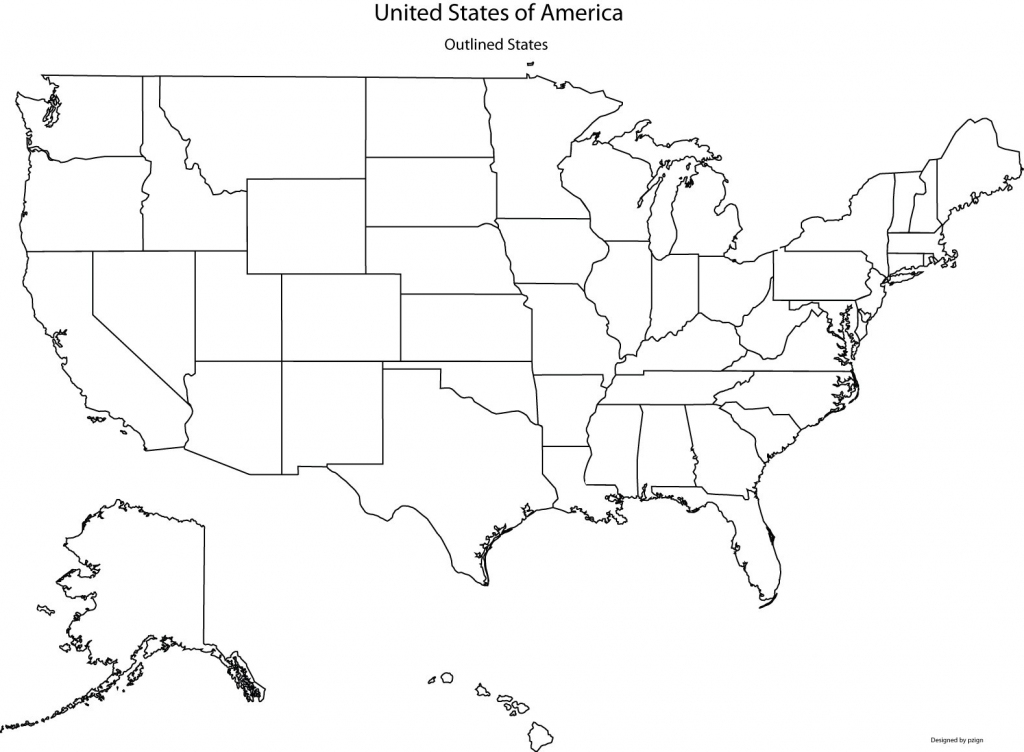
A blank map of the United States, devoid of state names, can seem like a daunting puzzle. The familiar labels, the comforting pronouncements of "Texas" or "California," are gone. What remains is a stark landscape, a jigsaw of interlocking shapes, forcing us to look deeper, to engage with the geography, history, and culture embedded within the very contours of the land. This silent symphony, played out across the unmarked terrain, offers a profound opportunity to understand the nation in a way that rote memorization of state names never could.
At first glance, the challenge is purely spatial. We are presented with a series of interconnected polygons, a geographic Rorschach test. Can we, without the crutch of labels, discern the outlines of the states? For many, the answer is a resounding "maybe, with difficulty." Certain states, their shapes distinctive and iconic, readily come to mind. Florida, the dangling peninsula, is unmistakable. Texas, the behemoth of the Southwest, its panhandle reaching north, is easily identifiable. California, stretching along the Pacific coast, its jagged coastline a defining feature, also stands out.
However, the familiarity quickly fades. The tightly packed states of the Northeast, a jumble of rectangles and irregular shapes, become a blur. The Midwest, with its predominantly straight-lined borders, presents a different kind of challenge, demanding a more nuanced understanding of relative positions and subtle variations in shape. The Mountain West, vast and sparsely populated, offers a unique set of clues, relying heavily on the visual representation of mountain ranges and river systems.
The key to unlocking this nameless map lies in understanding the forces that shaped its formation. State borders, often perceived as arbitrary lines on a map, are rarely arbitrary in reality. They are the product of historical events, political compromises, geographic constraints, and cultural influences.
The Historical Footprint:
Many state borders reflect the evolution of the United States from its colonial origins. The original thirteen colonies, clustered along the Atlantic coast, laid the foundation for many of the eastern states. Their borders often followed natural features like rivers and mountains, or were based on land grants and charters issued by the British Crown.
Consider the states of New England. Their compact size and irregular shapes are a testament to their long history of settlement and political development. Maine, initially part of Massachusetts, eventually separated to become its own state. Vermont, disputed between New York and New Hampshire, carved out its own independent identity. These states, born from conflict and compromise, bear the indelible marks of their historical struggles in their geographic forms.
Further south, the legacy of westward expansion and the Louisiana Purchase is evident. The relatively straight borders of many Midwestern states, like Iowa, Kansas, and Nebraska, reflect the systematic surveying and division of land under the Land Ordinance of 1785. These lines, drawn with the intention of creating a grid-like pattern across the landscape, transformed the West into a patchwork of rectangular states.
The Civil War also left its mark on the map. The border between the Union and the Confederacy, a line of conflict and division, continues to influence the political and cultural landscape of the United States. States like Virginia and West Virginia, the latter breaking away from the former during the war, stand as a reminder of the deep-seated tensions that shaped the nation’s history.
The Geographic Imperative:
While historical events played a significant role in shaping state borders, geography also exerted a powerful influence. Rivers, mountain ranges, and coastlines often served as natural boundaries, defining the limits of settlement and political control.
The Mississippi River, the mighty artery of the United States, forms the western border of several states, including Illinois, Kentucky, Tennessee, and Mississippi. Its course, meandering and ever-changing, has shaped the landscape and influenced the lives of people living along its banks for centuries.
The Appalachian Mountains, stretching from Maine to Georgia, form a natural barrier between the eastern seaboard and the interior of the country. States like Pennsylvania, West Virginia, and Virginia are deeply influenced by the rugged terrain of the Appalachians, their economies and cultures shaped by the challenges and opportunities presented by the mountains.
The Rocky Mountains, towering over the western landscape, define the boundaries of states like Montana, Idaho, and Colorado. Their sheer scale and ruggedness have limited settlement and shaped the development of the region.
The Great Lakes, a vast inland sea, form the northern border of several states, including Minnesota, Wisconsin, Michigan, and New York. These freshwater lakes have played a crucial role in the region’s economy and transportation network.
The Cultural Tapestry:
Beyond history and geography, the map of the United States also reflects the rich tapestry of cultures that have shaped the nation. Different regions have developed distinct identities, shaped by their history, geography, and the people who call them home.
The South, with its legacy of slavery and agriculture, has a distinct cultural identity, marked by its cuisine, music, and traditions. States like Mississippi, Alabama, and Georgia are deeply rooted in Southern culture.
The Southwest, with its blend of Native American, Hispanic, and Anglo-American cultures, is a region of vibrant diversity. States like New Mexico, Arizona, and Texas reflect this cultural fusion.
The Midwest, with its strong agricultural base and its reputation for hard work and traditional values, has a distinct cultural identity. States like Iowa, Kansas, and Nebraska are often seen as representing the heartland of America.
The Northeast, with its concentration of major cities and its history of immigration and innovation, is a region of diverse cultures and perspectives. States like New York, Massachusetts, and Pennsylvania are centers of culture, commerce, and education.
Deciphering the Silent Map:
So, how do we decipher this silent map, this collection of nameless shapes? We begin by focusing on the landmarks, the readily identifiable features that provide anchor points. Florida, Texas, and California are our starting points. From there, we can begin to build a mental framework, using relative positions and spatial relationships to piece together the puzzle.
Consider the state that borders Texas to the east: Louisiana. Its shape, a mix of coastal wetlands and river valleys, is relatively distinct. To the north of Texas lies Oklahoma, a state with a relatively simple, rectangular shape.
Moving eastward, we can focus on the Appalachian Mountains, tracing their path from Maine to Georgia. The states that straddle the Appalachians, like Pennsylvania, West Virginia, and Virginia, are easily identifiable.
In the Midwest, we can use the Great Lakes as a guide, identifying the states that border these vast freshwater bodies. Minnesota, Wisconsin, Michigan, and New York all have distinct relationships with the Great Lakes.
The Mountain West, with its vast expanses of open land, requires a different approach. We can focus on the major mountain ranges and river systems, using these features to identify the states that lie within their boundaries.
Beyond the Names:
Ultimately, the exercise of reading a map of the United States without state names is more than just a geographical challenge. It is an opportunity to engage with the nation on a deeper level, to understand the historical, geographic, and cultural forces that have shaped its landscape. It is a reminder that the names we attach to these shapes are simply labels, convenient shorthand for complex and multifaceted realities.
By stripping away the labels, we are forced to look beyond the surface, to engage with the underlying structure, the silent symphony of shapes and spaces that define the United States. We begin to appreciate the intricate interplay of forces that have shaped the nation’s borders and the diverse cultures that have taken root within them.
This silent map, devoid of names, becomes a powerful tool for understanding the United States, not as a collection of states, but as a complex and interconnected whole. It is a reminder that the true story of the nation lies not in the labels we apply, but in the land itself, in the history etched into its contours, and in the cultures that have shaped its identity. So, embrace the challenge, explore the nameless map, and discover the silent symphony that resonates within its borders.