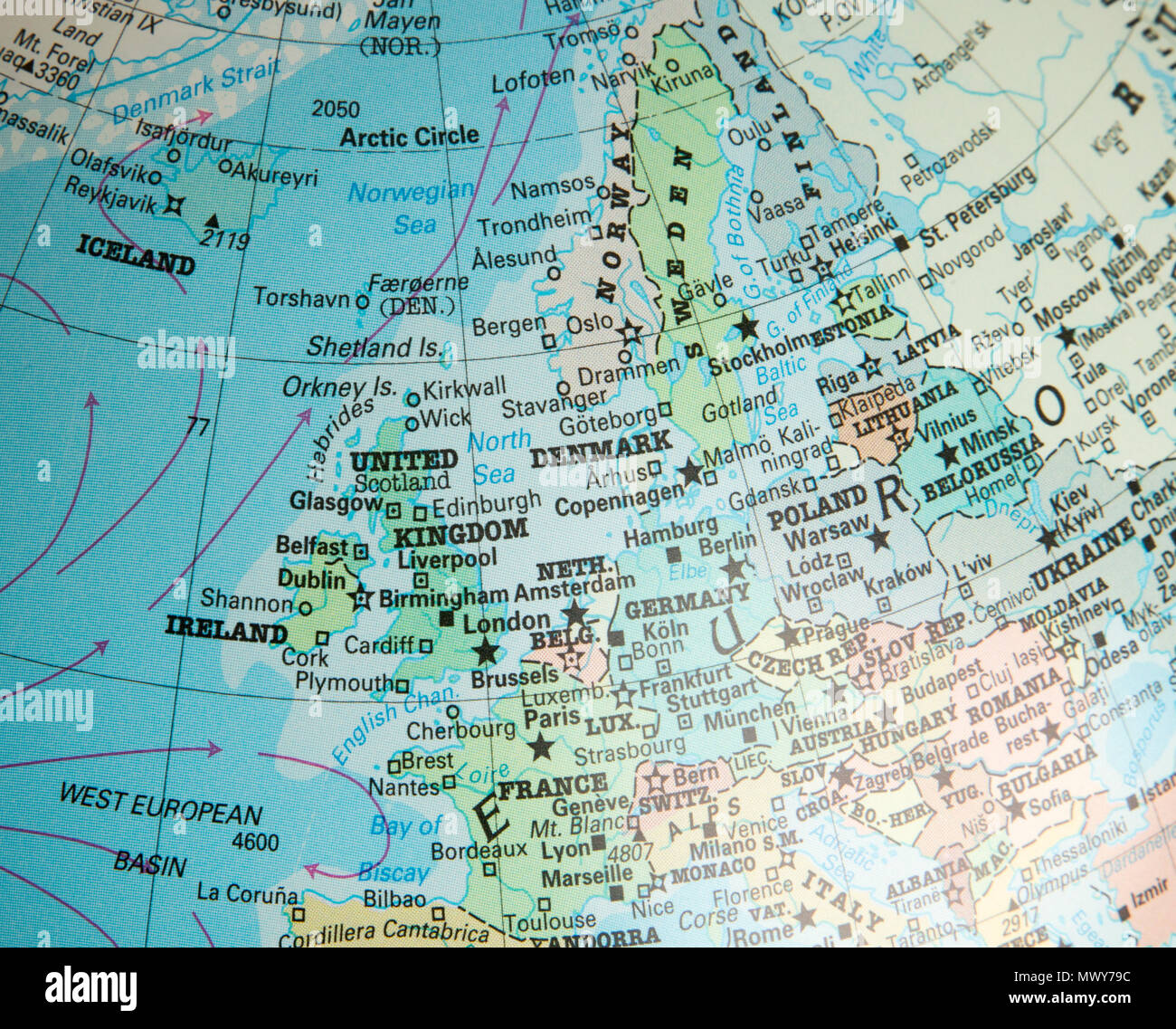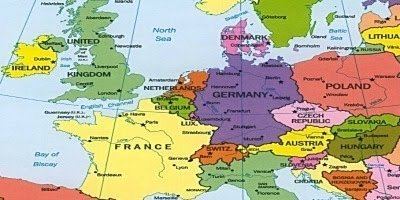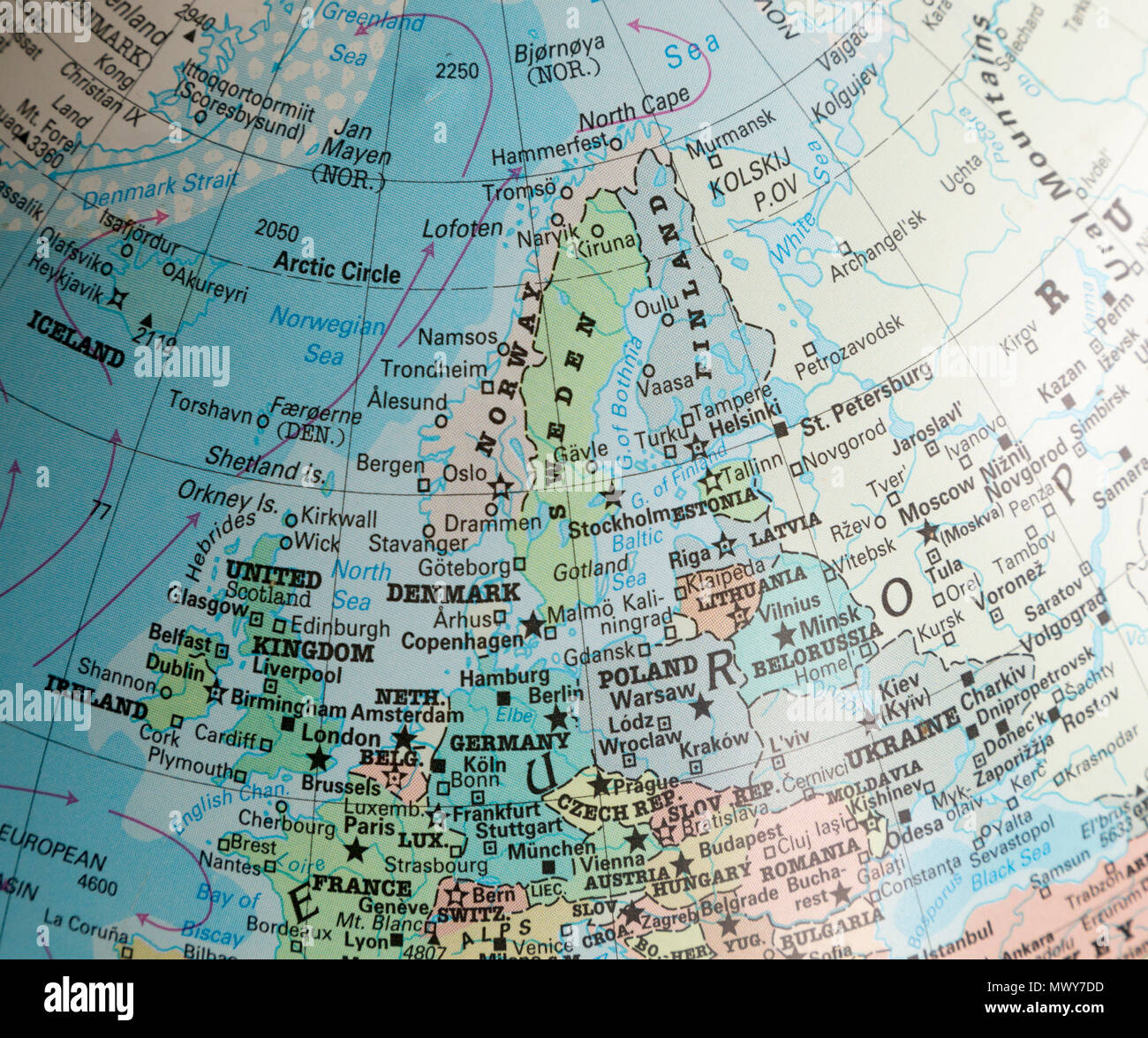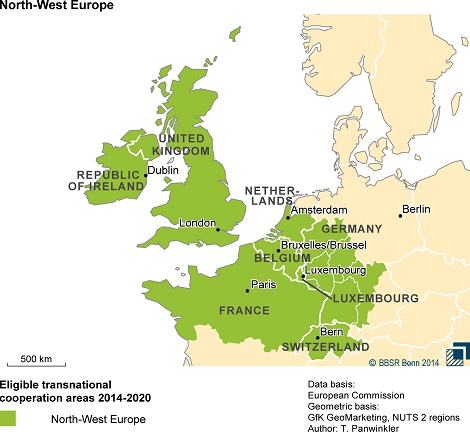
Northwest Europe, a region steeped in history and brimming with cultural diversity, presents a fascinating subject for exploration. Its compact geography, defined by a complex interplay of land and sea, has shaped its political landscape, economic development, and cultural identity for millennia. A detailed map of Northwest Europe is more than just a visual representation; it’s a portal to understanding the forces that have molded this influential corner of the world.
Defining the Boundaries:
Before embarking on our cartographic journey, it’s crucial to define what we mean by "Northwest Europe." While there isn’t a universally agreed-upon definition, the term typically encompasses the following countries:
- United Kingdom: The island nation, encompassing England, Scotland, Wales, and Northern Ireland, dominates the western edge of the region.
- Ireland: Sharing the island of Ireland with Northern Ireland, the Republic of Ireland boasts a rich Celtic heritage and stunning landscapes.
- France: A continental powerhouse, France stretches from the English Channel to the Mediterranean, playing a pivotal role in European history.
- Belgium: Situated between France, Germany, and the Netherlands, Belgium is a crossroads of cultures and a hub for international organizations.
- Netherlands: Characterized by its low-lying land and intricate canal systems, the Netherlands is a nation forged by its relationship with the sea.
- Luxembourg: A small but influential Grand Duchy, Luxembourg is a wealthy financial center nestled between Belgium, France, and Germany.
While some definitions might include countries like Germany, Denmark, and Switzerland, this article will primarily focus on the nations listed above. Understanding these boundaries is the first step in appreciating the geographic and cultural nuances of the region.
A Topographical Tapestry: Mountains, Plains, and Coastlines:
A physical map of Northwest Europe reveals a diverse topography. The landscape is shaped by the remnants of ancient mountain ranges, vast plains, and a coastline intricately carved by the sea.
-
Mountains and Highlands: The Scottish Highlands and the Cambrian Mountains of Wales represent the remnants of ancient mountain ranges, offering breathtaking scenery and challenging terrain. In France, the Massif Central, a highland region of volcanic origin, adds to the topographic diversity. These mountainous areas have historically provided natural barriers, influencing settlement patterns and political boundaries.
-
The Great European Plain: Stretching across much of France, Belgium, and the Netherlands, the Great European Plain is a vast expanse of relatively flat land. This feature has facilitated agriculture and transportation, contributing to the region’s economic development and connectivity. The fertile soils of this plain have supported thriving agricultural communities for centuries.
-
Coastal Complexity: The coastline of Northwest Europe is a defining feature. The jagged coasts of Ireland and Scotland, sculpted by the Atlantic Ocean, contrast sharply with the low-lying, reclaimed lands of the Netherlands. The English Channel, separating the United Kingdom from mainland Europe, has played a crucial role in both defense and trade. The North Sea, bordering the eastern coast of the UK and the western coasts of the Netherlands and Belgium, is a vital shipping lane and a source of natural resources.
Rivers: Lifelines of Commerce and Culture:
Major rivers crisscross Northwest Europe, serving as vital arteries for commerce, transportation, and cultural exchange.
-
The Thames: Flowing through London, the Thames has been a lifeline for England for centuries. It has facilitated trade, provided water for drinking and irrigation, and served as a defensive barrier.
-
The Seine: Winding its way through Paris, the Seine is synonymous with French culture and history. It has inspired artists, writers, and musicians, and its banks are lined with iconic landmarks.
-
The Rhine: While not exclusively within Northwest Europe, the Rhine plays a significant role in the region’s economy. It flows through the Netherlands and serves as a major shipping route, connecting the North Sea with the industrial heartland of Europe.
-
The Scheldt: Flowing through Belgium and the Netherlands, the Scheldt has been a historically important waterway, particularly for the city of Antwerp, one of Europe’s major ports.
Climate and its Impact:
Northwest Europe enjoys a temperate maritime climate, influenced by the North Atlantic Current, a warm ocean current that moderates temperatures and brings abundant rainfall.
-
Mild Temperatures: The region experiences relatively mild winters and cool summers compared to other areas at similar latitudes. This is due to the moderating influence of the Atlantic Ocean.
-
Abundant Rainfall: Rainfall is plentiful throughout the year, supporting lush vegetation and contributing to the region’s agricultural productivity.
-
Variations: There are, of course, regional variations. The Scottish Highlands experience colder winters and higher rainfall than the lowlands of the Netherlands. The south of France enjoys warmer, drier summers than the north.
The climate has significantly impacted agriculture, with crops like wheat, barley, potatoes, and various fruits and vegetables thriving in the region. It has also shaped building styles, with sturdy stone structures designed to withstand the elements.
Historical Significance: A Crossroads of Empires and Ideas:
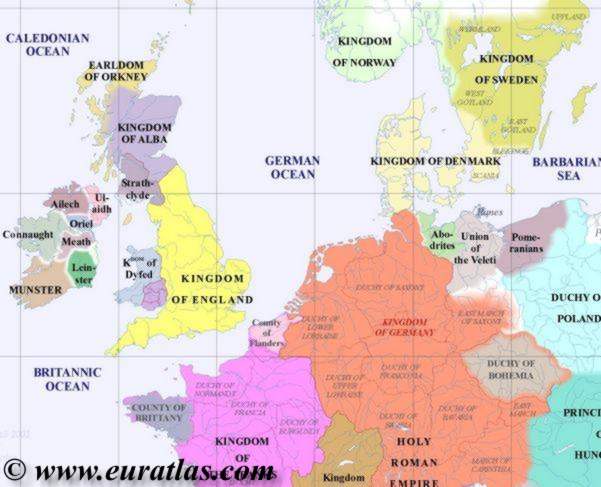
A historical map of Northwest Europe reveals a region shaped by centuries of conflict, conquest, and cultural exchange.
-
Roman Influence: The Roman Empire left an indelible mark on the region, establishing cities, roads, and infrastructure that influenced subsequent development. Roman influence is particularly evident in France and the United Kingdom.
-
Medieval Kingdoms: The Middle Ages saw the rise of powerful kingdoms and empires, including England, France, and various smaller states. These kingdoms often clashed, leading to centuries of warfare and shifting political boundaries.
-
The Age of Exploration: Northwest Europe played a central role in the Age of Exploration, with nations like England, France, and the Netherlands establishing vast colonial empires across the globe. This era brought wealth, power, and cultural influence to the region.
-
Industrial Revolution: The Industrial Revolution began in Britain and spread rapidly across Northwest Europe, transforming the region into a global economic powerhouse. This era saw the rise of factories, cities, and a new industrial working class.
-
World Wars: Northwest Europe was the epicenter of both World Wars, suffering immense destruction and loss of life. These conflicts reshaped the political landscape and led to the formation of international organizations like the European Union.
Cultural Mosaic: Languages, Traditions, and Identities:
Northwest Europe is a melting pot of cultures, languages, and traditions.
-
Languages: The region is home to a variety of languages, including English, French, Dutch, and Irish (Gaelic). These languages reflect the diverse historical influences that have shaped the region.
-
Religions: Christianity is the dominant religion, with a mix of Protestant and Catholic traditions. However, the region is also home to growing Muslim and Jewish communities, as well as a significant number of people who identify as non-religious.
-
Cuisine: Each country boasts its own unique culinary traditions. From French cuisine to British pub fare to Belgian chocolates, the region offers a diverse range of gastronomic experiences.
-
Art and Literature: Northwest Europe has produced some of the world’s greatest artists, writers, and musicians. From Shakespeare to Monet to the Beatles, the region’s cultural contributions are immense.
Modern Challenges and Opportunities:
Today, Northwest Europe faces a range of challenges and opportunities.
-
Economic Integration: The European Union has fostered economic integration, leading to increased trade and cooperation among member states. However, Brexit has created new challenges for the UK and the EU.
-
Immigration: Immigration has become a major political issue, with debates over integration, border control, and cultural identity.
-
Climate Change: Climate change poses a significant threat to the region, with rising sea levels, extreme weather events, and changes in agricultural patterns.
-
Sustainable Development: Promoting sustainable development is a key priority, with efforts to reduce carbon emissions, protect biodiversity, and promote renewable energy.
Conclusion: A Region of Enduring Significance:
A map of Northwest Europe is a window into a region of enduring significance. Its geography, history, and culture have shaped the modern world in profound ways. From its complex coastlines and fertile plains to its bustling cities and vibrant cultural traditions, Northwest Europe offers a rich tapestry of human experience. By understanding the region’s past and present, we can better appreciate its role in shaping the future. The next time you look at a map of Northwest Europe, remember that it represents more than just lines and colors; it embodies a story of resilience, innovation, and cultural dynamism that continues to unfold.