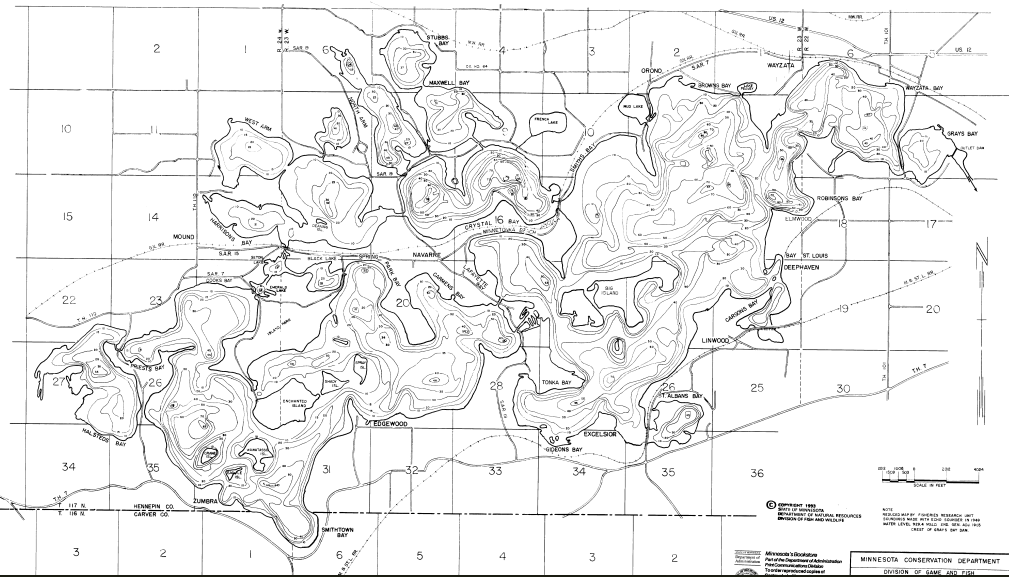
Water depth maps, also known as bathymetric charts, are visual representations of the underwater terrain. Just as topographic maps depict the land’s elevation, bathymetric charts reveal the contours and depths of the seabed, lakes, rivers, and other bodies of water. These maps are far more than just pretty pictures; they are invaluable tools for a wide range of applications, from navigation and resource management to scientific research and environmental protection. Understanding the creation, interpretation, and application of water depth maps is crucial for anyone involved with the marine or aquatic environment.
The Art and Science of Creating Water Depth Maps
Creating accurate and reliable water depth maps is a complex process involving a combination of technology, expertise, and meticulous data collection. The methods used to acquire this data have evolved significantly over time, moving from rudimentary techniques to sophisticated remote sensing systems.
-
Traditional Sounding Techniques: Historically, water depth was measured using lead lines – weighted ropes lowered from a vessel until they touched the bottom. While simple, this method was time-consuming and limited to relatively shallow waters. Single-beam echo sounders, which emit a sound pulse and measure the time it takes for the echo to return, represented a significant advancement. These devices provided continuous depth readings along a vessel’s track, but they still lacked the spatial resolution needed for detailed mapping.
-
Multibeam Echo Sounders: Revolutionizing Bathymetry: The advent of multibeam echo sounders (MBES) has revolutionized bathymetric mapping. Instead of a single beam, MBES systems emit multiple beams simultaneously, creating a swath of depth measurements along the seafloor. This allows for significantly faster and more comprehensive data acquisition, providing detailed 3D representations of the underwater terrain. MBES systems are typically mounted on survey vessels and can be used in a wide range of water depths, from shallow coastal areas to the deep ocean.
-
Lidar: Mapping from Above: Light Detection and Ranging (Lidar) is a remote sensing technology that uses laser pulses to measure distances. In bathymetry, airborne Lidar systems are used to map shallow coastal waters and inland water bodies. The laser pulses are emitted from an aircraft, and the time it takes for the pulses to reflect off the water surface and the seabed is measured. By analyzing these reflections, the depth of the water can be determined. Lidar is particularly useful in areas where it is difficult or dangerous to deploy survey vessels, such as shallow reefs and turbulent rivers.
-
Satellite-Derived Bathymetry (SDB): A Broad Perspective: SDB uses satellite imagery to estimate water depths. This technique relies on the fact that different wavelengths of light penetrate water to different depths. By analyzing the reflectance of various wavelengths, particularly blue and green light, it is possible to estimate the depth of the water. SDB is a cost-effective method for mapping large areas of shallow coastal waters, but it is limited by factors such as water clarity and atmospheric conditions.
-
Data Processing and Quality Control: Once the raw data has been acquired, it must be processed and corrected to remove errors and artifacts. This process involves accounting for factors such as vessel motion, tides, sound velocity variations, and atmospheric conditions. Rigorous quality control procedures are essential to ensure the accuracy and reliability of the final water depth map.
Interpreting the Language of Bathymetric Charts
Understanding the symbology and conventions used in water depth maps is essential for proper interpretation. These maps use a variety of visual cues to represent the underwater terrain, including:
-
Contour Lines: Contour lines connect points of equal depth. The closer the contour lines are together, the steeper the slope of the seabed. Contour intervals, the difference in depth between adjacent contour lines, are typically indicated on the map.
-
Color Shading: Color shading is often used to represent different depth ranges, with lighter colors typically indicating shallower waters and darker colors indicating deeper waters. The color scale used on the map should be clearly indicated.
-
Soundings: Individual depth measurements, known as soundings, are often displayed on the map. These soundings provide precise depth information at specific locations.
-
Symbols and Abbreviations: Water depth maps use a variety of symbols and abbreviations to represent features such as rocks, wrecks, buoys, and navigation aids. A legend is typically provided to explain the meaning of these symbols and abbreviations.
-
Tidal Datum: Understanding the tidal datum used for the map is crucial. The tidal datum is a reference level to which all depths are referenced. Common tidal datums include Mean Sea Level (MSL), Mean Lower Low Water (MLLW), and Lowest Astronomical Tide (LAT).
Applications Across Disciplines: The Versatile Utility of Water Depth Maps
Water depth maps are essential tools for a wide range of applications, impacting various sectors and disciplines:
-
Navigation and Maritime Safety: Accurate bathymetric charts are crucial for safe navigation. They allow mariners to avoid underwater hazards, plan routes efficiently, and ensure the safety of vessels and crew. Updated charts are vital for navigating complex waterways and ports.
-
Coastal Zone Management: Water depth maps are used to assess coastal erosion, monitor sediment transport, and plan coastal development projects. They provide valuable information for understanding the dynamics of the coastal environment and making informed management decisions.
-
Resource Management: Bathymetric charts are used to identify potential fishing grounds, assess the impact of fishing activities, and manage marine protected areas. They also play a role in the exploration and development of offshore oil and gas resources.
-
Scientific Research: Water depth maps are essential for studying marine ecosystems, mapping seafloor habitats, and understanding geological processes. They are used to investigate underwater volcanoes, hydrothermal vents, and other geological features.
-
Environmental Monitoring: Bathymetric charts are used to monitor the impact of pollution, assess the effects of climate change on sea levels, and track the movement of invasive species. They provide valuable data for understanding and mitigating environmental threats.
-
Infrastructure Development: Accurate bathymetric data is crucial for the design and construction of underwater infrastructure, such as pipelines, cables, and offshore platforms. It ensures the stability and safety of these structures.
-
Recreational Activities: Water depth maps are used by recreational boaters, divers, and fishermen to identify safe and productive areas. They provide valuable information for planning activities and ensuring safety on the water.
-
Disaster Management: Bathymetric data can be crucial in the aftermath of natural disasters, such as tsunamis and hurricanes. It can be used to assess damage, plan rescue operations, and rebuild infrastructure.
The Future of Bathymetry: Emerging Technologies and Challenges
The field of bathymetry is constantly evolving, driven by advancements in technology and the increasing demand for accurate and comprehensive underwater data. Some of the key trends shaping the future of bathymetry include:
-
Autonomous Underwater Vehicles (AUVs): AUVs are increasingly being used for bathymetric surveys, particularly in remote or hazardous areas. These vehicles can operate independently for extended periods, collecting high-resolution data in a cost-effective manner.
-
Unmanned Surface Vessels (USVs): USVs are another emerging technology for bathymetric surveys. These vessels can be remotely controlled or programmed to follow pre-defined survey lines, providing a safe and efficient way to collect data in shallow or difficult-to-access areas.
-
Artificial Intelligence (AI) and Machine Learning (ML): AI and ML algorithms are being used to automate data processing, improve data quality, and extract valuable information from bathymetric datasets. These technologies can help to reduce the time and cost of bathymetric surveys.
-
Cloud Computing and Data Sharing: Cloud computing platforms are facilitating the storage, processing, and sharing of bathymetric data. This allows for easier access to data and promotes collaboration among researchers and stakeholders.
Despite these advancements, several challenges remain in the field of bathymetry:
-
Cost: Acquiring and processing bathymetric data can be expensive, particularly for large areas or deep waters.
-
Data Quality: Ensuring the accuracy and reliability of bathymetric data is crucial, but it can be challenging due to factors such as water clarity, atmospheric conditions, and instrument limitations.
-
Data Availability: Bathymetric data is not always readily available, particularly for certain regions or depths.
-
Data Integration: Integrating bathymetric data with other types of data, such as geological and biological data, can be challenging due to differences in data formats and resolutions.
Conclusion: Mapping the Unknown for a Sustainable Future
Water depth maps are essential tools for understanding and managing the aquatic environment. From ensuring safe navigation to protecting marine ecosystems, these maps play a vital role in a wide range of applications. As technology continues to advance, the accuracy, efficiency, and accessibility of bathymetric surveys will continue to improve, leading to a better understanding of the underwater world and a more sustainable future for our planet. Investing in bathymetric research and mapping efforts is crucial for protecting our marine resources and ensuring the safety and prosperity of coastal communities. The deeper we look, the better we understand, and the better equipped we are to navigate the challenges ahead.