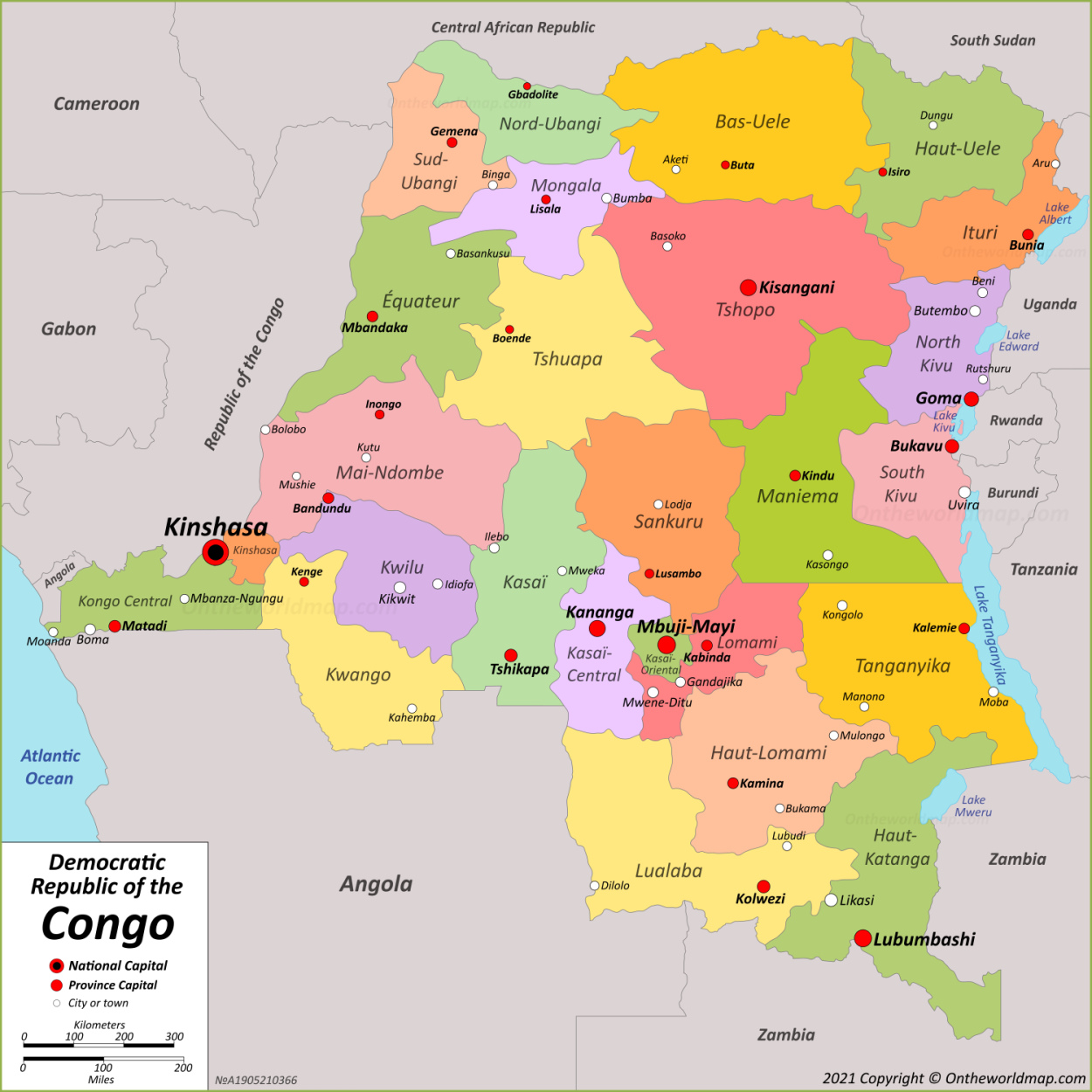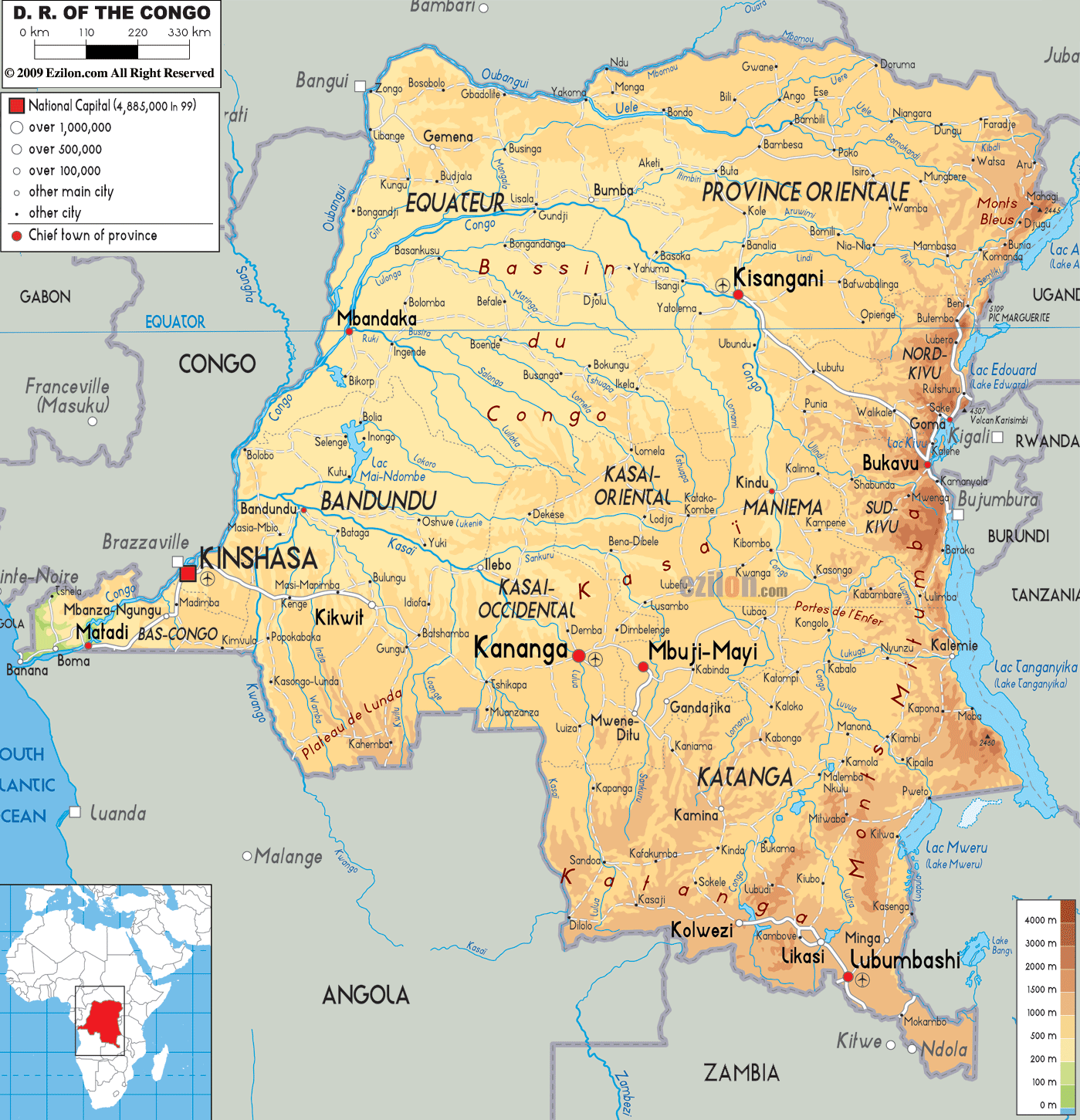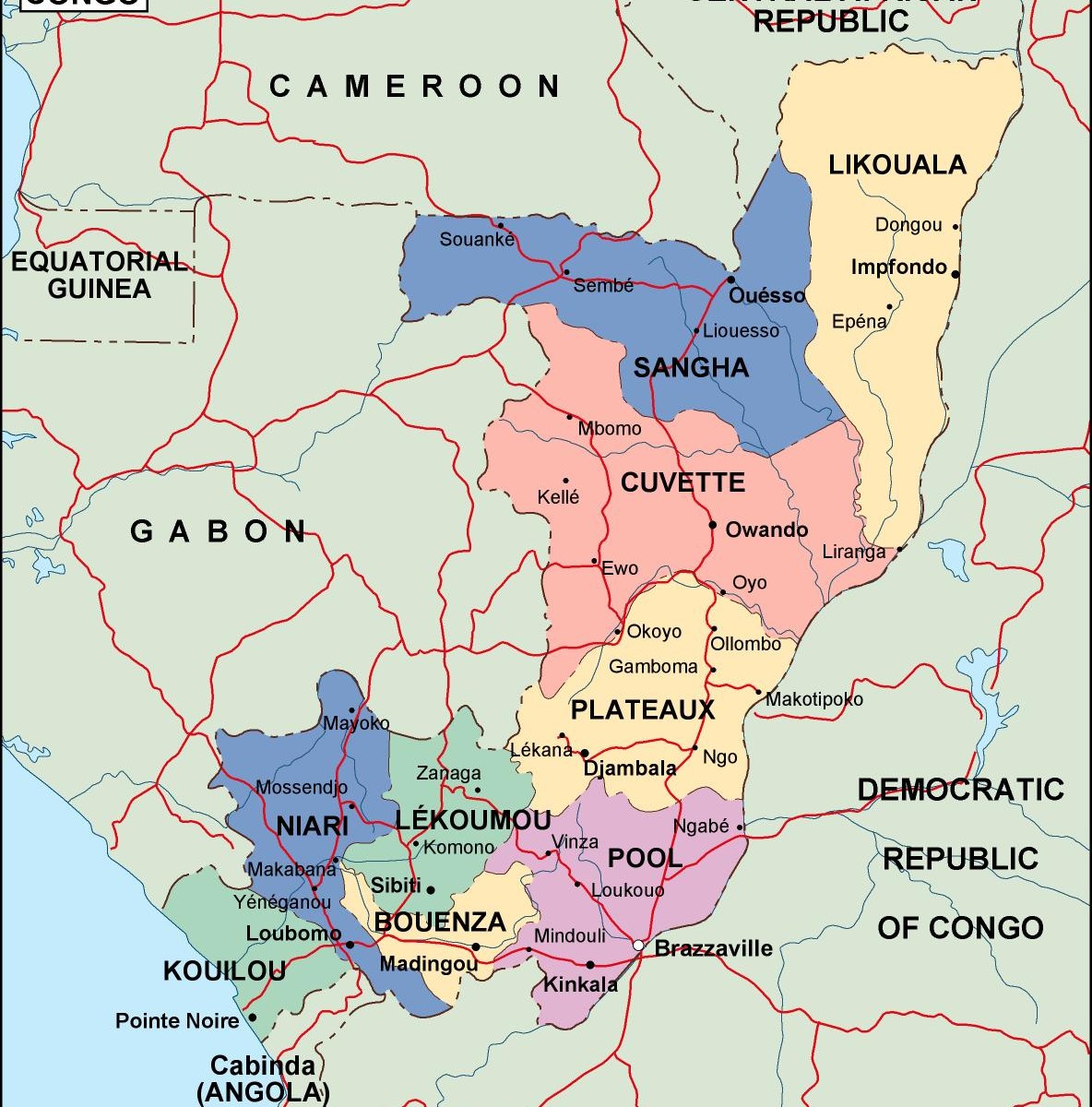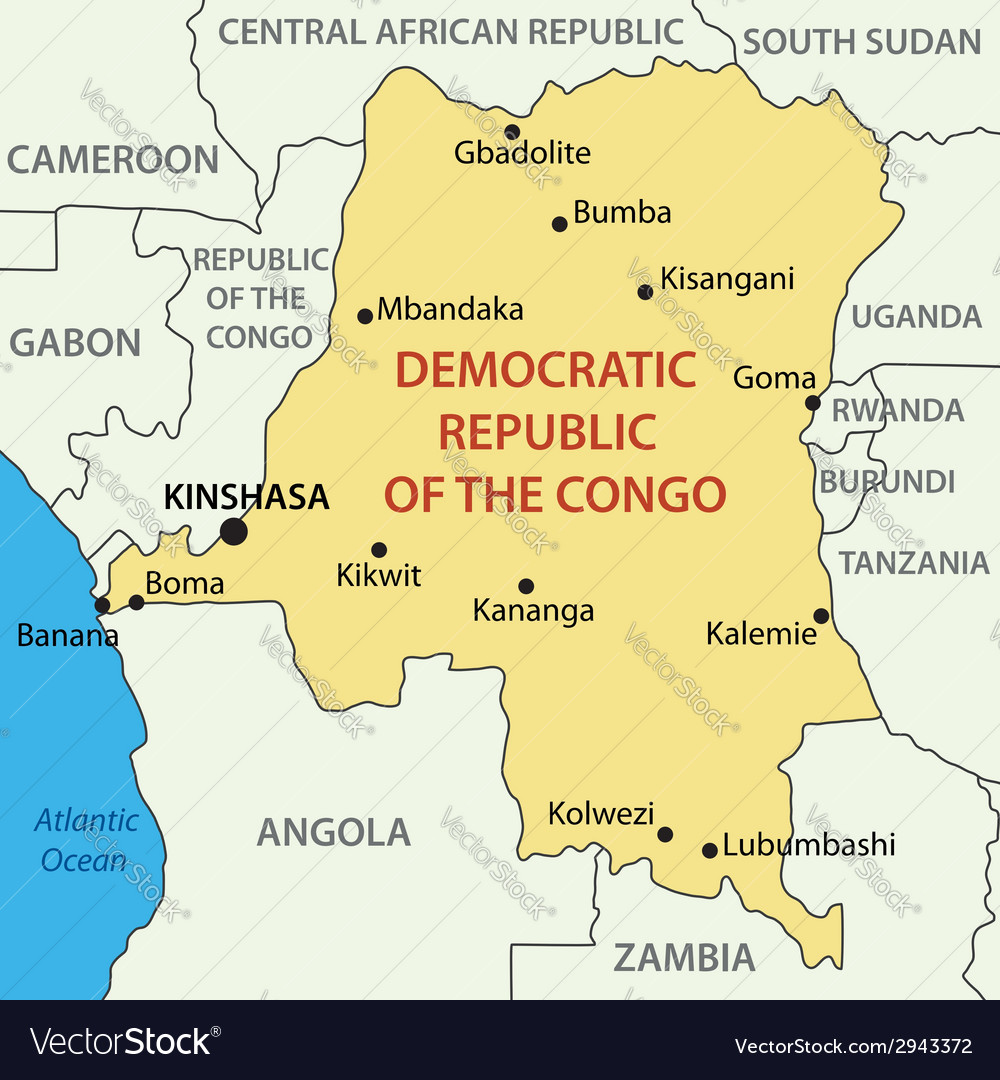
The Democratic Republic of the Congo (DRC), often simply referred to as Congo, is a land of superlatives. It is the second-largest country in Africa, boasting vast natural resources, a complex history, and a population as diverse as its landscapes. Understanding the Congo requires more than just knowing its name; it demands a close examination of its geography, a geography best visualized through a map. This article delves into the intricacies of the Congo map, exploring its physical features, political boundaries, and the profound influence these elements have exerted on the country’s past, present, and future.
A Land of Contrasts: Physical Geography on the Congo Map
The Congo map immediately reveals a nation shaped by dramatic physical geography. Dominating the central region is the Congo Basin, a sprawling lowland encompassing approximately 40% of the country’s total area. This basin is the heart of the Congo rainforest, the second-largest tropical rainforest in the world after the Amazon. The map vividly illustrates the dense, interconnected network of rivers and waterways that crisscross this area, feeding the mighty Congo River, formerly known as the Zaire River.
The Congo River, the second longest river in Africa after the Nile, is the lifeblood of the nation. Tracing its course on the map reveals a journey that begins in the highlands of northeastern Zambia, flows north through the DRC, then curves westward and southwestward before emptying into the Atlantic Ocean. The river and its tributaries serve as crucial transportation arteries, connecting remote communities and facilitating trade, albeit often with significant logistical challenges. The Inga Dams on the lower Congo River represent a significant source of hydroelectric power, holding immense potential for the country’s development, yet also facing challenges related to infrastructure and sustainability.
Moving away from the central basin, the Congo map showcases diverse topographical features. To the north and south, the landscape rises gradually, forming savannas and plateaus. These regions are characterized by grasslands, woodlands, and scattered forests, providing habitats for a variety of wildlife and supporting agricultural activities.
In the east, the map displays a dramatic shift in elevation. The Ruwenzori Mountains, also known as the "Mountains of the Moon," form a natural border with Uganda. These majestic peaks, permanently capped with snow and glaciers, stand in stark contrast to the humid lowlands of the Congo Basin. Further south, the Mitumba Mountains stretch along the eastern border, separating the DRC from Tanzania, Burundi, and Rwanda. This mountainous region is rich in mineral resources, but also plagued by conflict and instability.
The map also reveals the presence of several significant lakes along the eastern border, including Lake Tanganyika and Lake Albert. These lakes serve as vital sources of freshwater, support fishing industries, and provide transportation routes. They also represent shared resources, necessitating cooperation and management between the DRC and its neighbors.
Political Boundaries: A Legacy of Colonialism and Conflict
The Congo map is not just a representation of physical features; it also delineates political boundaries, a legacy of colonialism that continues to shape the country’s identity and challenges. The current borders were largely defined during the Scramble for Africa in the late 19th century, when European powers carved up the continent with little regard for existing ethnic or cultural boundaries.
Initially, the Congo was the personal property of King Leopold II of Belgium, known as the Congo Free State. The map of this period reveals the vast territory under Leopold’s control, an area exploited for its natural resources, particularly ivory and rubber, through brutal and inhumane practices. The atrocities committed during this era left a lasting scar on the Congolese people and continue to influence the country’s socio-political landscape.
In 1908, under pressure from international criticism, the Congo Free State was annexed by Belgium and became known as the Belgian Congo. While some improvements were made in areas such as infrastructure and education, the colonial administration remained deeply paternalistic and discriminatory. The map of the Belgian Congo reflects a hierarchical system, with European settlers holding positions of power and Congolese citizens largely excluded from decision-making processes.
The DRC gained independence in 1960, but the transition was far from smooth. The map of the newly independent nation soon reflected the fragmentation and instability that followed. The country plunged into a period of civil war and political turmoil, known as the Congo Crisis, which saw the emergence of rival factions, secessionist movements, and foreign intervention.
Even after the Congo Crisis subsided, the country continued to face challenges related to governance, corruption, and ethnic tensions. The map of the DRC has been marked by numerous internal conflicts, particularly in the eastern regions, where the presence of valuable mineral resources has fueled competition and violence. The ongoing presence of armed groups and the displacement of millions of people are stark reminders of the deep-seated challenges facing the DRC.
The Influence of Geography on Development and Conflict
The Congo map reveals how geography has played a critical role in shaping the country’s development and contributing to its conflicts.
- Natural Resources: The abundance of natural resources, including diamonds, gold, copper, cobalt, and timber, is evident when considering the Congo map. While these resources have the potential to drive economic growth, they have also been a source of conflict, corruption, and exploitation. The "resource curse" has plagued the DRC for decades, with armed groups and corrupt officials vying for control of these valuable assets.
- Transportation and Infrastructure: The vastness of the Congo Basin and the limited infrastructure pose significant challenges to transportation and communication. The map highlights the reliance on the Congo River and its tributaries for transportation, but also the difficulties of navigating these waterways due to rapids, waterfalls, and seasonal variations in water levels. The lack of paved roads and railways further hinders economic development and limits access to remote communities.
- Ethnic Diversity: The Congo map reflects the country’s immense ethnic diversity, with over 200 different ethnic groups speaking a variety of languages. While this diversity enriches Congolese culture, it has also been a source of tension and conflict, particularly in areas where ethnic groups compete for resources or political power.
- Border Disputes: The artificial nature of the DRC’s borders, as defined by colonial powers, has led to border disputes with neighboring countries. The map reveals the complex relationships between the DRC and its neighbors, and the ongoing challenges of managing shared resources and resolving territorial claims.
- Accessibility and Governance: The sheer size of the DRC and the difficulty of accessing remote areas have made it challenging for the government to effectively govern the entire country. The map highlights the vast distances between the capital, Kinshasa, and the eastern regions, where many of the conflicts are concentrated.
Looking Ahead: Mapping a Path to a Brighter Future
The Congo map is a powerful tool for understanding the complexities of this vast and fascinating nation. By examining its physical features, political boundaries, and the interplay between geography and human activity, we can gain a deeper appreciation for the challenges and opportunities facing the DRC.
Moving forward, it is crucial to address the root causes of conflict, promote good governance, and invest in infrastructure development. The map can serve as a guide for planning sustainable development projects, prioritizing infrastructure investments, and addressing the needs of marginalized communities.
Furthermore, promoting regional cooperation and strengthening ties with neighboring countries is essential for resolving border disputes, managing shared resources, and fostering peace and stability. The map can facilitate dialogue and collaboration by providing a visual representation of the interconnectedness of the DRC and its neighbors.
Ultimately, the future of the DRC depends on the ability of its people to overcome the legacies of colonialism, conflict, and exploitation, and to harness the country’s vast potential for the benefit of all its citizens. By understanding the complexities revealed by the Congo map, we can contribute to a more informed and nuanced understanding of this critical African nation and support its journey towards a more peaceful and prosperous future. The map, therefore, is not just a representation of land; it is a roadmap for progress, a blueprint for a better Congo.