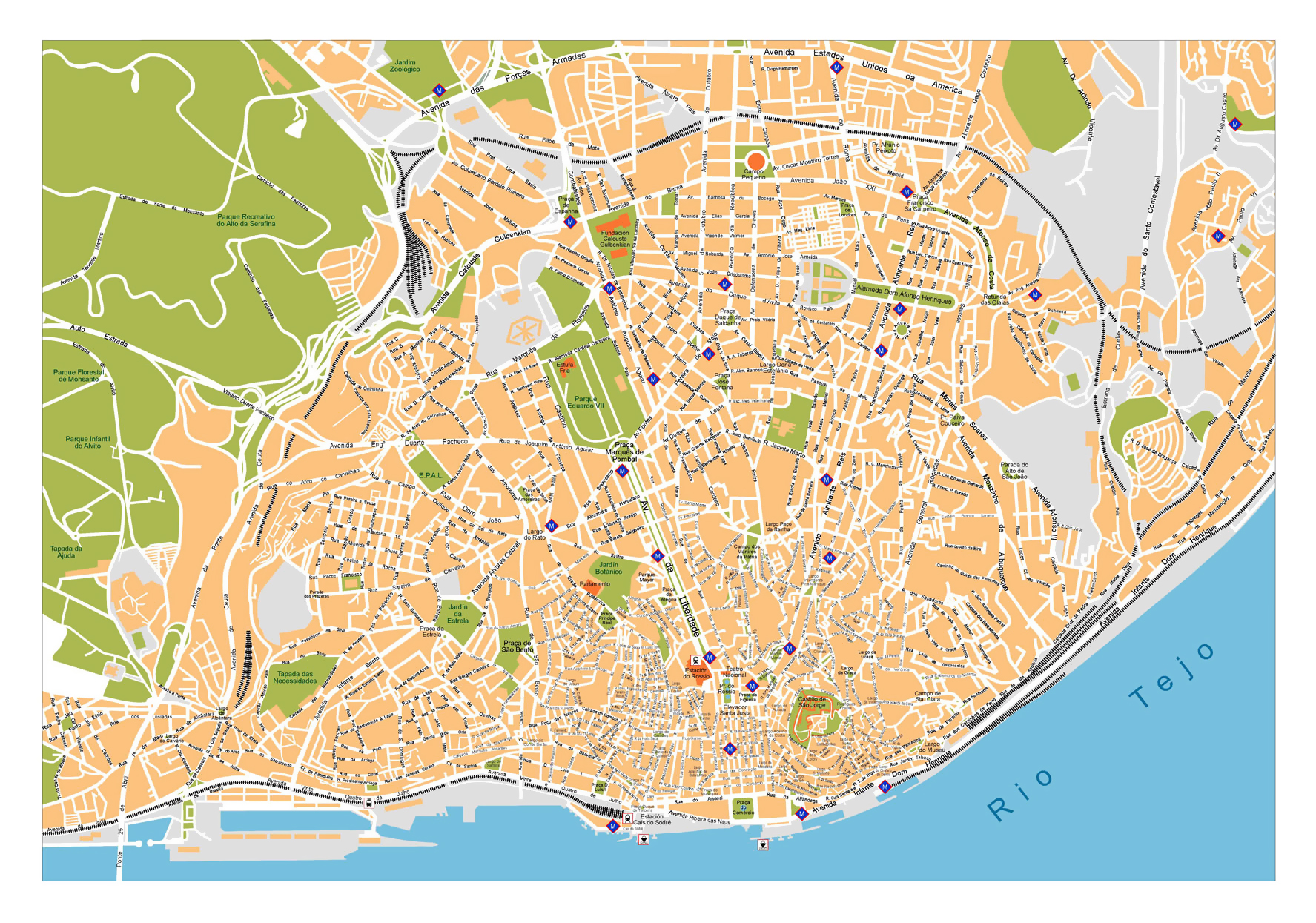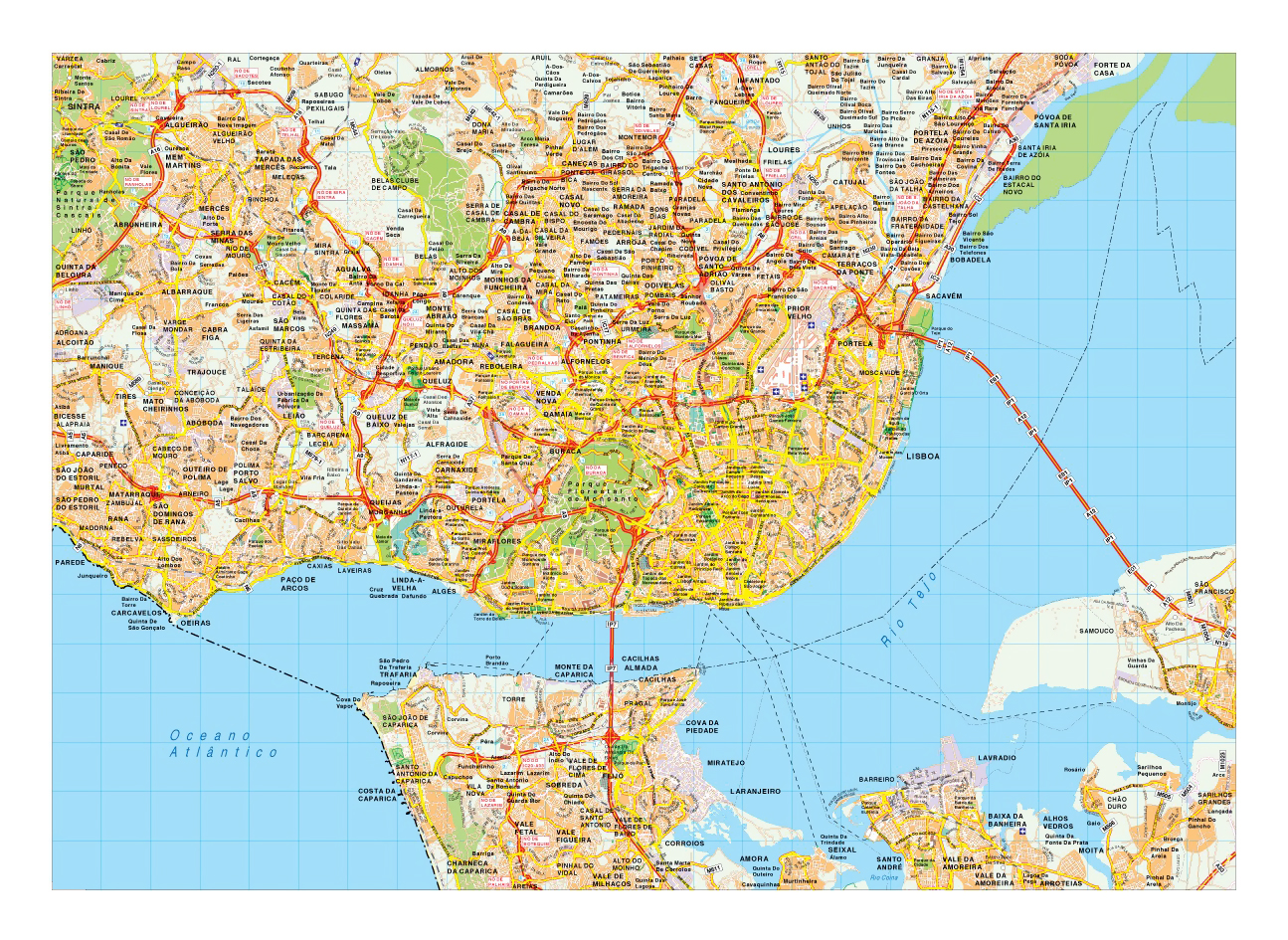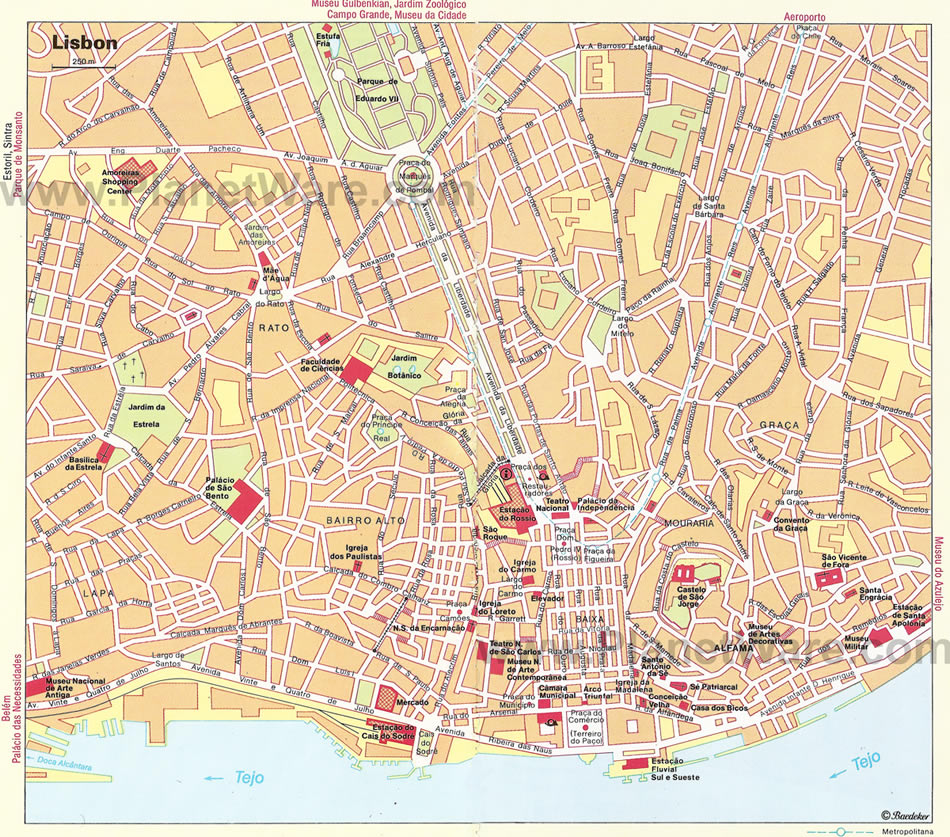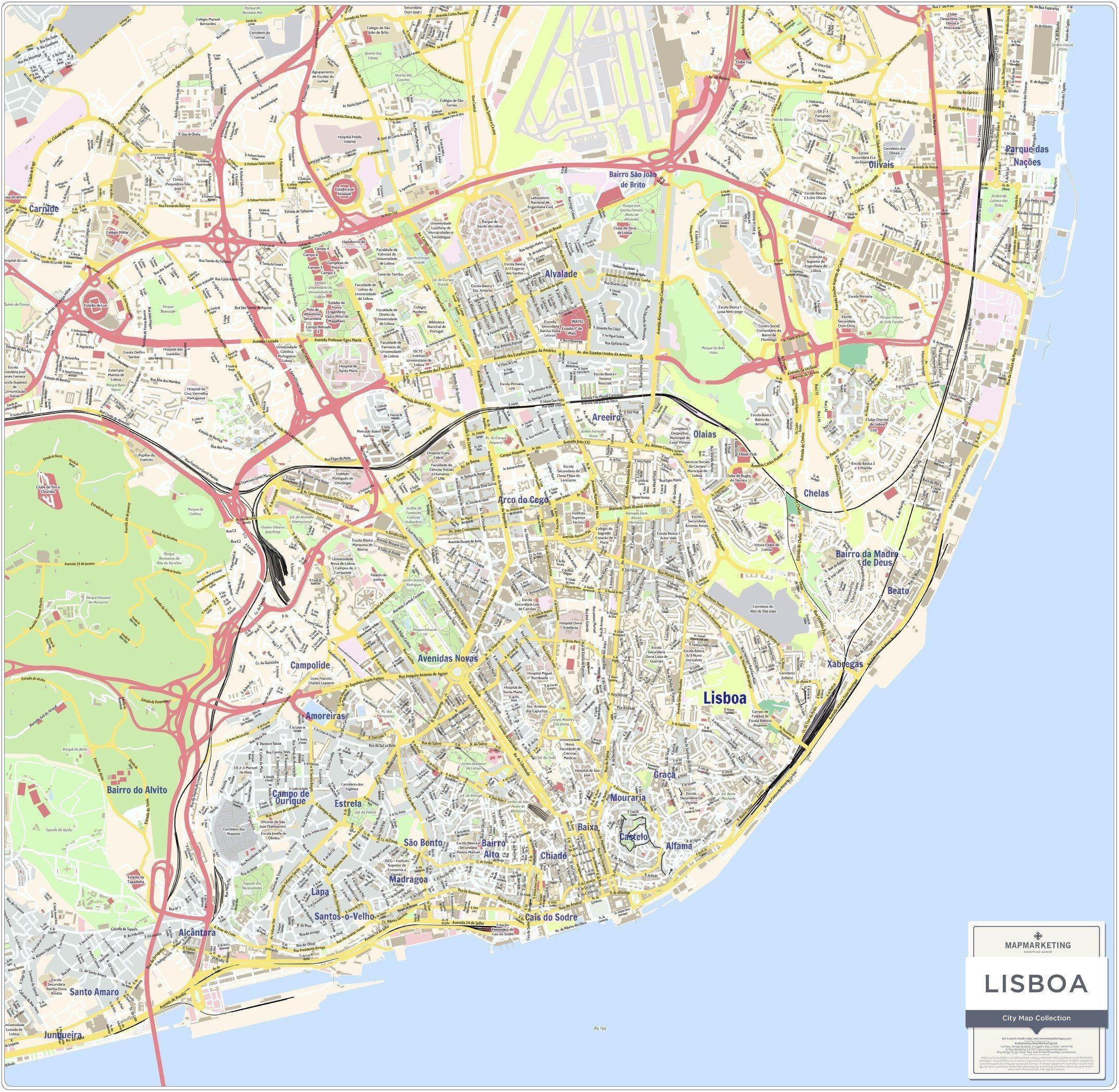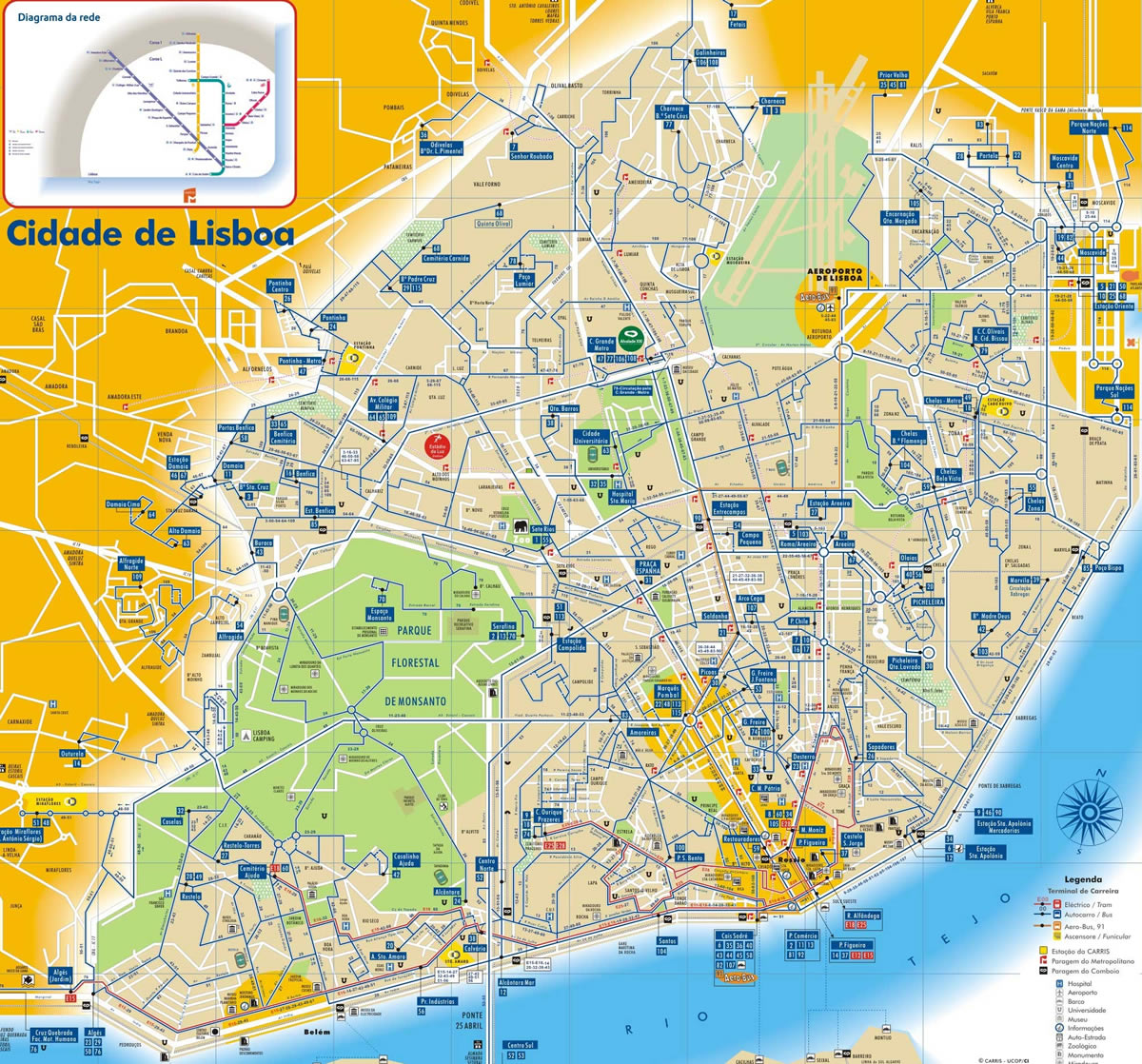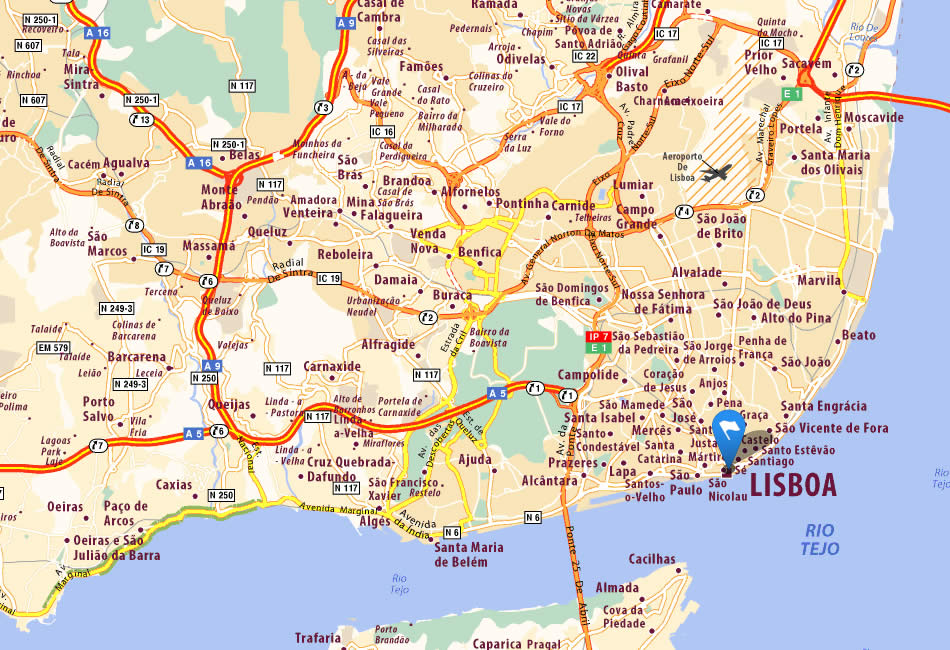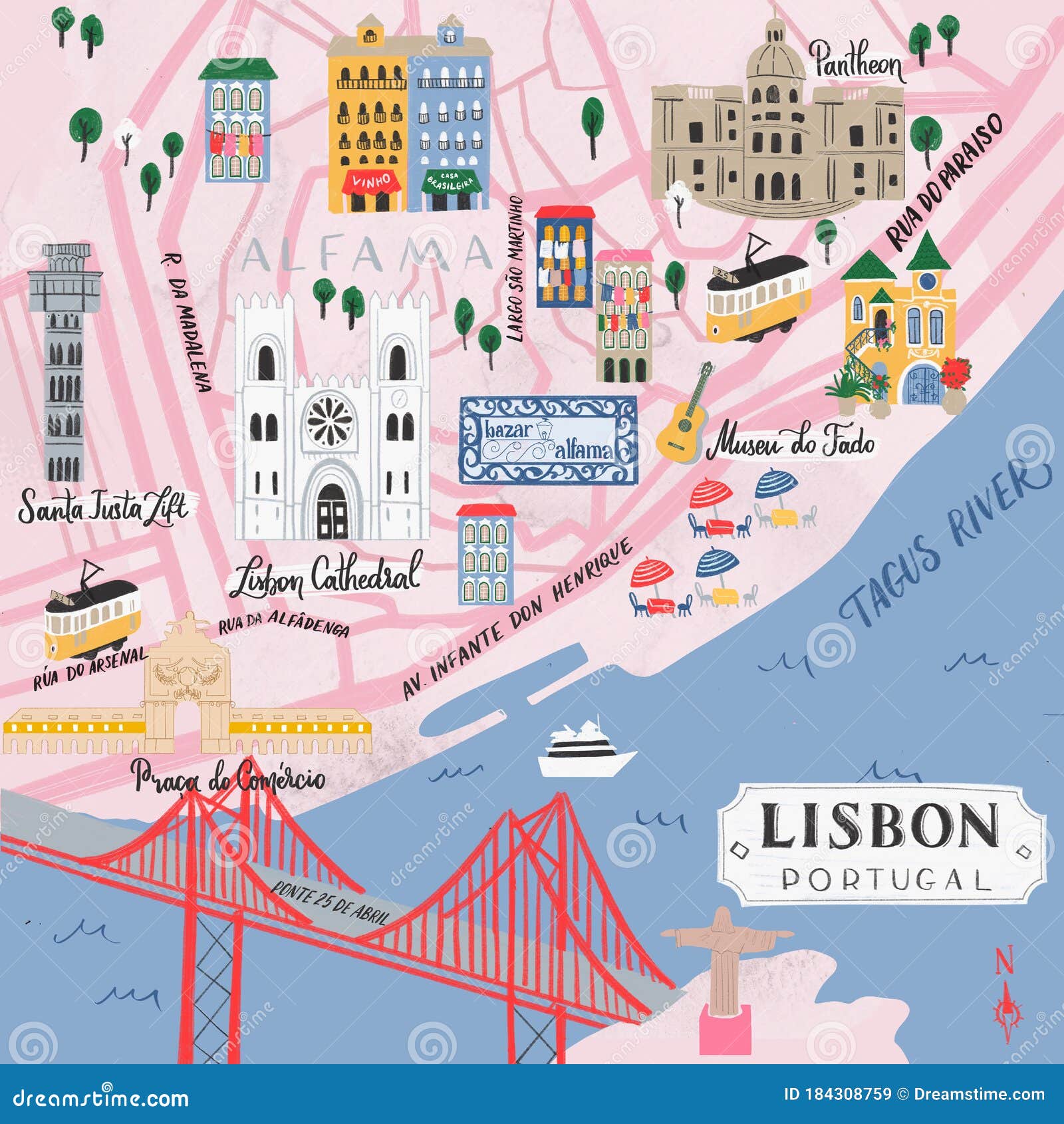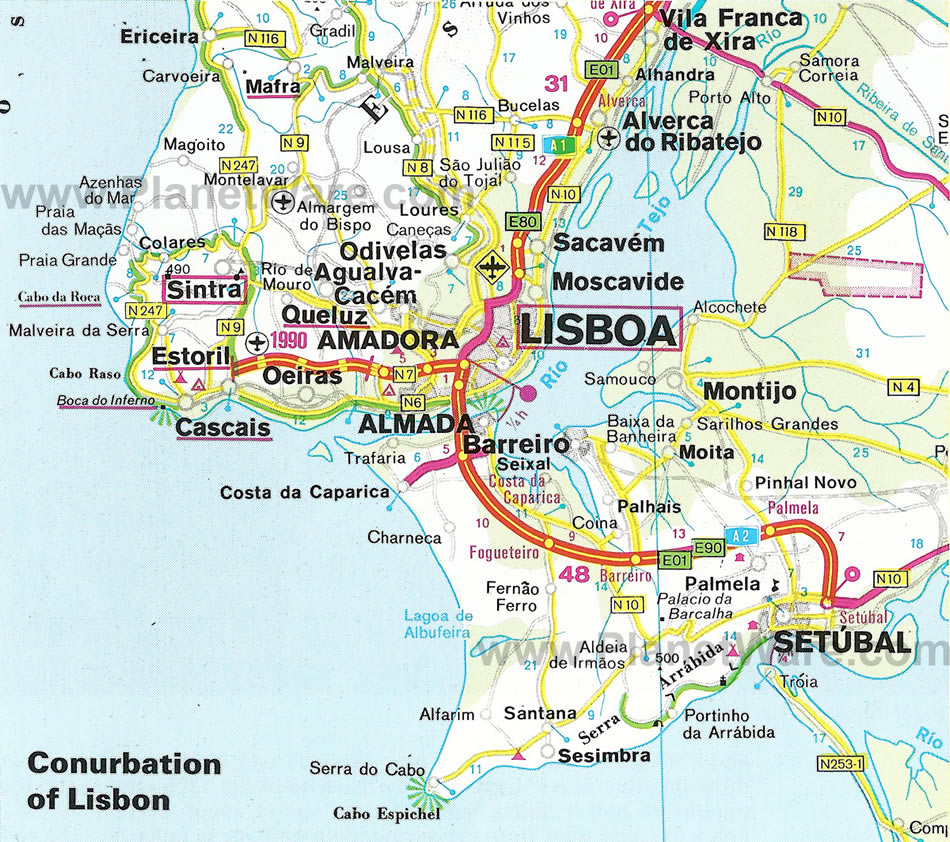
Lisbon, the captivating capital of Portugal, is a city that beckons with its melancholic charm, vibrant energy, and rich history. Tracing its contours on a map, you’ll discover a city sculpted by the Tagus River, sprawling across seven hills, and boasting a captivating blend of ancient grandeur and modern dynamism. More than just a pin on a map, Lisbon is a layered experience, a journey through time and cultures, etched onto its streets, architecture, and the very souls of its inhabitants.
A River Runs Through It: Lisbon’s Tagus Embrace
The Tagus River (Rio Tejo), the longest river in the Iberian Peninsula, is the lifeblood of Lisbon. Its expansive estuary, a shimmering expanse of water, defines the city’s southern boundary and has been instrumental in shaping its identity. On a map, the Tagus is more than just a geographical feature; it’s a historical narrative. For centuries, it served as the gateway to exploration and trade, carrying Portuguese caravels laden with spices, gold, and knowledge to the far reaches of the globe.
Looking at the map, you’ll notice the iconic landmarks that hug the Tagus shoreline. The Belém Tower (Torre de Belém), a UNESCO World Heritage site, stands proudly at the river’s edge, a sentinel guarding the entrance to the city. Built in the 16th century, it served as a defensive fortress and a ceremonial gateway for returning explorers. Nearby, the Jerónimos Monastery (Mosteiro dos Jerónimos), another UNESCO World Heritage site, stands as a testament to Portugal’s Age of Discoveries. Its intricate Manueline architecture, a unique Portuguese style characterized by nautical motifs, reflects the country’s maritime prowess and wealth accumulated during that era.
Further east along the Tagus, the modern Ponte 25 de Abril, a suspension bridge often compared to the Golden Gate Bridge in San Francisco, gracefully spans the river. Its imposing presence signifies Lisbon’s embrace of modernity and its connection to the southern bank of the Tagus. Nearby, the Parque das Nações, a modern district built for the 1998 Expo, showcases a contemporary Lisbon, with its sleek architecture, the Oceanário de Lisboa (Lisbon Oceanarium), and expansive green spaces. The Tagus, therefore, acts as a chronological roadmap, tracing Lisbon’s journey from its historical roots to its modern aspirations.
Seven Hills, Seven Charms: Navigating Lisbon’s Topography
Lisbon is famously built on seven hills, a fact that contributes significantly to its unique character and the breathtaking views it offers. On a map, these hills aren’t explicitly marked, but their impact is palpable in the winding streets, steep inclines, and the ubiquitous presence of trams and funiculars.
-
Alfama: The oldest district, Alfama, is a labyrinthine network of narrow alleys and historic buildings clinging to the slopes of the São Jorge Castle hill. Its medieval layout, resistant to the devastating 1755 earthquake, offers a glimpse into Lisbon’s past. Walking through Alfama is like stepping back in time, with the haunting melodies of Fado music echoing from its traditional taverns.
-
Castelo: Home to the iconic São Jorge Castle (Castelo de São Jorge), the Castelo hill offers panoramic views of the city and the Tagus River. The castle itself, with its Moorish origins, stands as a reminder of Lisbon’s complex history.
-
Bairro Alto: Known for its bohemian atmosphere and vibrant nightlife, Bairro Alto is a district of steep streets and colorful buildings. During the day, it’s a charming neighborhood with independent shops and art galleries, while at night it transforms into a buzzing hub of bars and restaurants.
-
Chiado: A sophisticated district known for its elegant shops, theaters, and cafes, Chiado was largely rebuilt after the 1755 earthquake. Its grid-like street plan reflects the Pombaline architectural style, characterized by its rational design and earthquake-resistant construction.
-
Estrela: Home to the Basílica da Estrela and the Jardim da Estrela, a beautiful park, Estrela offers a tranquil escape from the bustling city center. Its elegant architecture and green spaces make it a popular residential area.
-
Graça: Offering stunning views of the city and the São Jorge Castle, Graça is a historic neighborhood with a traditional atmosphere. Its viewpoints (miradouros) are popular spots for enjoying the sunset and taking in the Lisbon skyline.
-
São Vicente: Home to the Panteão Nacional (National Pantheon) and the Feira da Ladra (Thieves Market), São Vicente is a district with a rich history and a vibrant cultural scene.
These seven hills, while demanding to navigate, are integral to Lisbon’s charm. The constant elevation changes reveal hidden corners, stunning vistas, and a unique perspective on the city. They force you to slow down, to appreciate the details, and to engage with Lisbon in a more intimate way.
Neighborhood Narratives: A Mosaic of Cultures
Beyond the Tagus and the hills, Lisbon is a city of distinct neighborhoods, each with its own unique character and atmosphere. A map of Lisbon reveals this diversity, hinting at the stories that unfold within each district.
-
Baixa: The heart of Lisbon, Baixa, was completely rebuilt after the 1755 earthquake. Its grid-like streets and grand squares, like the Praça do Comércio, reflect the Pombaline architectural style. Baixa is the city’s commercial and administrative center, a bustling hub of shops, restaurants, and government buildings.
-
Belém: Located west of the city center, Belém is a district steeped in history and maritime heritage. Home to the Belém Tower, the Jerónimos Monastery, and the Padrão dos Descobrimentos (Monument to the Discoveries), Belém offers a glimpse into Portugal’s Age of Discoveries.
-
Mouraria: One of Lisbon’s oldest districts, Mouraria, was once home to the city’s Moorish population. Today, it’s a multicultural neighborhood with a vibrant street life and a growing artistic scene.
-
Alcântara: Located along the Tagus River, Alcântara is a former industrial area that has been transformed into a trendy district with bars, restaurants, and nightclubs. The LX Factory, a creative hub housed in a former industrial complex, is a popular attraction.
-
Campo de Ourique: A residential neighborhood with a relaxed atmosphere, Campo de Ourique is known for its local markets, parks, and traditional shops. It’s a popular spot for families and those seeking a quieter side of Lisbon.
Beyond the Traditional Map: Experiencing Lisbon’s Soul
While a map provides a geographical framework for understanding Lisbon, it cannot capture the city’s true essence. To truly experience Lisbon, you must venture beyond the marked streets and explore its hidden corners, engage with its people, and immerse yourself in its culture.
Listen to the melancholic strains of Fado music echoing from a traditional tavern in Alfama. Savor the taste of a Pastéis de Belém, a custard tart, warm from the oven in Belém. Wander through the Feira da Ladra, the Thieves Market, in São Vicente, searching for hidden treasures. Ride the iconic Tram 28, a vintage streetcar that winds its way through the narrow streets of Alfama and Graça. Watch the sunset from one of Lisbon’s many miradouros, offering breathtaking views of the city.
Lisbon is a city that rewards exploration, a place where the past and present intertwine, where tradition and innovation coexist, and where the spirit of discovery continues to thrive. It’s a city that unfolds slowly, revealing its layers of history, culture, and charm to those who take the time to look. So, grab a map, put on your walking shoes, and prepare to be captivated by the magic of Lisbon, Portugal. It’s a journey you won’t soon forget.