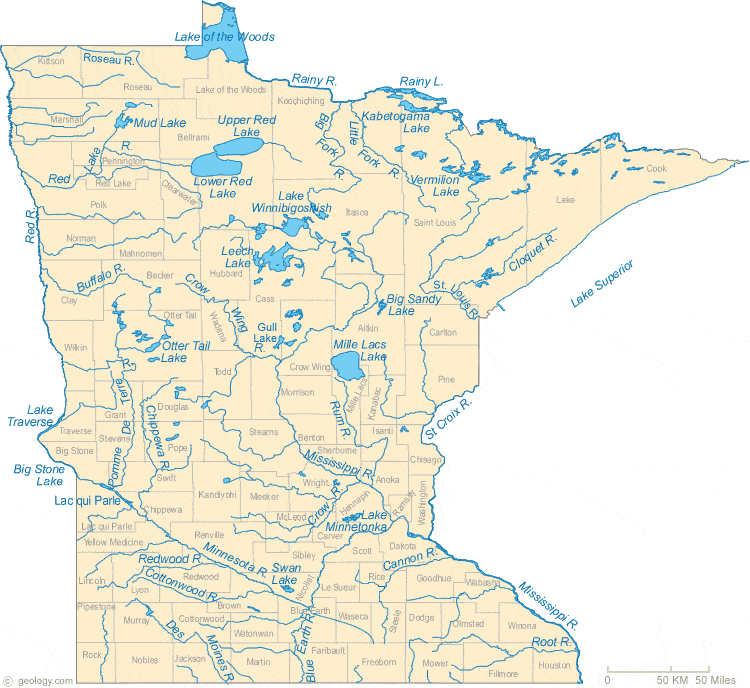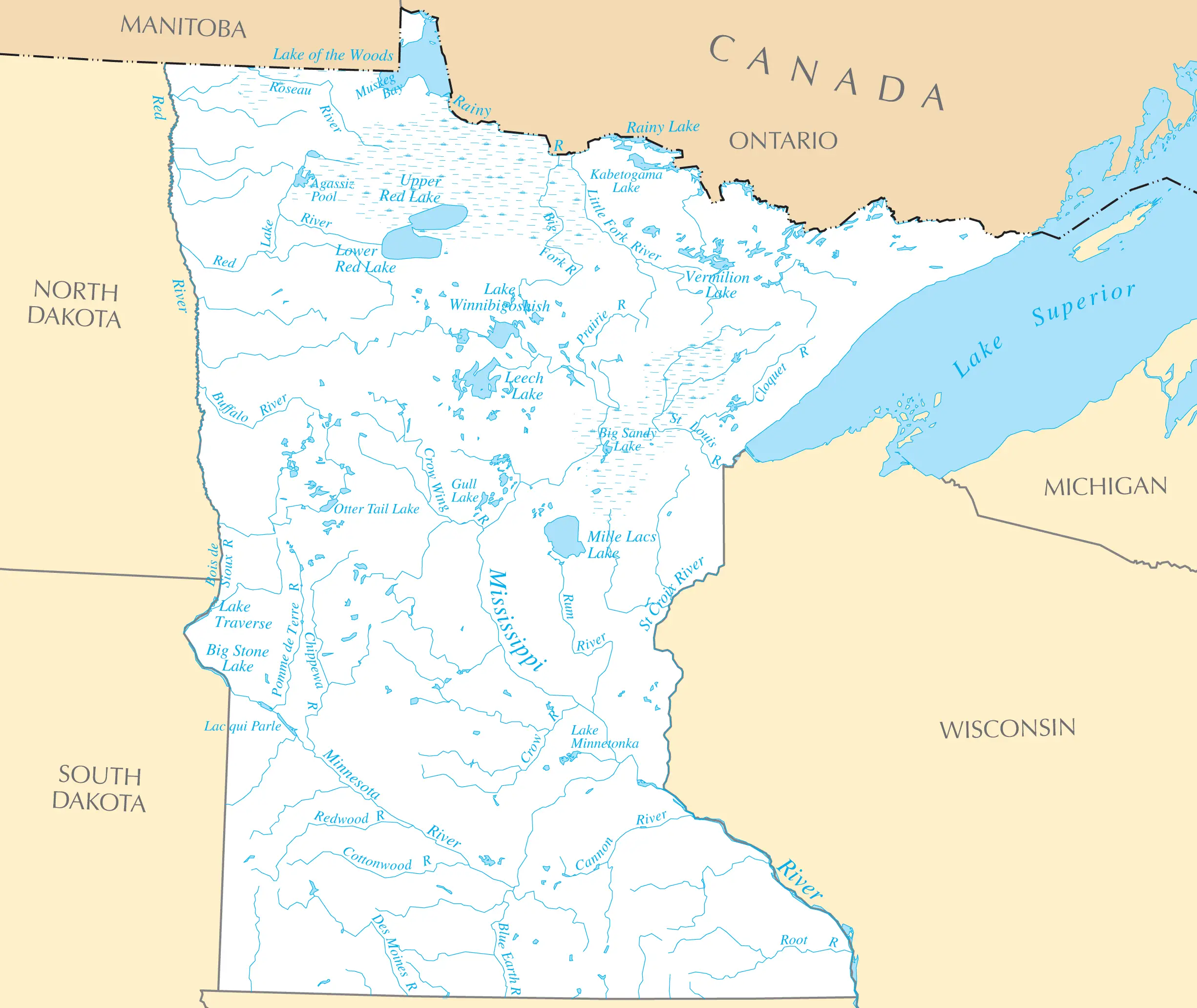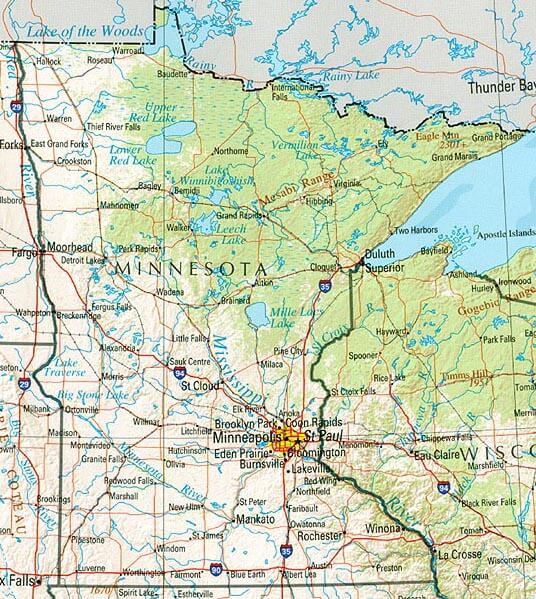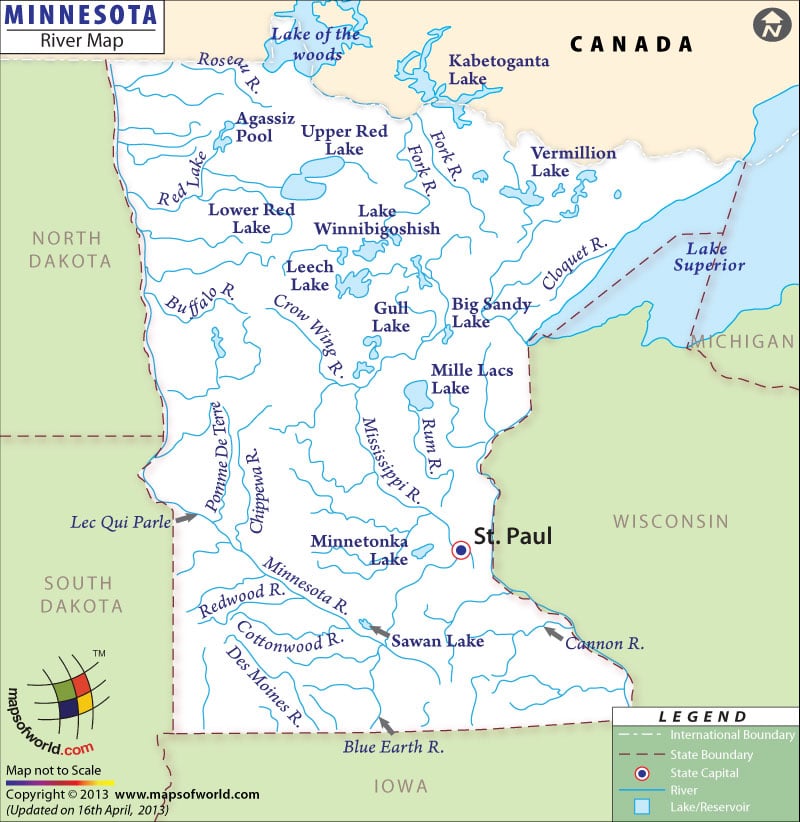
Minnesota, the "Land of 10,000 Lakes" (though the actual count is closer to 12,000), is equally blessed with an intricate network of rivers. These waterways, far more than just picturesque features, are the lifeblood of the state, shaping its geography, economy, and culture. Understanding the rivers of Minnesota, their diverse characteristics, and their interconnectedness is crucial for appreciating the state’s unique natural heritage. A detailed Minnesota rivers map provides a vital tool for exploring this complex and fascinating landscape.
This article delves into the significance of Minnesota’s rivers, exploring the major river systems, their historical importance, their present-day uses, and the challenges they face. We’ll use the rivers map as a guide, navigating through the different regions and highlighting the unique features of each watershed.
The Three Great Divides and Their River Kingdoms:
Minnesota is unique in that it sits at the headwaters of three major North American watersheds: the Mississippi River watershed, the Red River watershed, and the St. Lawrence River watershed. This geographical distinction has shaped the state’s ecological diversity and influenced its settlement patterns. Understanding these divides is fundamental to interpreting a Minnesota rivers map.
-
The Mississippi River Watershed: Dominating the southeastern and central portions of the state, the Mississippi River watershed is the largest and most influential. The mighty Mississippi itself originates at Lake Itasca in northern Minnesota, a humble beginning for a river that eventually drains over 40% of the continental United States. The map highlights numerous tributaries flowing into the Mississippi within Minnesota, including the Minnesota River, the St. Croix River, the Crow River, the Rum River, and the Cannon River. These rivers carve through diverse landscapes, from the fertile agricultural lands of the south to the forested regions of the north. They support a rich variety of wildlife and provide crucial transportation routes, both historically and in modern times.
-
The Red River Watershed: Draining the northwestern corner of Minnesota, the Red River flows north into Canada and eventually empties into Lake Winnipeg. Unlike the deeply entrenched Mississippi, the Red River flows through a relatively flat, prairie landscape. This characteristic makes it prone to flooding, a significant challenge for communities along its banks. The rivers map showcases the tributaries feeding the Red River, such as the Thief River, the Clearwater River, and the Buffalo River. These rivers play a critical role in agriculture, providing irrigation for crops and serving as drainage channels. The Red River Valley is known for its fertile soils, making it a major agricultural region in the state.
-
The St. Lawrence River Watershed: Located in northeastern Minnesota, this watershed drains into Lake Superior and eventually flows into the St. Lawrence River, which empties into the Atlantic Ocean. The rivers in this region are typically shorter and faster-flowing than those in the other watersheds, reflecting the rugged terrain and abundant rainfall. The rivers map reveals several important rivers within this watershed, including the St. Louis River, the Cloquet River, and the Pigeon River. These rivers are renowned for their scenic beauty, their importance to the logging industry in the past, and their recreational opportunities, such as canoeing and kayaking.
Navigating the Map: Key Rivers and Their Characteristics:
A detailed Minnesota rivers map provides a wealth of information about the individual rivers within these watersheds. Here’s a closer look at some of the key rivers and their distinguishing features:
-
The Mississippi River: As mentioned earlier, the Mississippi originates at Lake Itasca. The map traces its winding path through the state, showcasing its transformation from a narrow stream to a significant river. It highlights the numerous locks and dams along its course, which are crucial for navigation and flood control. The map also indicates the location of major cities along the Mississippi, such as Minneapolis, St. Paul, and Red Wing, emphasizing its historical and economic importance.
-
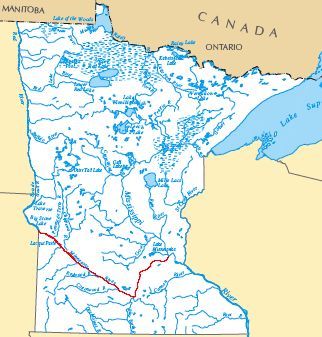
The Minnesota River: A major tributary of the Mississippi, the Minnesota River flows from the southwestern part of the state towards the southeast. The map reveals its meandering course through agricultural lands and its confluence with several smaller rivers. The Minnesota River Valley is known for its rich history, having been the homeland of the Dakota people for centuries.
-
The St. Croix River: Forming part of the border between Minnesota and Wisconsin, the St. Croix River is a National Scenic Riverway. The map highlights its pristine waters, its diverse ecosystem, and its recreational opportunities. The St. Croix is popular for canoeing, kayaking, and fishing, attracting visitors from across the region.
-
The Rainy River: Forming part of the border between Minnesota and Ontario, Canada, the Rainy River flows westward into Lake of the Woods. The map showcases its importance as a transportation route and its role in the region’s economy. The Rainy River is also known for its excellent fishing, particularly for walleye.
-
The Cannon River: Located in southeastern Minnesota, the Cannon River is a popular destination for canoeing and kayaking. The map reveals its scenic beauty, its numerous rapids, and its historical significance as a power source for mills.
Historical Significance and Modern Uses:
The rivers of Minnesota have played a vital role in the state’s history and continue to be important in modern times.
-
Transportation and Commerce: For centuries, rivers served as crucial transportation routes for Native Americans, fur traders, and early settlers. The Mississippi River, in particular, was a major artery for commerce, connecting the Midwest to the Gulf of Mexico. Even today, barge traffic on the Mississippi remains important for transporting agricultural products and other goods.
-
Power Generation: Many rivers in Minnesota have been dammed for hydroelectric power generation. While dams provide a renewable energy source, they also have significant impacts on river ecosystems, altering water flow and disrupting fish migration.
-
Agriculture: Rivers provide irrigation water for crops and serve as drainage channels in agricultural areas. The Red River Valley, in particular, relies heavily on the Red River and its tributaries for agricultural production.
-
Recreation: Minnesota’s rivers offer a wide range of recreational opportunities, including canoeing, kayaking, fishing, swimming, and boating. The state’s rivers are a major draw for tourists and provide important economic benefits to local communities.
Challenges and Conservation Efforts:
Despite their importance, Minnesota’s rivers face numerous challenges, including:
-
Pollution: Agricultural runoff, industrial discharges, and urban stormwater runoff can pollute rivers, harming aquatic life and making them unsafe for recreation.
-
Habitat Loss: Dams, channelization, and development along riverbanks can destroy fish and wildlife habitat.
-
Invasive Species: Invasive species, such as zebra mussels and Eurasian watermilfoil, can disrupt river ecosystems and harm native species.
-
Climate Change: Changes in precipitation patterns and temperatures can affect river flows, water quality, and the distribution of aquatic species.
Addressing these challenges requires a concerted effort from government agencies, conservation organizations, and individuals. Conservation efforts include:
- Implementing best management practices for agriculture to reduce runoff.
- Upgrading wastewater treatment plants to reduce pollution.
- Restoring degraded riverbanks and wetlands.
- Removing dams to restore natural river flows.
- Controlling invasive species.
- Promoting responsible recreational activities.
Conclusion:
A Minnesota rivers map is more than just a collection of lines; it’s a window into the state’s rich natural and cultural heritage. By understanding the different river systems, their characteristics, and their importance, we can better appreciate the vital role that rivers play in Minnesota’s ecosystem and economy. By working together to protect and restore these valuable resources, we can ensure that future generations will continue to benefit from the beauty and bounty of Minnesota’s rivers. The map serves as a reminder of the interconnectedness of the landscape and the importance of responsible stewardship. It encourages exploration, understanding, and ultimately, a deeper appreciation for the liquid heart of the Land of 10,000 Lakes.