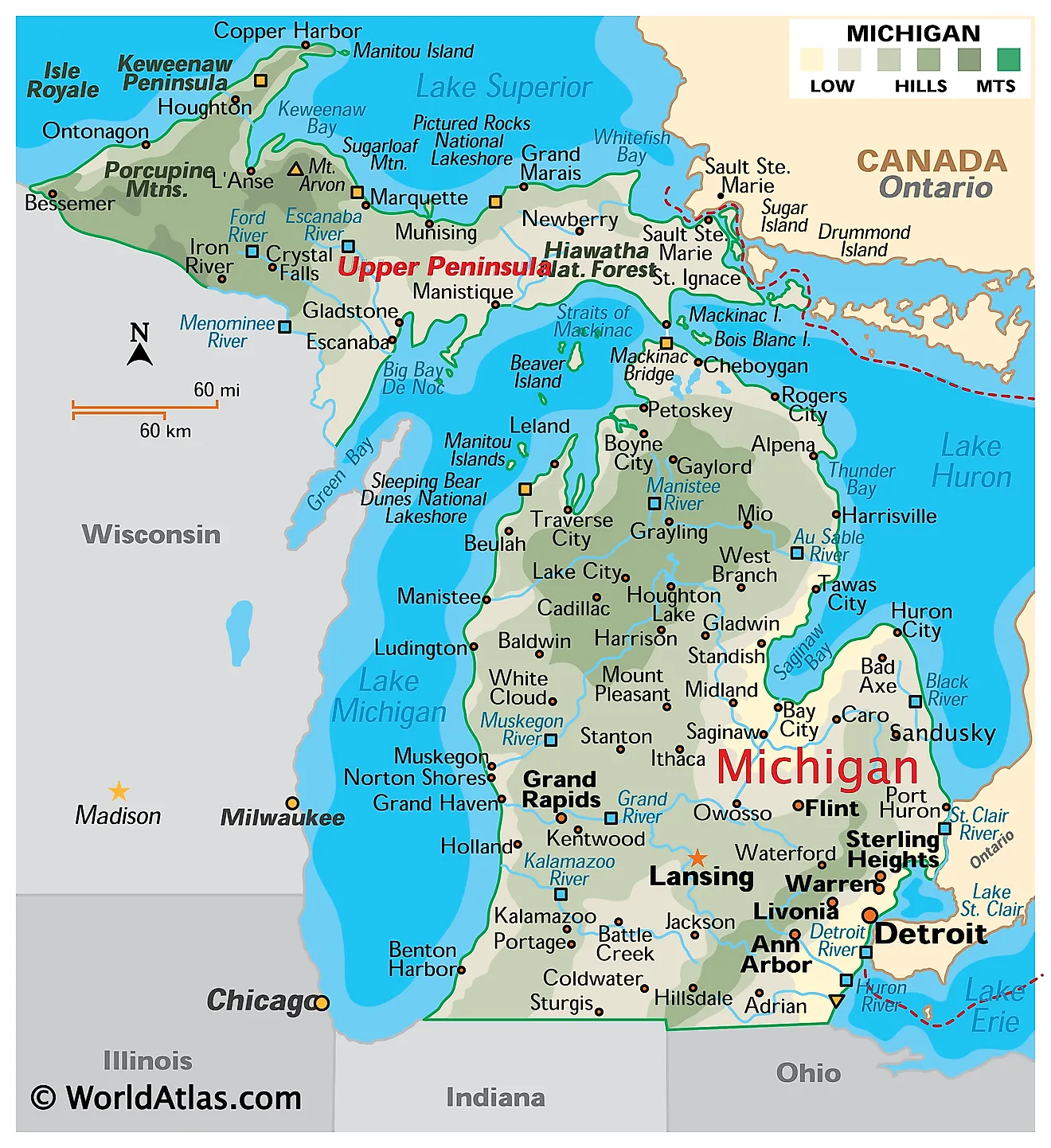
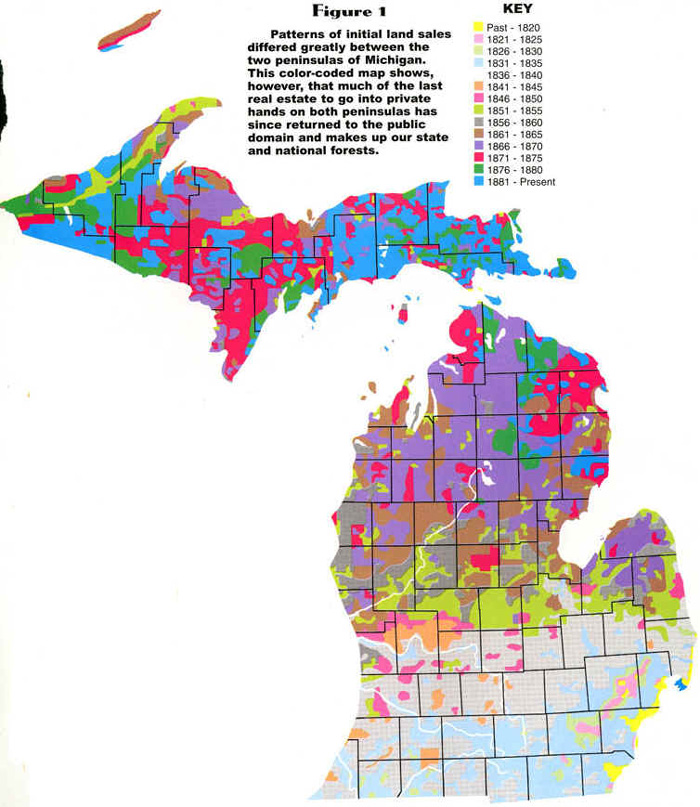
Michigan, a state known for its vast forests, shimmering Great Lakes coastline, and diverse ecosystems, manages a significant amount of land for public benefit. Understanding how this land is mapped, accessed, and utilized is crucial for recreation enthusiasts, researchers, developers, and anyone interested in exploring the state’s natural resources. This article will delve into the intricacies of Michigan’s land map, exploring the resources available, the governing agencies, and the significance of this information for various stakeholders.
The Foundation: Understanding Michigan’s Land Ownership Landscape
Before diving into the specifics of the map, it’s important to understand the broad categories of land ownership in Michigan. These include:
-
Private Land: The vast majority of land in Michigan is privately owned, encompassing residential areas, farms, businesses, and privately managed forests. Access to private land generally requires permission from the owner.
-
State-Owned Land: The Michigan Department of Natural Resources (MDNR) manages millions of acres of state-owned land, including state forests, game areas, state parks, and recreation areas. This land is typically open to the public for various recreational activities, subject to specific regulations.
-
Federal Land: The federal government owns and manages significant tracts of land in Michigan, primarily through the U.S. Forest Service (national forests like the Huron-Manistee National Forests) and the National Park Service (Isle Royale National Park, Sleeping Bear Dunes National Lakeshore). These lands are managed for conservation, recreation, and resource extraction.
-
Tribal Land: Federally recognized Native American tribes in Michigan own and manage their own lands, often with unique regulations and access requirements.
-
County and Local Government Land: County and local governments also own and manage land for parks, recreational facilities, and other public purposes.
The Michigan land map primarily focuses on state-owned land, providing information about its location, boundaries, and permitted uses. However, understanding the broader context of land ownership is essential for responsible land use and navigation.
The Michigan Land Map: A Key to Unlocking Outdoor Adventures
The "Michigan Land Map," more accurately described as a collection of mapping resources and GIS data managed by the MDNR, is a vital tool for understanding and accessing state-owned land. It’s not a single, monolithic map, but rather a system of interconnected datasets and applications designed to provide comprehensive information.
The core components of this system include:
-
Michigan DNR’s GIS (Geographic Information System) Data: The MDNR maintains a comprehensive GIS database containing information about various aspects of state-owned land, including:
- State Forest Boundaries: Accurately delineating the boundaries of state forests, which are open for a wide range of recreational activities, including hunting, fishing, hiking, and camping.
- Game Areas: Identifying game areas managed specifically for wildlife habitat and hunting opportunities.
- State Parks and Recreation Areas: Showing the location and boundaries of state parks and recreation areas, highlighting amenities such as campsites, trails, boat launches, and picnic areas.
- Designated Natural Rivers: Mapping designated natural rivers and their surrounding buffer zones, which are subject to special regulations to protect their ecological integrity.
- Oil and Gas Leases: Indicating areas leased for oil and gas exploration and development, providing transparency regarding resource extraction activities.
- Timber Management Activities: Displaying areas where timber harvesting is planned or has recently occurred, informing users about potential changes to the landscape.
- Public Access Sites: Identifying boat launches, fishing piers, and other public access points to lakes, rivers, and streams.
- Roads and Trails: Mapping roads, trails, and other transportation routes within state-owned land.
- Topographic Information: Providing elevation data, contour lines, and other topographic features to aid in navigation and understanding the terrain.
-
Interactive Mapping Applications: The MDNR provides several interactive mapping applications that allow users to access and visualize GIS data online. These applications typically offer features such as:
- Zooming and Panning: Allowing users to zoom in and out of the map and pan to different areas of interest.
- Layer Selection: Enabling users to choose which layers of information to display, such as state forest boundaries, game areas, trails, and roads.
- Attribute Querying: Allowing users to click on map features to view detailed information about them, such as the name of a state park, the type of trail, or the regulations applicable to a specific area.
- Measurement Tools: Providing tools for measuring distances and areas on the map.
- Printing and Exporting: Allowing users to print maps or export data in various formats.
-
Printed Maps and Guides: While digital resources are increasingly prevalent, printed maps and guides remain valuable for users who prefer a tangible resource or who may not have access to electronic devices in remote areas. The MDNR publishes various printed maps and guides, including:
- State Forest Maps: Providing detailed information about state forests, including roads, trails, campsites, and hunting regulations.
- State Park Maps: Showing the layout of state parks, highlighting amenities and attractions.
- Fishing Guides: Identifying public access sites and providing information about fishing regulations.
- Hunting Guides: Providing information about hunting seasons, regulations, and game areas.
Accessing and Utilizing Michigan’s Land Map Resources
The MDNR provides various avenues for accessing and utilizing the Michigan land map resources:
-
MDNR Website: The MDNR website (www.michigan.gov/dnr) is the primary portal for accessing GIS data, interactive mapping applications, and printed maps and guides. The website provides links to various resources, including:
- Mi-HUNT: An interactive mapping application specifically designed for hunters, providing information about hunting seasons, regulations, and game areas.
- Michigan Interactive Map Viewer (MiMap): A general-purpose interactive mapping application that allows users to access a wide range of GIS data, including state-owned land, roads, trails, and topographic information.
- GIS Open Data Portal: A portal for downloading GIS data in various formats, allowing users to create their own maps and analyses.
-
MDNR Field Offices: MDNR field offices located throughout the state provide information about state-owned land and can assist users with navigating the mapping resources.
-
Authorized Map Vendors: Several authorized vendors sell printed maps and guides published by the MDNR.
The Significance of the Michigan Land Map for Various Stakeholders
The Michigan land map and its associated resources are valuable for a wide range of stakeholders:
-
Recreation Enthusiasts: Hunters, anglers, hikers, campers, and other outdoor enthusiasts can use the map to identify state-owned land open for recreation, plan their trips, and ensure they are complying with regulations.
-
Researchers: Scientists, academics, and other researchers can use the GIS data to study various aspects of Michigan’s natural resources, such as wildlife populations, forest ecology, and water quality.
-
Developers: Developers can use the map to identify state-owned land that may be suitable for development, such as wind farms or solar energy projects.
-
Land Managers: The MDNR uses the GIS data to manage state-owned land effectively, including planning timber harvests, managing wildlife populations, and protecting natural resources.
-
Local Governments: Local governments can use the map to coordinate land use planning and infrastructure development with state land management.
-
The General Public: The Michigan land map provides transparency about state land ownership and management, allowing the public to hold the MDNR accountable for its stewardship of these resources.
Challenges and Future Directions
While the Michigan land map is a valuable resource, there are some challenges and areas for improvement:
-
Data Accuracy and Currency: Maintaining the accuracy and currency of the GIS data is an ongoing challenge, as land ownership and management practices can change over time.
-
Data Accessibility: Making the GIS data more accessible to users with limited technical skills is important to ensure that the map is widely used.
-
Integration with Other Datasets: Integrating the GIS data with other datasets, such as private land ownership information and environmental data, could provide a more comprehensive picture of Michigan’s landscape.
-
Mobile Accessibility: Improving the mobile accessibility of the interactive mapping applications is crucial for users who are accessing the map in the field.
Looking ahead, the MDNR is committed to enhancing the Michigan land map and its associated resources. This includes:
- Improving data accuracy and currency through regular updates and quality control procedures.
- Developing more user-friendly interactive mapping applications with improved mobile accessibility.
- Integrating the GIS data with other datasets to provide a more comprehensive view of Michigan’s landscape.
- Expanding outreach and education efforts to promote the use of the Michigan land map among various stakeholders.
Conclusion
The Michigan land map is an invaluable tool for understanding and accessing the state’s vast network of state-owned lands. By providing comprehensive information about location, boundaries, and permitted uses, the map empowers recreation enthusiasts, researchers, developers, and the general public to explore, utilize, and protect Michigan’s natural resources. As technology advances and data availability increases, the Michigan land map will continue to evolve, playing an increasingly important role in the responsible management and sustainable use of the state’s land resources. By leveraging these resources responsibly, Michigan can continue to balance conservation, recreation, and economic development for the benefit of current and future generations.