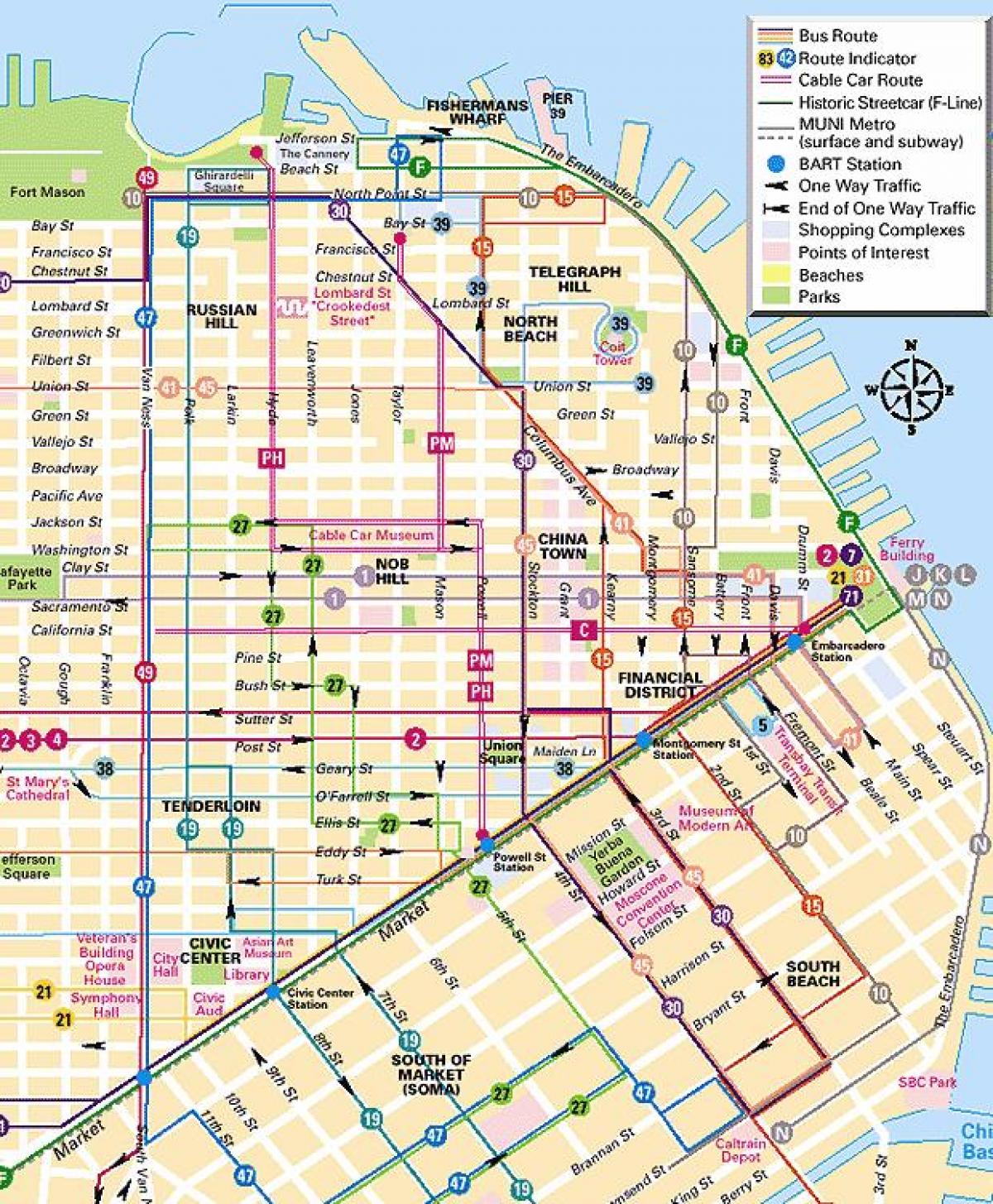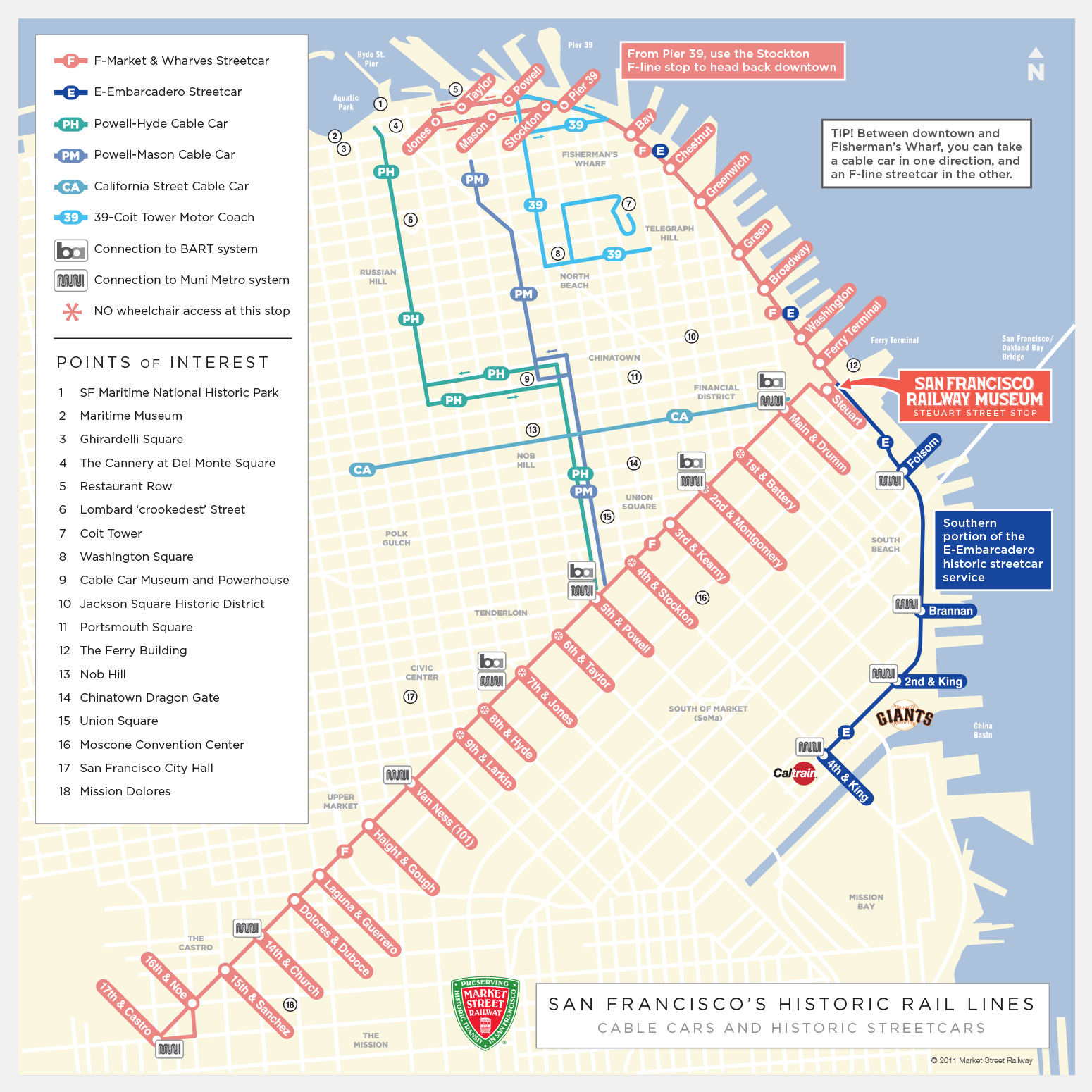
San Francisco, a city renowned for its rolling hills, vibrant culture, and stunning Golden Gate Bridge, also boasts a unique and historic public transportation system: the San Francisco cable car. These charming, open-air trolleys, officially known as cable cars, are more than just a way to get around; they are a symbol of the city, a living museum on wheels, and a thrilling experience for visitors and locals alike. Understanding the San Francisco trolley map is key to unlocking the city’s hidden gems and experiencing its authentic charm. This comprehensive guide will delve into the history, routes, and practicalities of navigating this beloved transportation icon.
A Glimpse into History: The Genesis of San Francisco’s Cable Cars
Before the advent of the automobile, San Francisco’s steep hills presented a significant challenge for transportation. Horses struggled to pull carriages up the grades, leading to accidents and inefficiencies. In 1869, Andrew Smith Hallidie, a Scottish-born engineer, witnessed a particularly gruesome accident involving a horse-drawn carriage. Inspired by his experience with mining cable systems, Hallidie envisioned a solution: a mechanically powered cable car system.
Hallidie’s invention, patented in 1873, revolutionized transportation in San Francisco. The first cable car line, the Clay Street Hill Railroad, opened on August 2, 1873, proving the feasibility of the technology. The success of the Clay Street line spurred the development of numerous other cable car lines throughout the city. By the late 19th century, San Francisco boasted a network of over 600 cable cars operated by various companies.
However, the rise of electric streetcars and automobiles in the early 20th century led to the decline of the cable car system. Many lines were abandoned or converted to other forms of transportation. By 1947, only a handful of lines remained, threatened with complete closure.
A dedicated group of citizens, led by Friedel Klussmann, formed the "Citizens’ Committee to Save the Cable Cars." They argued that the cable cars were a vital part of San Francisco’s history and identity. Their efforts culminated in a successful public referendum in 1947, enshrining the cable cars in the city charter and ensuring their preservation.
Deciphering the San Francisco Trolley Map: Three Routes, Countless Adventures
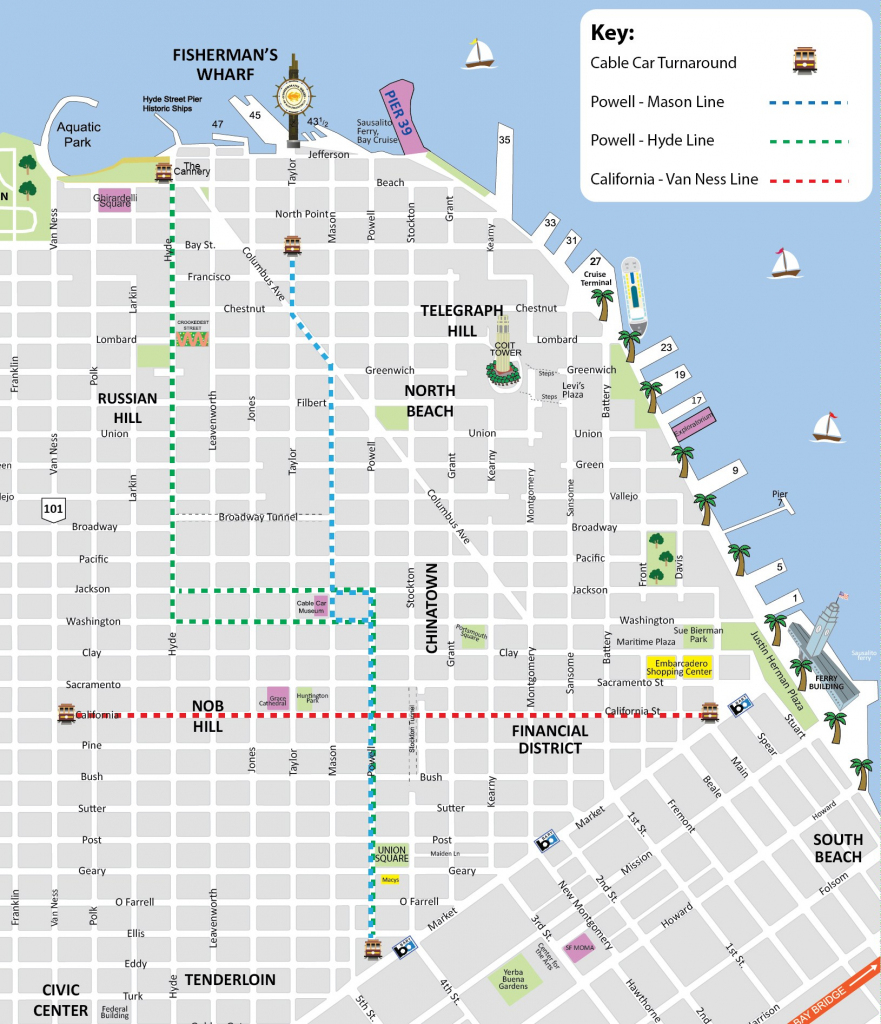
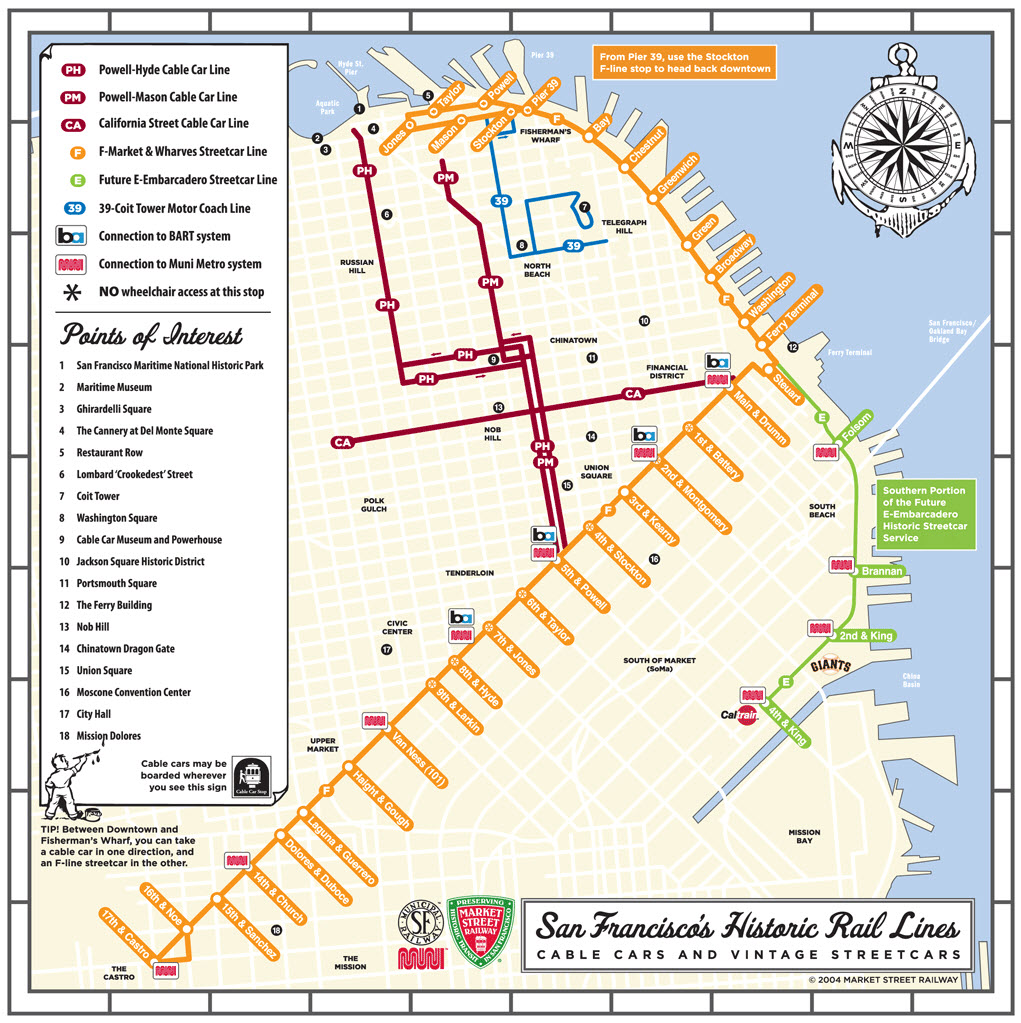
Today, the San Francisco cable car system consists of three lines, each offering a unique perspective of the city. Understanding the trolley map is crucial for planning your journey and maximizing your experience. The three lines are:
-
Powell-Hyde Line: This is arguably the most scenic and popular line, offering breathtaking views of Alcatraz Island, the Golden Gate Bridge, and the San Francisco Bay. The Powell-Hyde line starts at Powell and Market Streets in downtown San Francisco and climbs up Nob Hill, passing through Russian Hill before descending to Ghirardelli Square and Fisherman’s Wharf. This route is known for its steep grades and stunning vistas.
-
Powell-Mason Line: Similar to the Powell-Hyde line, the Powell-Mason line also begins at Powell and Market Streets. It ascends Nob Hill, offering glimpses of the city’s historic architecture, before descending to Bay Street, a short walk from Fisherman’s Wharf. This route is slightly less crowded than the Powell-Hyde line, making it a good alternative for those seeking a more relaxed experience.
-
California Street Line: Unlike the other two lines, the California Street line is the only east-west route. It runs along California Street, passing through the Financial District and Chinatown before climbing Nob Hill and terminating at Van Ness Avenue. This line offers a glimpse into the city’s business and cultural heart, providing a different perspective than the more tourist-oriented Powell lines.
Understanding the Trolley Map Symbols:
The San Francisco trolley map, available at visitor centers, hotels, and online, utilizes several symbols to represent key features:
- Solid Lines: Indicate the actual route of the cable car lines. Each line is typically represented by a distinct color.
- Circles: Denote cable car stops. Major stops, like the starting points at Powell and Market, are often marked with larger circles.
- Squares: Represent major landmarks, attractions, and points of interest along the route.
- Transfer Points: Indicate locations where you can transfer between different cable car lines or connect to other forms of public transportation, such as buses and BART (Bay Area Rapid Transit).
Navigating the System: Practical Tips for Riding the San Francisco Trolleys
Riding the San Francisco cable cars is a unique experience, but it’s important to be prepared. Here are some practical tips to ensure a smooth and enjoyable ride:
- Purchase a Muni Passport: The Muni Passport provides unlimited rides on all San Francisco Municipal Transportation Agency (SFMTA) services, including cable cars, buses, streetcars, and light rail. It’s available for various durations, such as one day, three days, or seven days, making it a cost-effective option for tourists. Individual cable car rides can be purchased, but a Muni Passport offers better value if you plan to use public transportation extensively.
- Be Prepared for Crowds: The cable cars are a popular attraction, especially during peak season (summer and holidays). Expect long lines, particularly at the starting points on Powell Street. Arriving early in the morning or later in the afternoon can help you avoid the worst of the crowds.
- Consider Off-Peak Hours: Riding during off-peak hours (weekdays during midday or evenings) can significantly reduce wait times and provide a more comfortable experience.
- Choose Your Spot Wisely: The best spots on the cable cars are on the outside, where you can enjoy unobstructed views. However, these spots are also the most popular. Be prepared to stand or share space with other passengers.
- Hold On Tight: The cable cars can be jerky, especially when starting and stopping. Hold on to the handrails for safety.
- Listen to the Gripman and Conductor: The gripman controls the cable car and the conductor collects fares and provides information. Pay attention to their instructions and announcements.
- Be Aware of Your Surroundings: San Francisco is a major city, so be aware of your surroundings and protect your belongings from theft.
- Learn the History: Take some time to learn about the history of the cable cars before your ride. This will enhance your appreciation for this unique transportation system. The Cable Car Museum, located on Mason Street, is an excellent resource.
- Tip the Crew: Tipping the gripman and conductor is customary, especially if they provide good service.
Beyond the Trolley Map: Exploring the Neighborhoods Along the Routes
The San Francisco trolley map isn’t just a guide to transportation; it’s a key to unlocking the city’s diverse neighborhoods. Each of the three lines offers access to unique attractions and experiences:
- Nob Hill: This affluent neighborhood is known for its grand Victorian mansions, luxurious hotels, and stunning views. Explore Huntington Park, visit Grace Cathedral, or indulge in a fine dining experience at one of Nob Hill’s renowned restaurants.
- Russian Hill: This charming neighborhood is home to Lombard Street, famously known as "the most crooked street in the world." Explore the neighborhood’s quaint shops and cafes, and enjoy panoramic views from Ina Coolbrith Park.
- Chinatown: The California Street line provides direct access to Chinatown, the oldest Chinatown in North America. Immerse yourself in the vibrant culture, sample authentic Chinese cuisine, and explore the neighborhood’s historic temples and shops.
- Fisherman’s Wharf: All three cable car lines provide access to Fisherman’s Wharf, a popular tourist destination known for its seafood restaurants, sea lions, and attractions like Pier 39 and Aquarium of the Bay.
- Ghirardelli Square: Located at the end of the Powell-Hyde line, Ghirardelli Square is a historic chocolate factory that has been transformed into a shopping and entertainment complex. Indulge in a delicious sundae at the Ghirardelli Ice Cream & Chocolate Shop.
- Financial District: The California Street line runs through the heart of the Financial District, home to towering skyscrapers and major financial institutions. Explore the neighborhood’s modern architecture and enjoy a business lunch at one of its upscale restaurants.
The Enduring Appeal of San Francisco’s Cable Cars
The San Francisco cable cars are more than just a mode of transportation; they are a living piece of history, a symbol of the city’s resilience and innovation. Their enduring appeal lies in their unique charm, the thrill of riding on an open-air trolley, and the breathtaking views they offer. By understanding the San Francisco trolley map and following the practical tips outlined in this guide, you can embark on a memorable journey through the city’s iconic landmarks and hidden gems. So, grab your Muni Passport, hop on board, and experience the magic of San Francisco’s cable cars for yourself. The clanging of the bells, the wind in your hair, and the stunning views will create an unforgettable San Francisco experience.