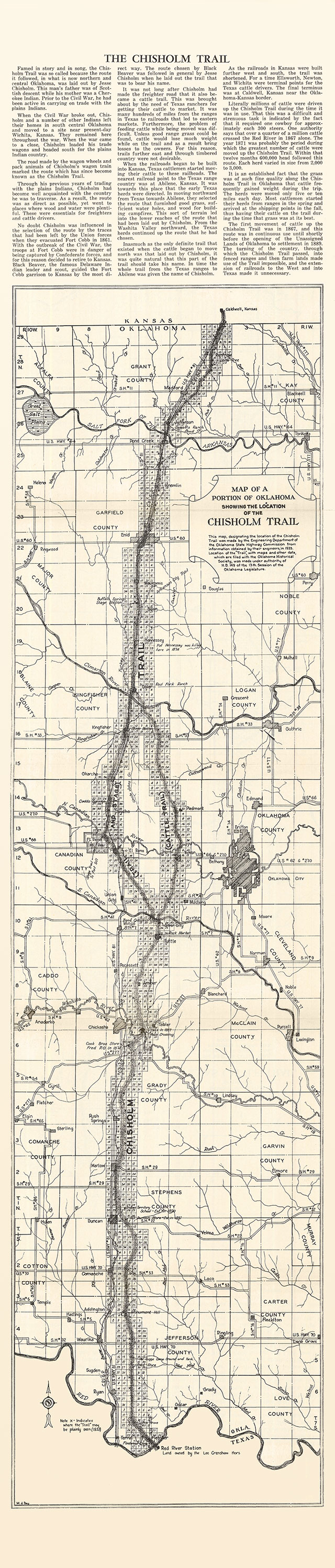
The Chisholm Trail, a legendary pathway carved through the heart of the American West, stands as a potent symbol of grit, resilience, and the transformative power of the cattle industry. More than just a dirt track, it was a vital artery connecting Texas ranches with burgeoning markets in Kansas, fueling the economic boom of the post-Civil War era. Understanding the Chisholm Trail, its history, and its impact requires a careful examination of its geography, which is best achieved through the lens of a Chisholm Trail map.
This article aims to provide a comprehensive guide to the Chisholm Trail map, delving into its route, key landmarks, the challenges faced by drovers, and the enduring legacy it left behind. By exploring the map, we can gain a deeper appreciation for the arduous journey undertaken by countless cowboys and the profound influence the trail had on the development of the American West.
Tracing the Trail: Deciphering the Chisholm Trail Map
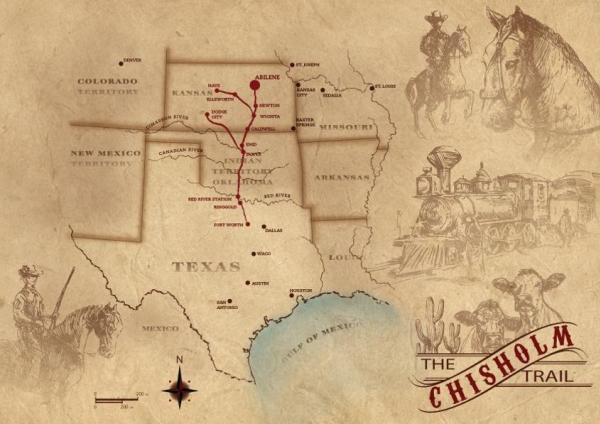
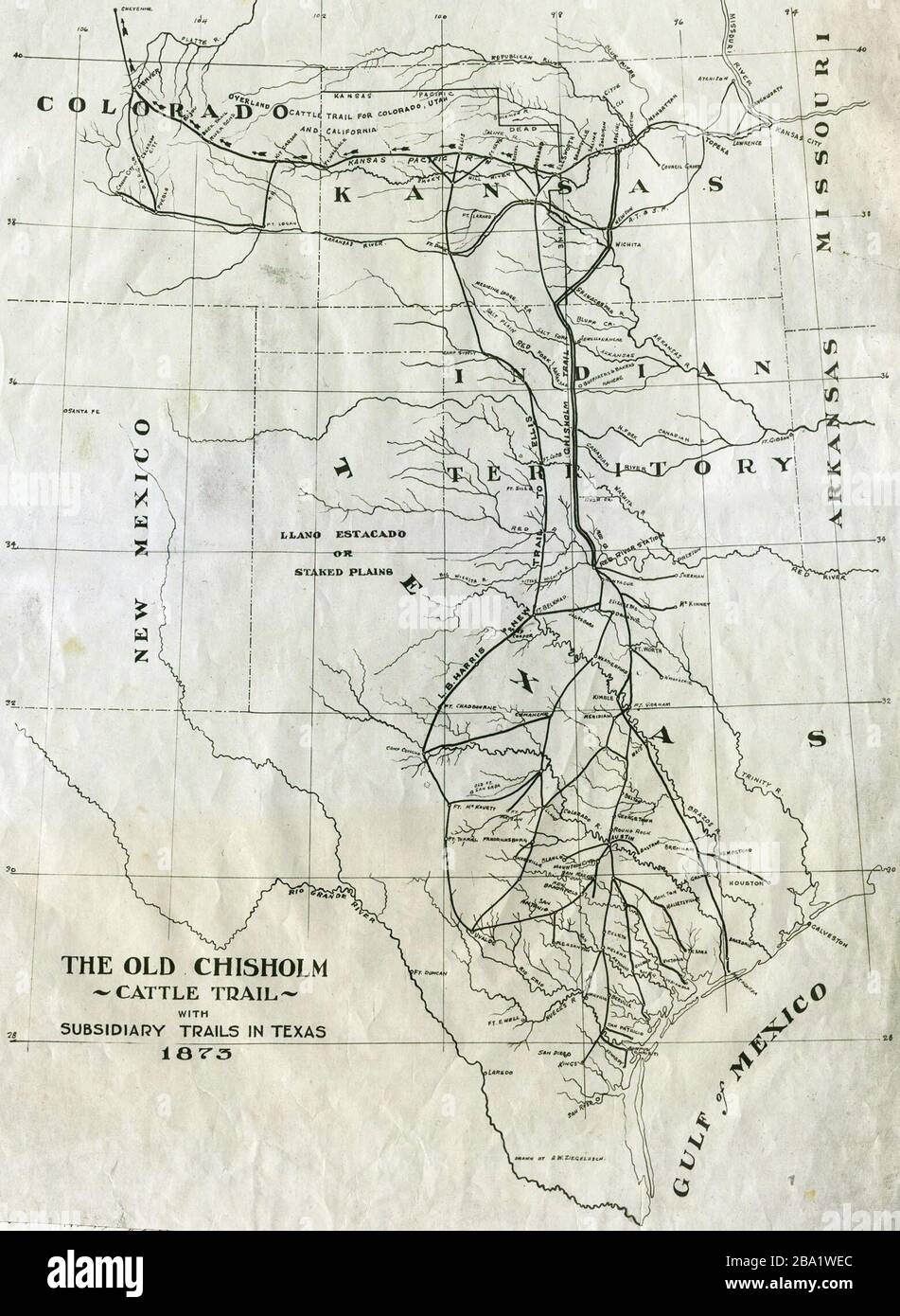
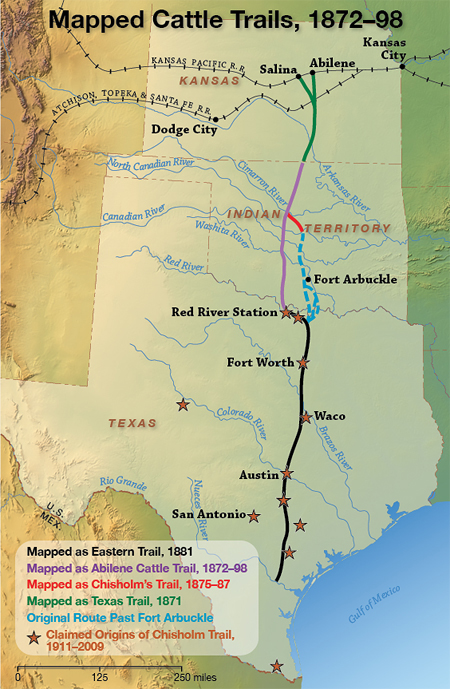
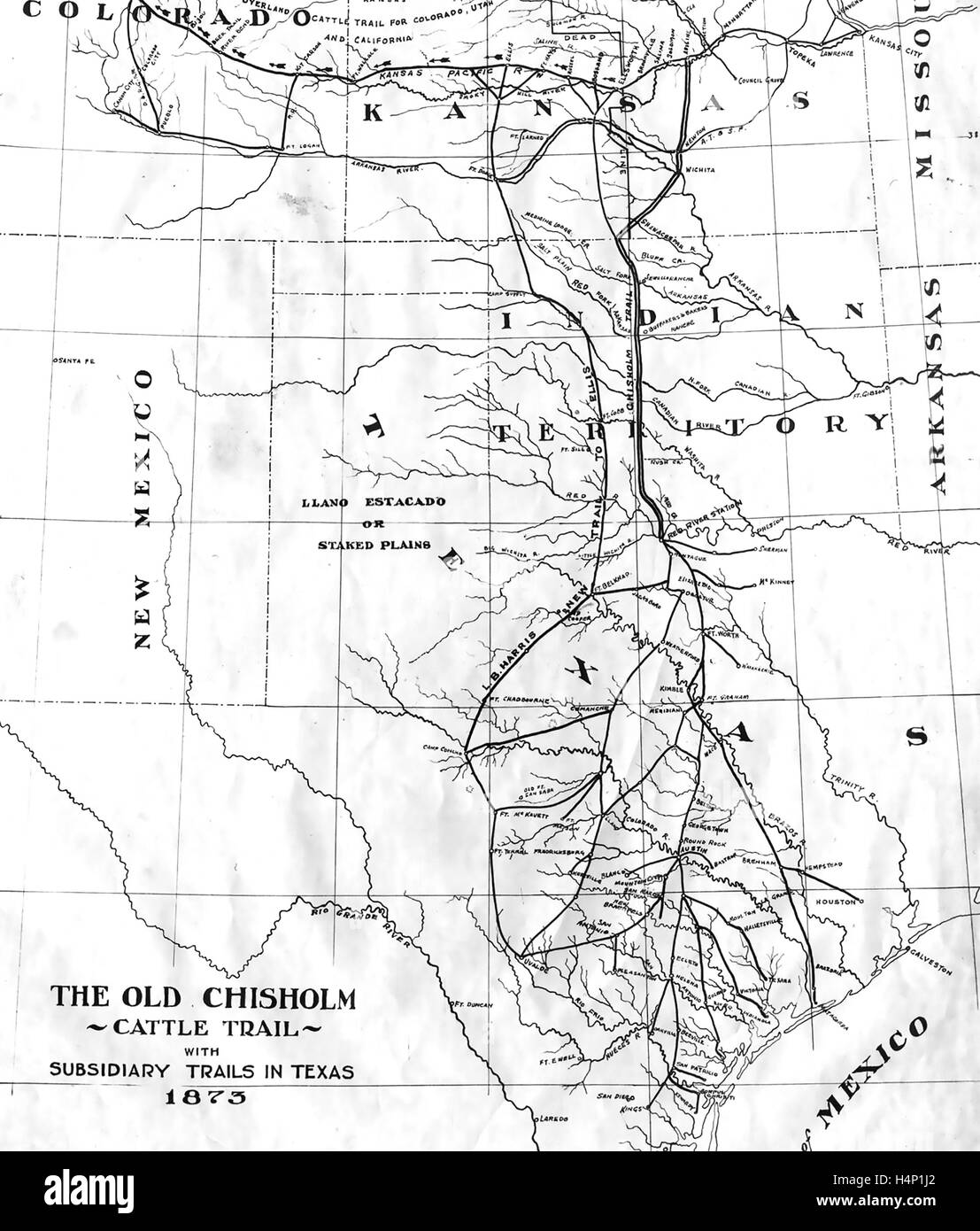
A typical Chisholm Trail map reveals a sinuous line stretching northward from southern Texas to central Kansas, a visual representation of a journey fraught with peril and opportunity. While there were variations in the exact route, especially in the early years, the general path followed certain key geographic features and strategic locations.
The Southern Start: South Texas and the Brush Country
The Chisholm Trail’s origins lie in the vast cattle ranches of South Texas. Here, longhorn cattle roamed freely, their numbers swelling after the Civil War. The map shows the trail originating in several locations, reflecting the decentralized nature of the cattle drives. Key starting points included:
- Brownsville: Situated near the Rio Grande, Brownsville served as a gathering point for cattle from the surrounding region.
- Goliad: Another prominent starting point, Goliad was a well-established town with access to ample grazing land.
- Victoria: Further inland, Victoria offered a convenient starting point for ranches in the central Texas region.
From these various starting points, the cattle drives converged, following the natural contours of the land and seeking out reliable water sources. The initial leg of the journey traversed the challenging terrain of the Texas brush country, a landscape characterized by thorny mesquite trees, dense undergrowth, and unpredictable weather. The map highlights the importance of finding suitable crossing points over rivers and creeks, as these could become impassable during periods of heavy rainfall.
Navigating Central Texas: River Crossings and Growing Towns
As the trail moved northward into Central Texas, the landscape gradually transitioned from dense brush to rolling prairies. The map reveals the increasing importance of river crossings, as the cattle drives encountered larger waterways like the Guadalupe, San Antonio, and Colorado Rivers. These crossings posed significant challenges:
- Flooding: Flash floods were a common occurrence, making river crossings extremely dangerous for both cattle and drovers.
- Quicksand: Unstable riverbeds could swallow cattle and even horses, posing a constant threat.
- Native American Territory: Some river crossings were located within or near Native American territories, requiring careful negotiation or even armed conflict.
The map also highlights the emergence of towns along the trail, which served as crucial resupply points and opportunities for cowboys to rest and relax (often leading to legendary saloon brawls). Prominent towns in Central Texas included:
- San Antonio: A major hub for cattle trading and supplies, San Antonio was a bustling city that exerted a strong influence on the Chisholm Trail.
- Austin: The capital of Texas, Austin provided a growing market for cattle and supplies.
- Waco: Situated on the Brazos River, Waco became a significant cattle town and a popular stop for drovers.
Crossing the Red River: A Defining Moment
The Red River marked the border between Texas and Indian Territory (present-day Oklahoma), representing a significant milestone on the Chisholm Trail. The map emphasizes the importance of the Red River crossing, as it was a potentially dangerous and politically sensitive area.
- Indian Territory: The Chisholm Trail passed through lands belonging to various Native American tribes, including the Chickasaw, Choctaw, and Cherokee. While some tribes welcomed the trade opportunities offered by the cattle drives, others viewed them with suspicion and resentment.
- Toll Bridges: In some areas, Native American tribes operated toll bridges across the Red River, charging drovers a fee to cross their territory.
- Conflict: Encounters between drovers and Native Americans occasionally led to conflict, highlighting the complex relationship between the two groups.
Through Indian Territory: Navigating the Plains
Once across the Red River, the Chisholm Trail entered the vast expanse of Indian Territory. The map shows the trail traversing the rolling plains, dotted with occasional settlements and trading posts. This leg of the journey presented its own unique challenges:
- Open Range: The open range offered ample grazing land for the cattle, but it also made them vulnerable to theft and stampedes.
- Water Scarcity: Finding reliable water sources was crucial, especially during the hot summer months.
- Severe Weather: The plains were subject to extreme weather conditions, including scorching heat, violent thunderstorms, and even tornadoes.
The map highlights the importance of strategic locations within Indian Territory, such as:
- Doan’s Crossing: A popular crossing point on the Red River, Doan’s Crossing became a significant trading post and supply center.
- Caddo: Located in the heart of Indian Territory, Caddo served as a rest stop and a place to resupply.
The Kansas Terminus: Abilene and Beyond
The Chisholm Trail ultimately led to the railheads in Kansas, where cattle were loaded onto trains and shipped to eastern markets. The map clearly shows the importance of Abilene, Kansas, as the primary terminus of the trail.
- Abilene: Founded by Joseph McCoy, Abilene quickly became a boomtown, transforming from a small village into a bustling cattle market.
- Railroads: The arrival of the railroads in Abilene provided a crucial link between the Texas cattle ranches and the eastern markets.
- Other Railheads: As the railroad network expanded, other towns in Kansas, such as Wichita, Caldwell, and Newton, also became important railheads for the Chisholm Trail.
Challenges Faced by Drovers: Beyond the Map’s Lines
The Chisholm Trail map provides a visual representation of the route, but it only hints at the immense challenges faced by the drovers who navigated it. These challenges included:
- Stampedes: A sudden noise or movement could trigger a stampede, sending thousands of cattle running in a chaotic frenzy.
- Weather: Extreme heat, torrential rain, and freezing temperatures all took their toll on both cattle and drovers.
- Disease: Diseases like Texas Fever could decimate herds, causing significant financial losses.
- Theft: Cattle rustlers were a constant threat, preying on unsuspecting drovers.
- Native American Relations: Maintaining peaceful relations with Native American tribes was crucial, but often difficult.
The Enduring Legacy: Beyond the Dust
The Chisholm Trail era was relatively short-lived, lasting from the late 1860s to the mid-1880s. The expansion of railroads into Texas gradually made long cattle drives obsolete. However, the Chisholm Trail left an indelible mark on the American West, shaping its economy, culture, and mythology.
- Economic Impact: The Chisholm Trail fueled the growth of the cattle industry, transforming Texas into a major economic power.
- Cultural Significance: The Chisholm Trail played a significant role in shaping the image of the American cowboy, a symbol of rugged individualism and frontier spirit.
- Historical Memory: The Chisholm Trail has been romanticized in countless books, movies, and songs, ensuring its place in American folklore.
Conclusion: The Chisholm Trail Map as a Window to the Past
The Chisholm Trail map is more than just a geographical representation; it is a portal to a bygone era. By studying the map, we can gain a deeper understanding of the challenges and opportunities faced by the drovers who traversed this legendary pathway. The Chisholm Trail’s legacy continues to resonate today, reminding us of the resilience, adaptability, and entrepreneurial spirit that shaped the American West. As we trace the dusty path on the map, we can appreciate the enduring impact of the Chisholm Trail on the history and culture of the United States. The echoes of hooves, the calls of cowboys, and the spirit of the open range still linger along the route, whispering tales of a time when cattle were king and the Chisholm Trail was the highway to prosperity.