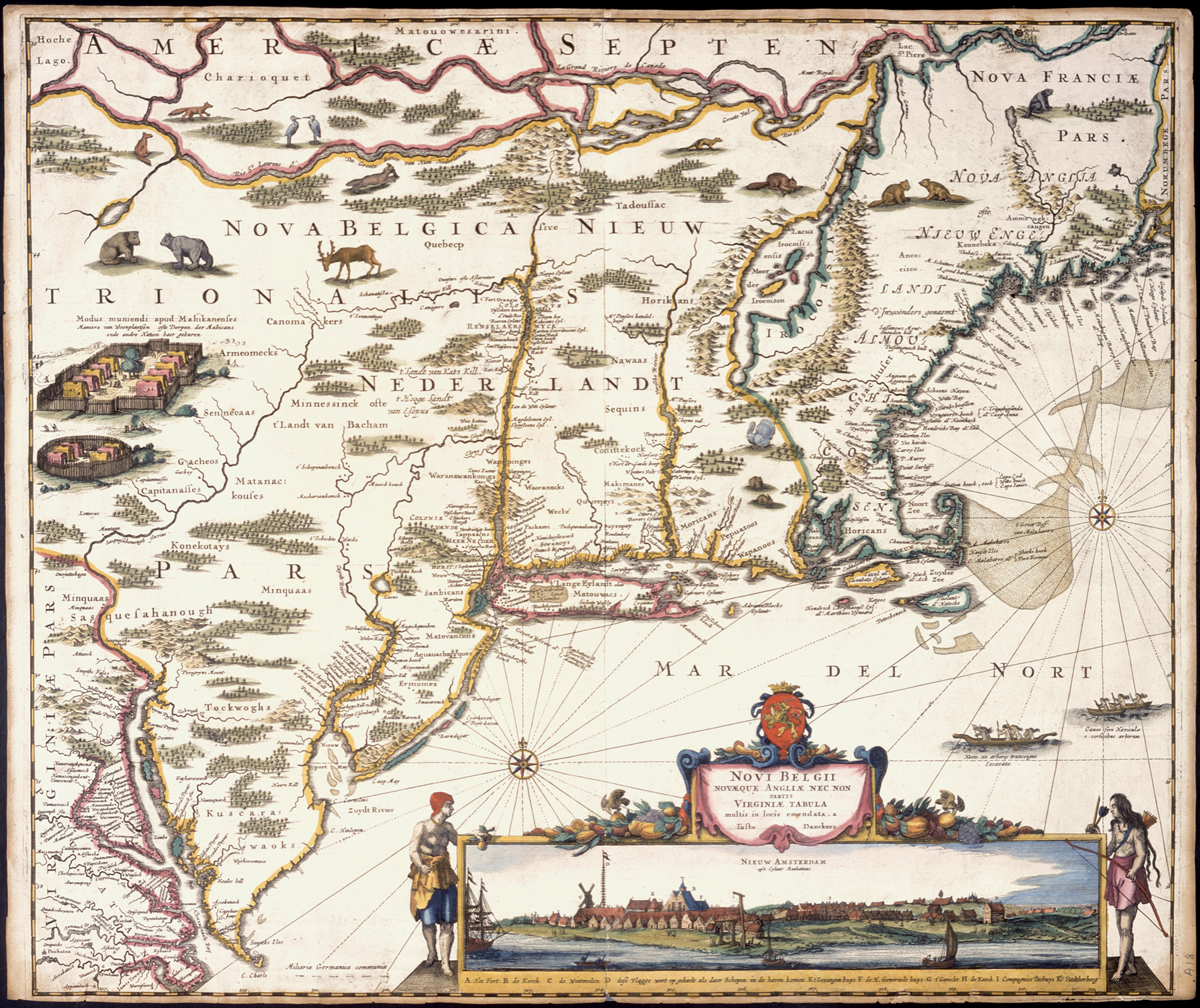
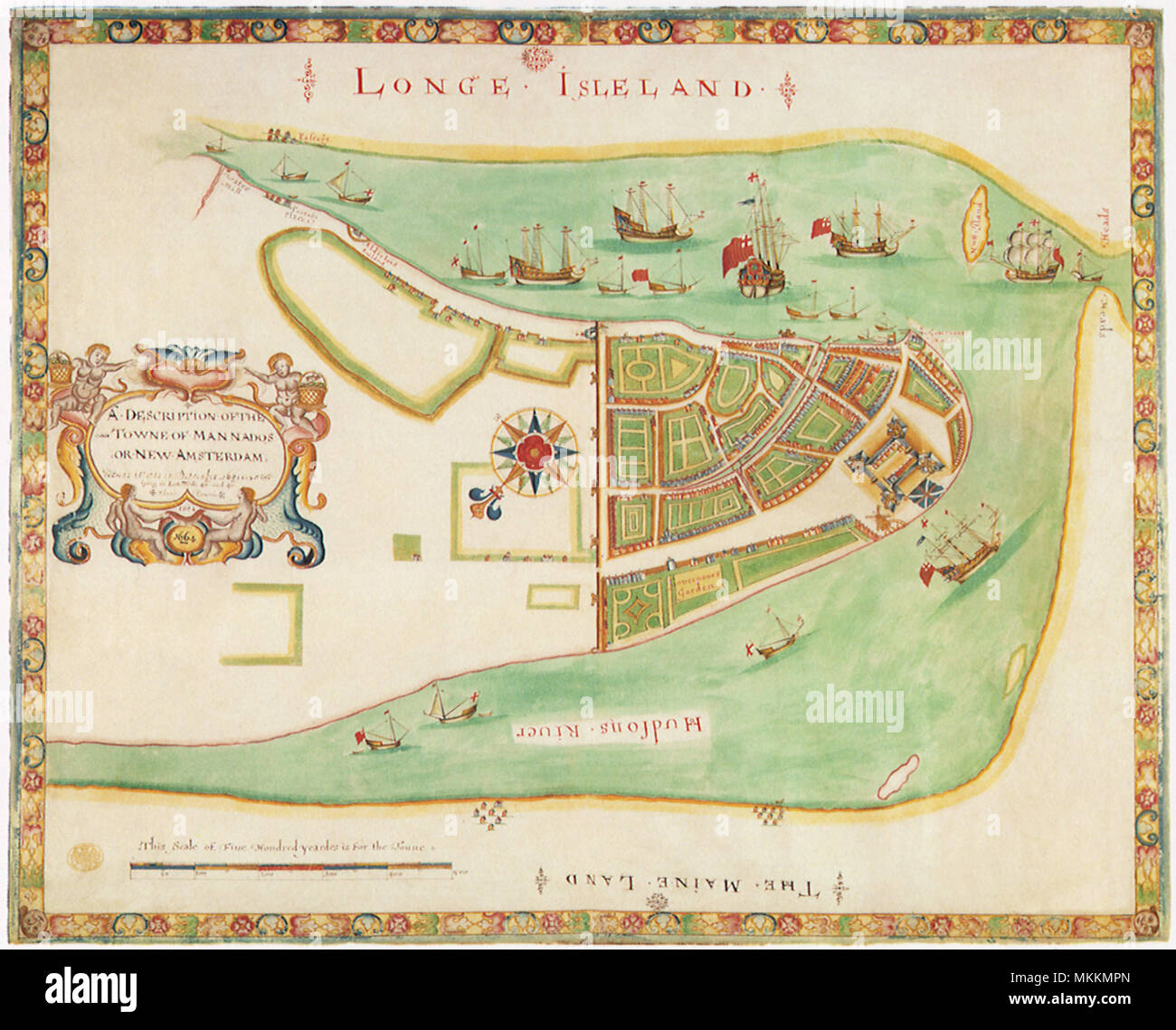
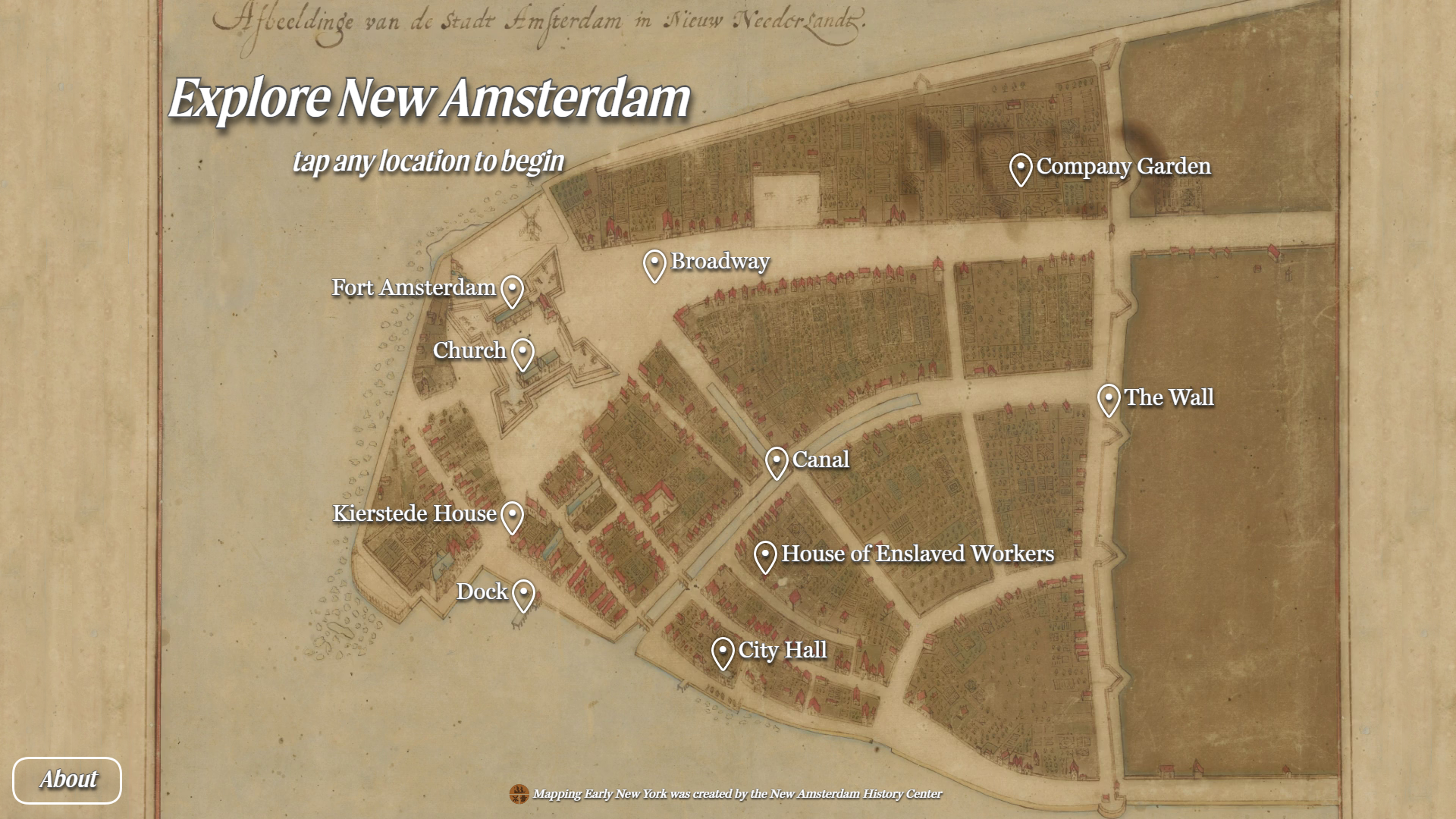
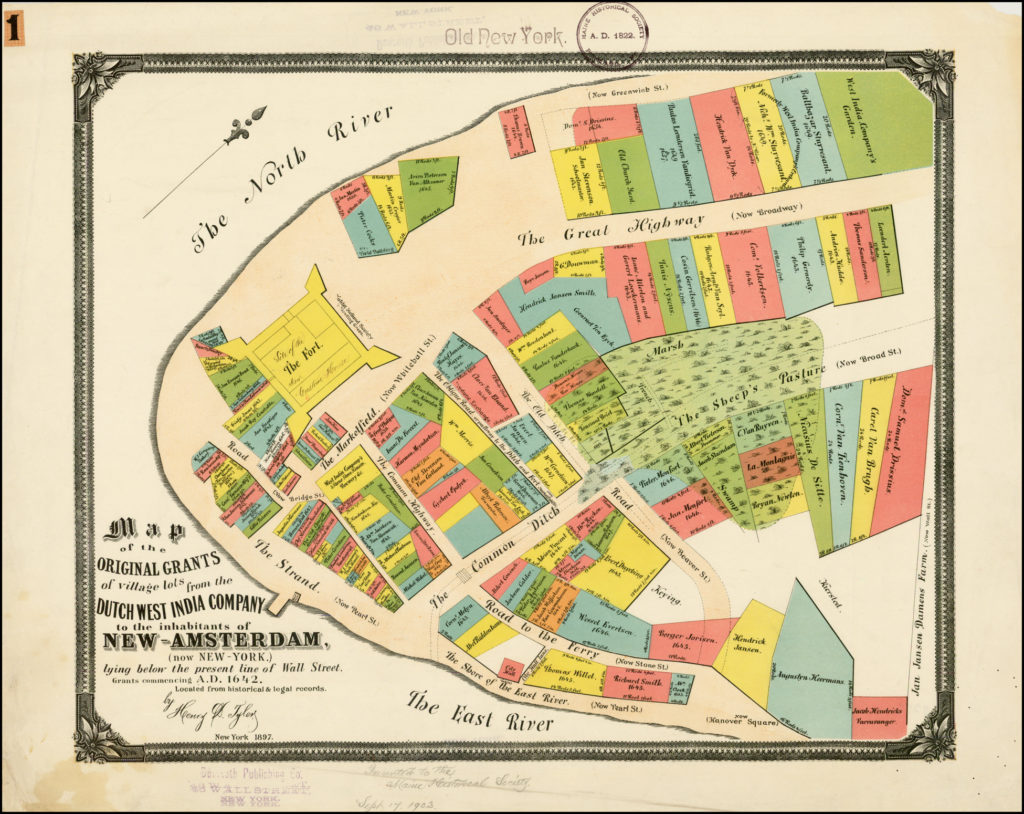
New York City, a global metropolis of steel and concrete, often obscures the historical layers beneath its bustling streets. But beneath the soaring skyscrapers and vibrant avenues lies the ghost of a Dutch colonial settlement, New Amsterdam, a 17th-century trading post that laid the foundations for the city we know today. While New Amsterdam ceased to exist in name and governance in 1664, its urban plan, its social fabric, and even its geographical features continue to exert a subtle influence on the modern map of Lower Manhattan. Understanding the topography and layout of New Amsterdam provides a fascinating lens through which to view the evolution of one of the world’s most dynamic cities.
The Physical Landscape: A Foundation for the Future
New Amsterdam was strategically situated at the southern tip of Manhattan Island, a location chosen for its access to vital waterways and its potential for defense. The natural landscape, however, was quite different from the heavily engineered environment of today. A key feature was the Collect Pond, a large freshwater source located north of the settlement, which provided drinking water and supported various industries. Today, the Collect Pond is gone, filled in during the early 19th century due to pollution and unsanitary conditions. Its former location corresponds roughly to the area around Foley Square, where the city’s courthouses now stand.
The shoreline of New Amsterdam also differed significantly. The Hudson River lapped much closer to the western edge of the settlement, and the East River extended further inland on the eastern side. Over centuries, landfill projects have dramatically altered the coastline, creating significant amounts of new land that now houses some of the city’s most important financial and commercial districts. The Financial District, in particular, sits on land reclaimed from the East River, burying the original wharves and docks that were the lifeblood of New Amsterdam’s maritime trade.
Understanding these geographical shifts is crucial to interpreting the historical map of New Amsterdam. Reconstructing the settlement’s layout requires overlaying historical maps and archival data onto the modern city grid, a process that reveals the enduring influence of the Dutch colonial plan.
The Urban Fabric: Tracing the Streets of New Amsterdam
The street grid of New Amsterdam, though small in scale compared to the sprawling metropolis it would become, played a pivotal role in shaping the future of Lower Manhattan. Unlike the rigid grid system that dominates much of New York City, the streets of New Amsterdam were organic and often followed existing pathways or the natural contours of the land.
One of the most prominent features of New Amsterdam was the "Heere Straat," or "Gentlemen’s Street," which served as the settlement’s main thoroughfare. Today, this street is known as Broadway, and it continues to follow its original course, a diagonal path that cuts across the orthogonal grid system further uptown. Broadway’s enduring presence is a testament to the lasting impact of the Dutch colonial plan, defying the later imposition of a more regimented urban layout.
Another significant street was "De Waal Straat," now known as Wall Street. Originally, this was not a street at all, but rather the location of a defensive wall built in the 1650s to protect the settlement from Native American raids and potential English incursions. While the wall itself is long gone, the street that followed its path continues to define the northern boundary of the Financial District and serves as a potent reminder of the settlement’s early struggles for survival.
Other streets of New Amsterdam, though less prominent than Broadway and Wall Street, still exist in modified forms. Stone Street, once a cobbled pathway known as "Hoogh Straat" (High Street), remains one of the oldest streets in Manhattan, retaining its narrow, winding character. Pearl Street, originally a shoreline road following the contours of the East River, still exists, though it is now several blocks inland due to landfill projects.
Social and Economic Spaces: The Heart of New Amsterdam
Beyond the street grid, the map of New Amsterdam also reveals the social and economic organization of the settlement. The center of activity was the "Stadthuys," or City Hall, which served as the seat of government and a hub for public gatherings. The Stadthuys stood at the intersection of Pearl Street and Coenties Slip, a location now occupied by a modern office building.
Near the Stadthuys was the "Marktvelt," or Market Square, where farmers and merchants gathered to trade goods. This area, located near the present-day Bowling Green, was a vital center for the exchange of agricultural produce, manufactured goods, and imported commodities. The presence of the Marktvelt underscores the importance of trade to the economy of New Amsterdam.
Churches also played a significant role in the social fabric of the settlement. The Dutch Reformed Church, the dominant religious institution in New Amsterdam, had a prominent presence near the Stadthuys. The church served as a place of worship, a center for community gatherings, and a symbol of Dutch cultural identity.
Residential areas in New Amsterdam were typically located along the streets radiating out from the Stadthuys and the Marktvelt. Houses were generally small and built of wood, reflecting the limited resources and the frontier nature of the settlement. Over time, these houses were replaced by larger structures, reflecting the growing prosperity and sophistication of New York City.
The English Takeover and the Legacy of New Amsterdam
In 1664, the English captured New Amsterdam and renamed it New York, marking the end of Dutch colonial rule. While the English takeover brought significant changes to the governance and culture of the city, the urban plan of New Amsterdam continued to exert a powerful influence. The English largely adopted the existing street grid, recognizing its practicality and its deep roots in the physical landscape.
The legacy of New Amsterdam is not just limited to the street grid. The Dutch colonial period also left a lasting imprint on the social and cultural fabric of New York City. Dutch customs, traditions, and family names continue to be part of the city’s identity. The concept of religious tolerance, which was relatively advanced in New Amsterdam, also contributed to the city’s diverse and cosmopolitan character.
Reclaiming the Past: Mapping New Amsterdam Today
Today, historians, archaeologists, and urban planners are actively working to reconstruct and map the lost city of New Amsterdam. Through archival research, archaeological excavations, and the use of digital mapping technologies, they are piecing together a more complete picture of the Dutch colonial settlement.
One of the challenges of mapping New Amsterdam is the limited availability of reliable historical data. Maps from the 17th century are often inaccurate or incomplete, and archival records can be fragmentary. However, by combining different sources of information and using sophisticated analytical techniques, researchers are able to create increasingly accurate and detailed reconstructions of the settlement.
The rediscovery of New Amsterdam is not just an academic exercise. It also has practical implications for urban planning and historic preservation. By understanding the original layout of the city, planners can make more informed decisions about development and infrastructure projects. Historic preservation efforts can also be guided by a deeper understanding of the cultural and historical significance of the Dutch colonial period.
In conclusion, the map of New Amsterdam, though often obscured by the modern cityscape, continues to exert a subtle but powerful influence on Lower Manhattan. By tracing the streets, identifying key landmarks, and understanding the social and economic organization of the settlement, we can gain a deeper appreciation for the origins of New York City and the enduring legacy of Dutch colonial rule. Reclaiming the past is essential for understanding the present and shaping the future of one of the world’s most dynamic cities. The story of New Amsterdam is a story of resilience, adaptation, and the enduring power of place. It is a story that continues to unfold with each new discovery and each new interpretation of the historical record.