Michigan’s political landscape underwent a seismic shift in 2021 with the implementation of new redistricting maps drawn by the Michigan Independent Citizens Redistricting Commission (MICRC). This commission, born from a 2018 constitutional amendment aimed at ending partisan gerrymandering, was tasked with creating fair and impartial maps for both the state legislature and the U.S. House of Representatives. After a rigorous process involving public input, expert analysis, and internal debate, the MICRC delivered maps that promised to reshape the state’s political dynamics for the next decade.
This article delves into the intricacies of the new Michigan redistricting maps, examining their creation, analyzing their key features, and assessing their potential impact on future elections and the overall political climate of the state.
The Genesis of Change: The Drive for Independent Redistricting
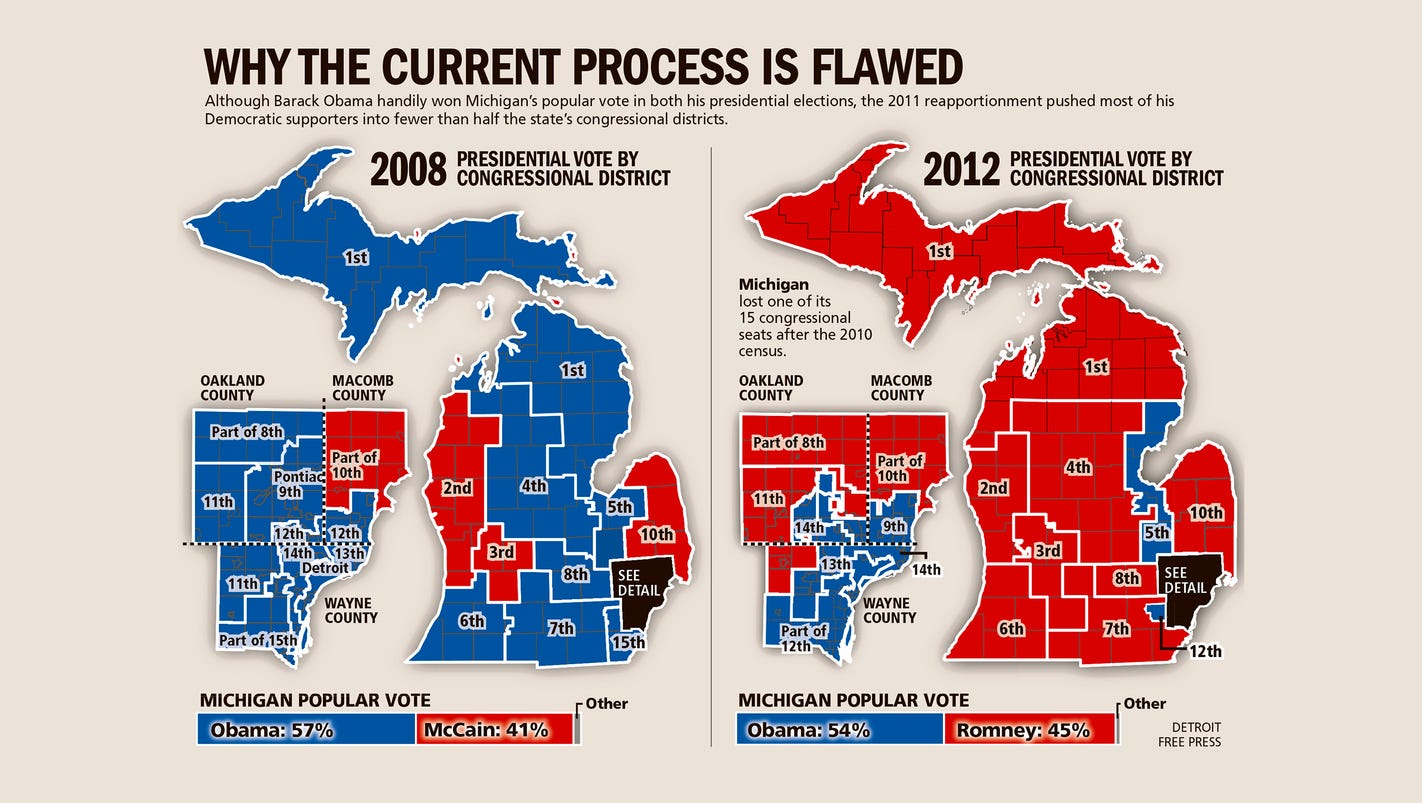
For decades, Michigan’s redistricting process was controlled by the party in power, leading to maps that often favored the incumbent party and entrenched their control. This practice, known as partisan gerrymandering, resulted in districts that were oddly shaped and strategically drawn to maximize the number of seats for one party while minimizing the chances of the other.
Growing frustration with this system fueled the movement for independent redistricting. Voters, supported by various advocacy groups, argued that politicians should not be allowed to draw their own districts. The culmination of this effort was the 2018 ballot initiative, Proposal 2, which established the MICRC.
The amendment mandated that the MICRC be composed of 13 randomly selected registered voters: four identifying as Democrats, four as Republicans, and five as unaffiliated. This composition was designed to ensure a balance of perspectives and prevent any single party from dominating the process.
The MICRC in Action: Navigating Complexity and Controversy
The MICRC faced a monumental task. They had to redraw the boundaries of 13 U.S. Congressional districts, 38 State Senate districts, and 110 State House districts, all while adhering to strict constitutional and legal requirements. These requirements included:
- Equal Population: Districts must be as close to equal in population as possible to ensure fair representation.
- Compliance with the Voting Rights Act: Districts must not dilute the voting power of minority groups.
- Contiguity and Compactness: Districts should be geographically connected and as compact as possible, minimizing oddly shaped boundaries.
- Communities of Interest: Districts should, where possible, preserve communities of interest, such as cities, townships, and shared economic or social ties.
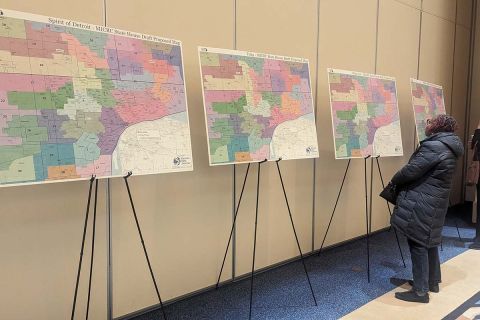
The MICRC embarked on a lengthy process that included public hearings across the state, soliciting input from residents, and hiring legal and mapping experts. They considered thousands of proposed maps and incorporated feedback from diverse stakeholders.
However, the process was not without its challenges. The MICRC faced criticism from both Republicans and Democrats, who argued that the proposed maps favored the opposing party. Disputes arose over the interpretation of legal requirements, the definition of "communities of interest," and the overall fairness of the maps.
Despite these challenges, the MICRC ultimately approved a set of maps in late 2021, marking a significant departure from the previous politically-drawn districts.
Key Features of the New Maps: A Shift in Political Landscape
The new Michigan redistricting maps differ significantly from the previous maps in several key ways:
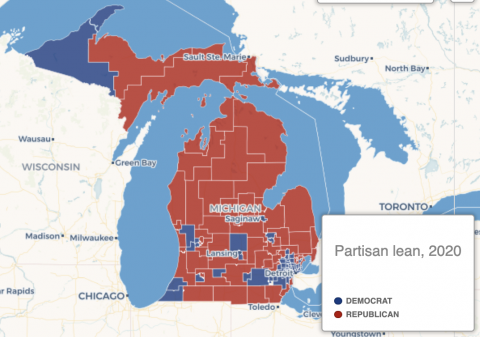
- Increased Competitiveness: The new maps are generally considered to be more competitive than the previous maps, meaning that more districts are likely to be closely contested between Democrats and Republicans. This is due in part to the MICRC’s efforts to prioritize compactness and avoid creating heavily gerrymandered districts.
- Reduced Partisan Skew: While no map can be perfectly neutral, the new maps are believed to be less biased in favor of either party compared to the previous maps. This is expected to lead to a more balanced representation of both parties in the state legislature and the U.S. House of Representatives.
- Changes in District Boundaries: The new maps have significantly altered the boundaries of many districts, leading to shifts in the demographics and political leanings of those districts. Some long-standing incumbents found themselves in districts with unfamiliar voters, while others were drawn into districts with other incumbents, setting the stage for potential primary challenges.
- Impact on Minority Representation: The MICRC carefully considered the Voting Rights Act in drawing the new maps. While the maps have been subject to legal challenges related to their impact on minority representation, the commission aimed to create districts that provided fair opportunities for minority voters to elect candidates of their choice.
Analyzing the Potential Impact: Uncertainties and Opportunities
The full impact of the new Michigan redistricting maps will only be revealed over time, as voters head to the polls in the coming election cycles. However, some potential consequences can be anticipated:
- Increased Voter Engagement: The increased competitiveness of many districts could lead to higher voter turnout, as both parties invest more resources in these races. Voters in these districts may feel that their votes have a greater impact on the outcome of the election.
- Shifts in Party Control: The new maps could alter the balance of power in the state legislature and the U.S. House of Representatives. Depending on the overall political climate and the performance of individual candidates, either party could gain or lose seats.
- Increased Accountability for Elected Officials: In more competitive districts, elected officials may be more accountable to their constituents, as they will need to appeal to a broader range of voters to win re-election.
- Legal Challenges and Interpretations: The new maps have already faced legal challenges, and it is likely that further legal disputes will arise as the maps are implemented. Courts may be called upon to interpret the legal requirements of redistricting and to address concerns about fairness and minority representation.
Beyond the Maps: The Broader Implications for Michigan Politics
The implementation of the new Michigan redistricting maps represents a significant victory for proponents of fair elections and voter empowerment. By taking the power of redistricting out of the hands of politicians and placing it in the hands of an independent commission, Michigan has taken a major step towards creating a more level playing field for all candidates and parties.
However, the new maps are not a panacea for all the challenges facing Michigan’s democracy. Other issues, such as campaign finance reform, voter access, and political polarization, also need to be addressed to ensure a healthy and vibrant political system.
Furthermore, the success of the MICRC model depends on the continued commitment of the commission members to impartiality and transparency. Future commissions must be vigilant in upholding the principles of fairness and avoiding any appearance of bias.
Conclusion: A New Era for Michigan Elections
The new Michigan redistricting maps represent a bold experiment in democratic reform. While the full impact of these maps remains to be seen, they have the potential to reshape the state’s political landscape, increase voter engagement, and promote greater accountability among elected officials.
The process of creating these maps was not without its challenges and controversies, but the MICRC ultimately delivered a set of maps that are generally considered to be fairer and more competitive than the previous politically-drawn maps.
As Michigan enters a new era of elections under these new maps, it is crucial for voters to become informed about the changes and to participate actively in the political process. By engaging in thoughtful debate and holding their elected officials accountable, Michiganders can ensure that their voices are heard and that their government truly represents the will of the people. The MICRC’s work has laid the foundation for a more democratic future, but it is up to the citizens of Michigan to build upon that foundation and create a political system that is fair, transparent, and responsive to the needs of all.